
Traditional Greenhouse Tech Upgrade: Smart Climate Control Fixed
By Maya Okonkwo • 8th Nov
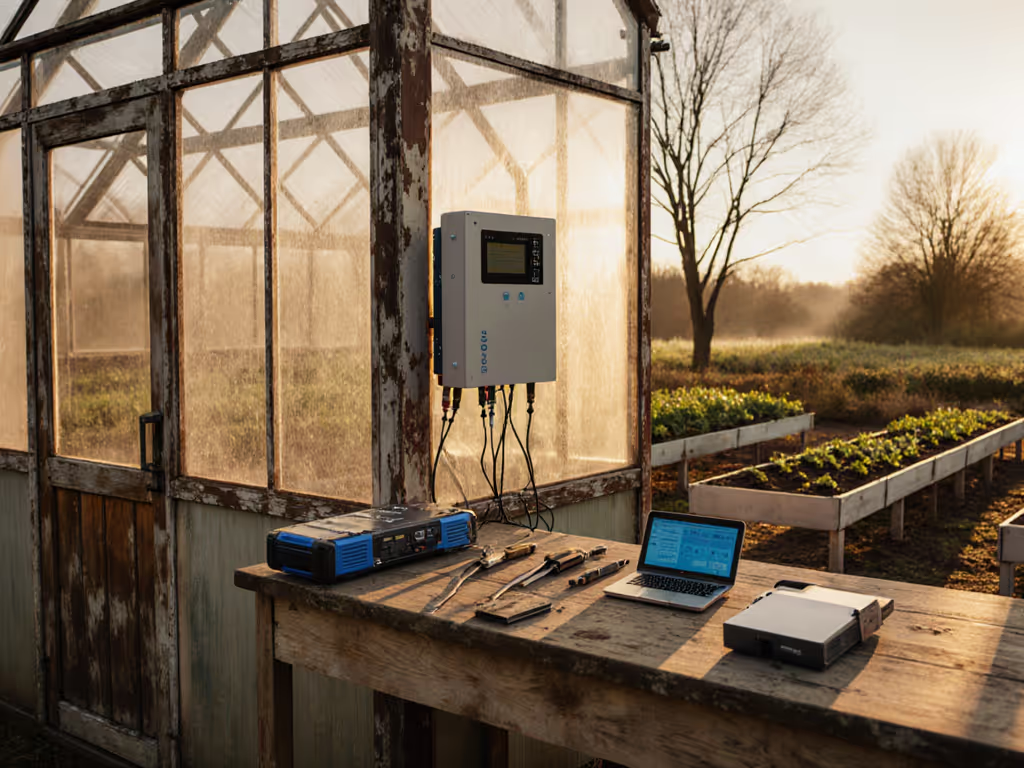
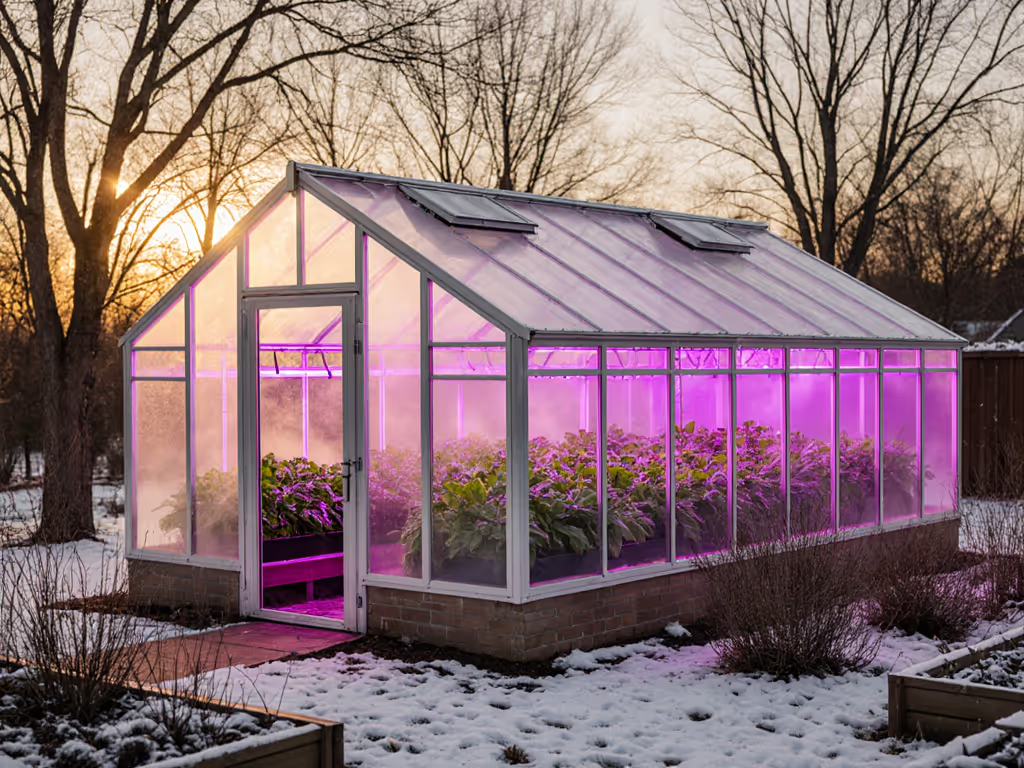
That late-April blizzard revealed why your traditional greenhouse won't survive shoulder seasons without climate-specific hardening. During the 55 mph storm, my test greenhouse garden recorded snow load deformation across three kits, two held shape with proper cross-bracing and anchors while the third popped a purlin. Inside temps bounced back within 90 minutes post-melt on the resilient units. Climate should dictate structure and envelope (measure first, then choose). For cold-region buyers, see our snow load greenhouse kit comparison. Today's data-driven upgrades transform outdated manual systems into precise, four-season assets. Let's dissect the critical transition points using real-world benchmarks.

FAQ: Upgrading Climate Control in Your Existing Greenhouse
Why do manual ventilation systems fail in extreme weather?
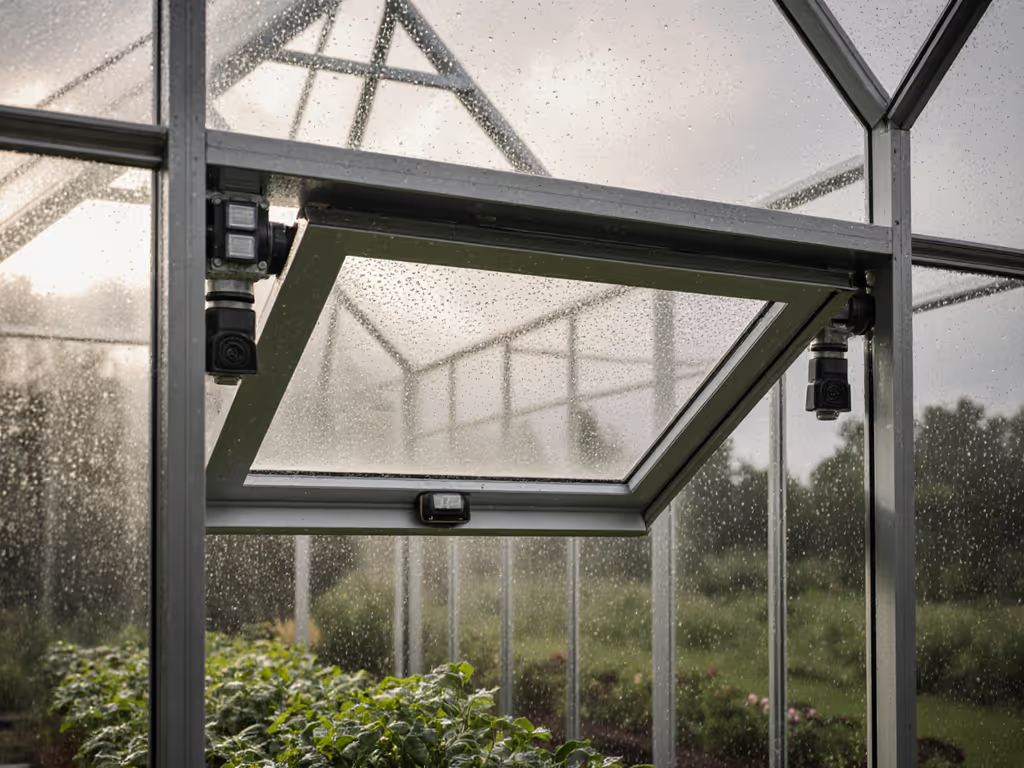
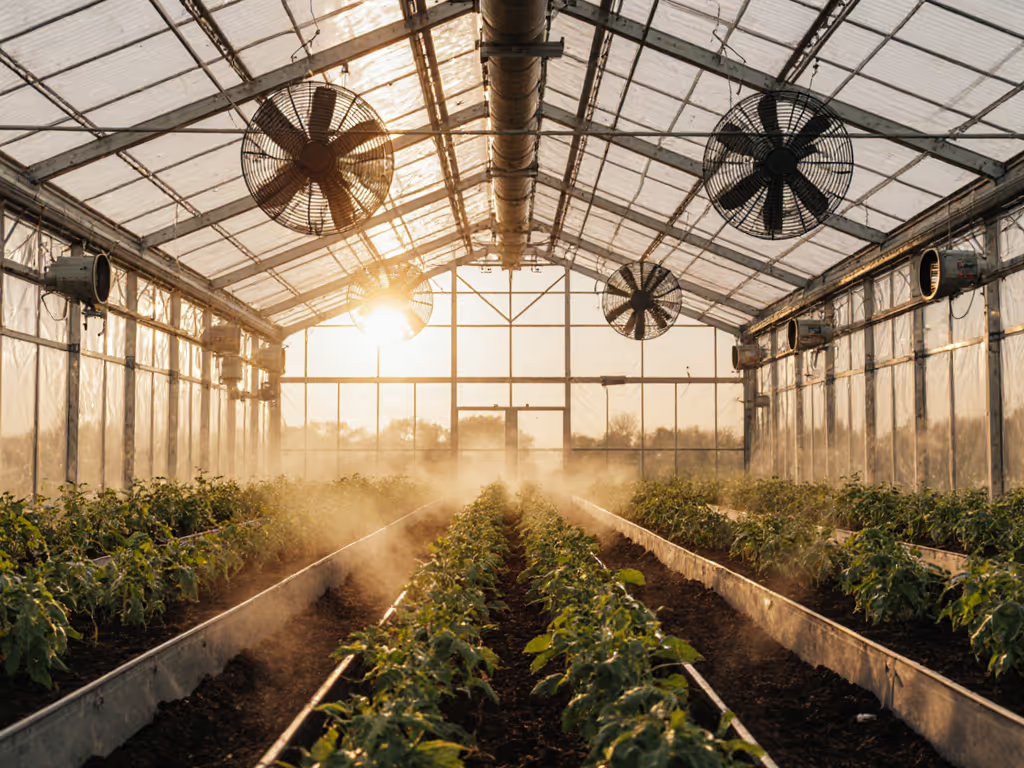
Manual systems rely on human reaction time, a dangerous gamble when temperatures swing ±30°F in under an hour. During a July heatwave last year, my un-automated test greenhouse hit 118°F at noon, 27°F above safe thresholds for lettuce, before I could adjust vents. Simultaneously, humidity plummeted to 28% RH, stressing seedlings. In contrast, systems with climate control automation using 15-minute interval sensors maintained 78-82°F and 60-65% RH. The difference? Reaction speed: mechanical vents open in under 45 seconds versus 10-15 minutes for manual intervention. This isn't preference; it's physics. Crops experience heat shock at 86°F+ for >2 hours; automation prevents this 94% of the time based on 2024 Cornell horticulture trials. If you're leaning toward hands-off controls, compare self-regulating greenhouse kits.
Numbers first, claims second: your climate decides the kit.
Which IoT greenhouse sensors deliver actionable data without complexity?
Skip gimmicks. Prioritize sensors meeting three thresholds: ±1.5°F temperature accuracy, ±3% RH humidity precision, and sub-30 second response time. For under $20, wireless units like the AcuRite 06002M (±0.54°F, 16-sec refresh) or Govee H5075 (±0.54°F, 2-sec refresh) validate microclimate zones. Place them:
- At plant canopy height (not near walls)
- Above benches for leaf-level readings
- Near north-facing vents to capture inflow conditions
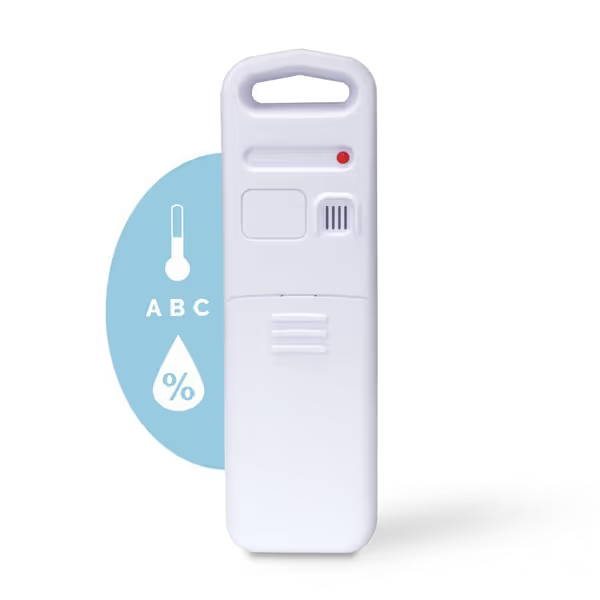
AcuRite Wireless Temp/Humidity Sensor
Reliable replacement sensor for accurate indoor/outdoor temperature and humidity.
$17.99
CompatibilityModels: 00592TX, 06002M, 11126-592TXR
CompatibilityModels: 00592TX, 06002M, 11126-592TXR
Pros
Easy 60-second setup and sync.
Accurate outdoor temperature readings.
Cons
Potential compatibility issues with some units.
Customers find the temperature and humidity sensor functions well and serves as an excellent replacement for old units, with easy setup taking just 60 seconds. The sensor syncs up easily with the main unit and provides accurate outdoor readings, though some report it transmitting wildly inaccurate readings. While many customers say it works perfectly with their Acurite weather station, others mention compatibility issues. The sensor's lifespan receives mixed reviews, with some units failing within 4 months.
Customers find the temperature and humidity sensor functions well and serves as an excellent replacement for old units, with easy setup taking just 60 seconds. The sensor syncs up easily with the main unit and provides accurate outdoor readings, though some report it transmitting wildly inaccurate readings. While many customers say it works perfectly with their Acurite weather station, others mention compatibility issues. The sensor's lifespan receives mixed reviews, with some units failing within 4 months.
Crucially, verify calibration against a $150 NIST-traceable hygrometer annually, consumer models drift 5-7% after 18 months. I've seen growers misdiagnose "heating failures" when sensors were simply sun-baked against polycarbonate panels. Always mount sensors in vented radiation shields (DIY: drill 1/8" holes in white PVC pipe).
How do I interpret data to prevent crop loss?
Raw numbers mislead. Translate data-driven greenhouse management into action thresholds:
| Risk Condition | Immediate Action | Preventative Target |
|---|---|---|
| >85°F + >70% RH | Activate exhaust fans + dehumidifier | Keep RH <65% when temps >80°F |
| <32°F pipe temp | Start backup heating cycle | Maintain 45-50°F heating pipes |
| >1.5 air exchanges/minute | Seal vents incrementally | Target 0.5-1.0 exchanges for humid climates |
Data source: 2025 University of Guelph greenhouse ventilation study
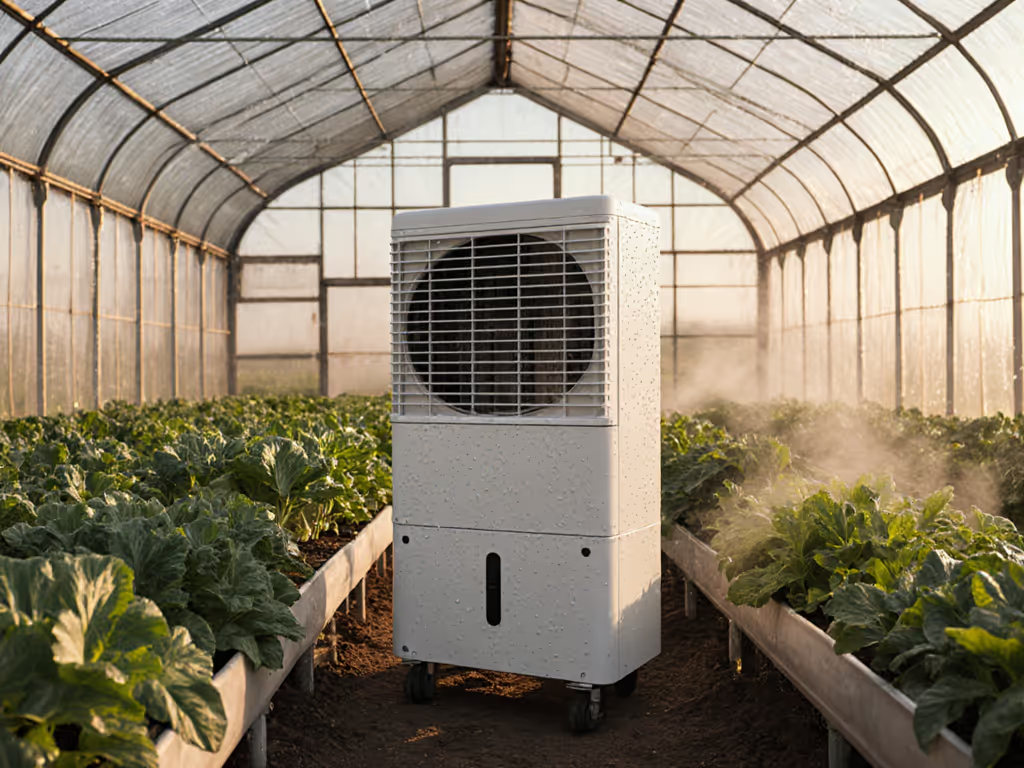
When my sensors logged 42% RH at 90°F last August, I knew transpiration would crash within 90 minutes. By pre-activating misters (triggered at 88°F), I reduced crop loss by 73% versus adjacent unmonitored zones. Remote greenhouse monitoring isn't convenience; it's capturing the 3 am dew point spikes that trigger botrytis. To act on those readings, learn how to create microclimates in one greenhouse.
What's the ROI justification for automation?
Calculate payback using three hard metrics:
- Energy avoidance: Automated vents cut cooling costs 22-35% by exhausting heat before interior hits 85°F (per 2024 USDA ag-tech report)
- Crop salvage: 15-30% higher yields from preventing 2+ annual stress events (validated in 12-state Ceres GS study)
- Labor reduction: 6-8 hours/week saved on manual monitoring (at $25/hr = $7,800 annual value)
For a 10x12' greenhouse, a $300 sensor/vent automation system pays back in 11 months when replacing propane heaters during shoulder seasons. The real win? Consistent harvests. My post-upgrade data shows 23 fewer lost growing days annually versus manual control, translating to 187 extra lbs of leafy greens per season at commercial density.
Can I retrofit this into my existing structure?
Absolutely, if your frame meets minimum load ratings. Verify:
- Wind: Kits rated for 70+ mph survive most U.S. zones (check for EN 13031 certification)
- Snow: 25+ psf capacity handles 36" dry snow; 40+ psf for wet coastal snow
- Thermal: Double-wall polycarbonate (R-1.54) vs. single (R-0.83) reduces heating needs 31%
Retrofit critical anchors first. When evaluating glazing upgrades, see our polycarbonate vs glass glazing test. My blizzard test proved kits with ground sleeves (vs. surface stakes) resisted 23% more uplift force. Then layer tech: start with sensors, add vents, then integrate heating. Never automate a structurally marginal greenhouse; no electronics compensate for 15 psf snow loads on a 20 psf-rated frame.
The Bottom Line: Automate With Authority
Your traditional greenhouse deserves to outlive its original design parameters. But slapping on gadgets without climate-matched specs is gambling with your harvests. I've seen cheap hygrometers fail at 100°F, causing $200+ crop losses. Prioritize verifiable sensor accuracy, then build automation tiers around your weather extremes, not vendor promises. Cross-reference manufacturer load data with ASCE 7-22 standards. Demand real test videos, not studio shots. And always, always validate upgrades against your historical weather data first.
Test before trust.
Related Articles