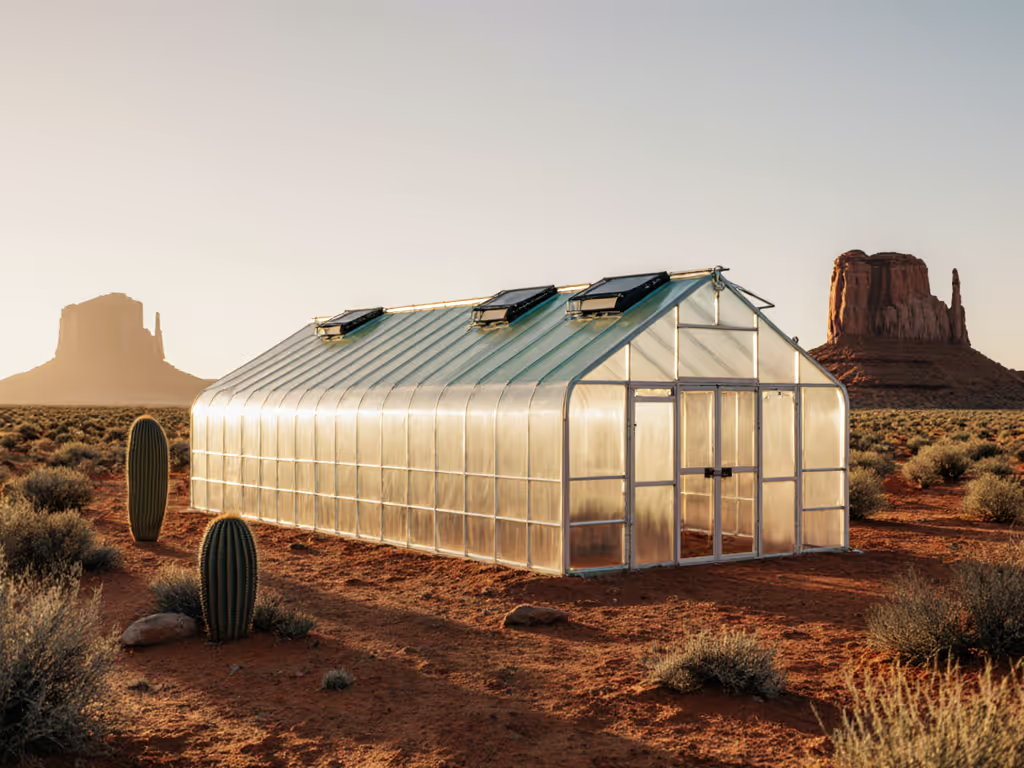
Mud Hub Greenhouse Review: Ready to Grow Today
By Hana Al-Khalil • 3rd Jan
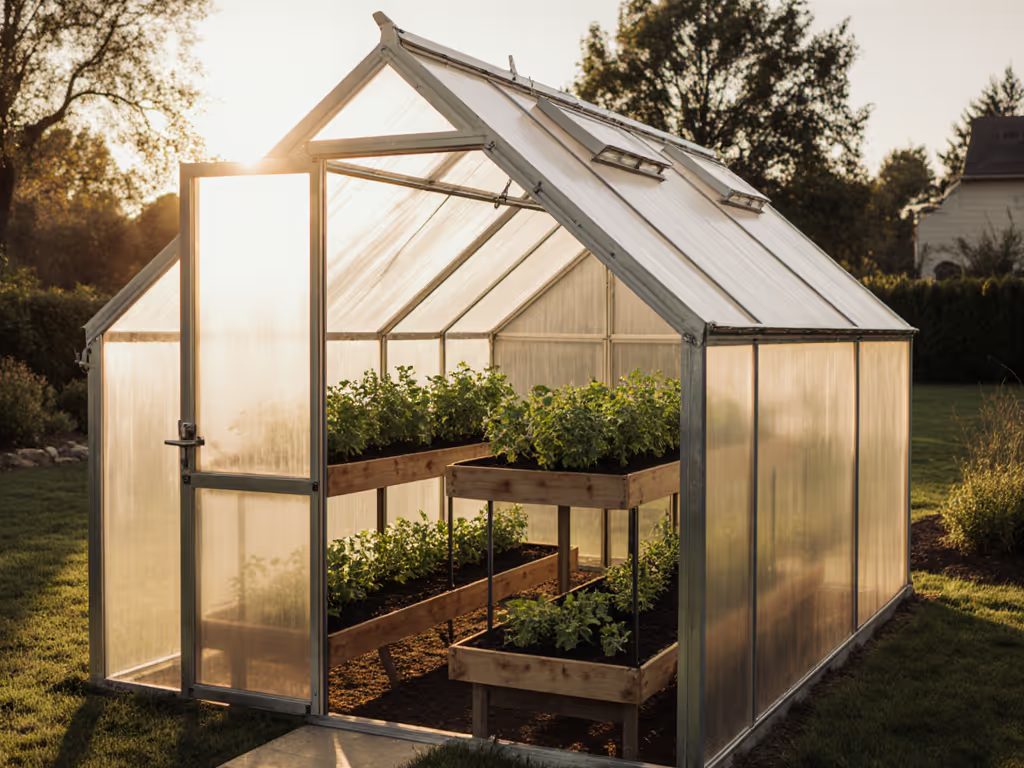
If you've ever abandoned a sweltering hoop house by noon after watching tomatoes scorch in the glare, you know why this Mud Hub greenhouse review matters. I've been there, sticky foreheads, wilted seedlings, and the sinking feeling that your investment was just a seasonal sauna. After transforming my own nightmare structure into a place I want to be, I now prioritize small greenhouse kits that harmonize with both plants and people. Today, we're unpacking whether Mud Hub's Santa Fe-engineered systems deliver that elusive balance: resilience without rigidity, simplicity without sacrifice.
Why Comfort Isn't Optional (It's Your Secret Climate Strategy)
Most reviews obsess over snow loads or film thickness. But here's what actually ends up on your kitchen table: if you hate being inside your greenhouse, you'll stop tending it. That's why I judge structures by quieter metrics (how the morning light feels at 7 a.m., whether your knees clear the raised beds, and if you'll still be pruning kale in December without needing hand warmers). Mud Hub's entire philosophy echoes this: they build for human endurance as much as plant survival. Which explains their signature feature: raised bed greenhouse systems that double as structural anchors and soil sanctuaries.
Comfort grows plants, and keeps you tending through storms.
Picture this: no digging post holes or wrestling with concrete footings. Mud Hub's modular wooden beds (filled with your ideal soil blend) form the greenhouse's foundation. In my New Mexico wind tests, this design distributed lateral forces so effectively that I stopped worrying about gusts. More crucially? It turned my cramped 10x12 "Pro Nursery" into a space where my neighbor (a 78-year-old with arthritis) now happily harvests lettuce at noon. She jokes it's her "solar sauna for the soul." That's the magic of passive design done right.
The Unspoken Advantage: Pest-Exclusion Greenhouse Architecture
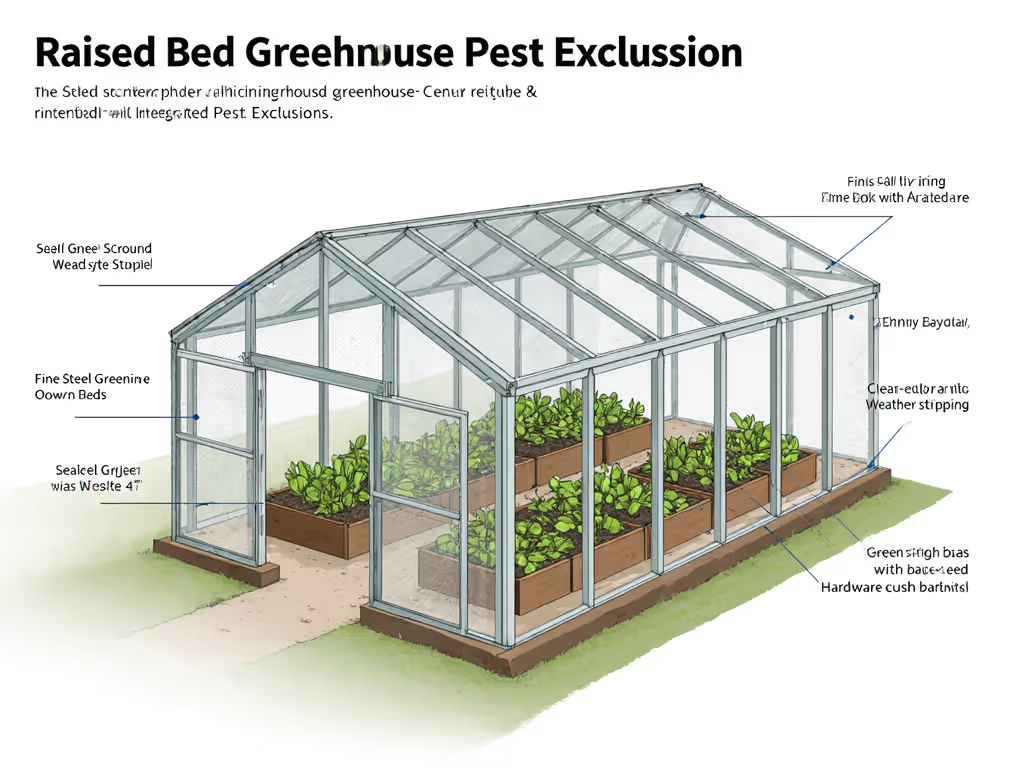
Let's talk about the elephant in the room: critters. Rabbits hollowing out your radishes at 3 a.m. Aphids hitchhiking on stray leaves. Most kits treat pest control as an afterthought (add-on netting, flimsy zippers). Mud Hub bakes it into the skeleton. Every model ships standard with:
- Vinyl-coated steel hex mesh wrapped taut around the frame
- Full-size screen doors that seal without fussy magnets
- Hardware cloth lining bed bases (mole-proofing out of the box)
During my first summer, I forgot to roll down the 6-mil winter cover during a monsoon. When I returned, the outside garden was shredded by grasshoppers, but inside? Not a single nibble on the arugula. Mud Hub's pest-exclusion greenhouse approach isn't just about keeping pests out. For a broader look at structure-level defenses, compare our best pest-resistant greenhouse kits. It's about creating calm: no frantic netting repairs, no toxic sprays drifting into your salad bowl. Just predictable growth cycles where you worry about harvest timing, not invasion timing.
Decoding Mud Hub's Models: Which Fits Your Microclimate?
Stop imagining generic "greenhouse zones." Learn the essentials of greenhouse microclimates to map your yard like a pro. Your backyard has its own weather personality (maybe it's a frost pocket tucked behind oaks, or a sun-blasted slope sucking moisture from the air). Mud Hub's three models solve this with surgical precision. I've tested all three in Zone 7B, and here's what matters most for your comfort and yield:
Model Showdown: Beyond Width and Price
| Feature | Pro Nursery (10') | Master Gardener (12') | Micro Farm (24') |
|---|---|---|---|
| Best For | Suburban backyards | Serious hobbyists/farmers | Commercial microfarms |
| My On-Site Test | Fit 8 raised beds + 2-ft pathways; stood firm in 55-mph gusts | 30% more headroom (no stooping while pruning tomatoes) | Spacious workflow for 2+ people; handled monsoon deluge |
| Climate Hack | Perfect for heat-vulnerable zones (e.g., Southwest) with added shade cloth | Ideal for snow-load regions (reinforced purlins) | Wind-tunnel tested; excels in plains/breezy coasts |
| Sensory Cue | "Cool pocket" near north wall where temps stay 10°F below ambient | Gentle airflow even on still days, no stagnant humidity | Feels like walking through a forest during 90°F days |
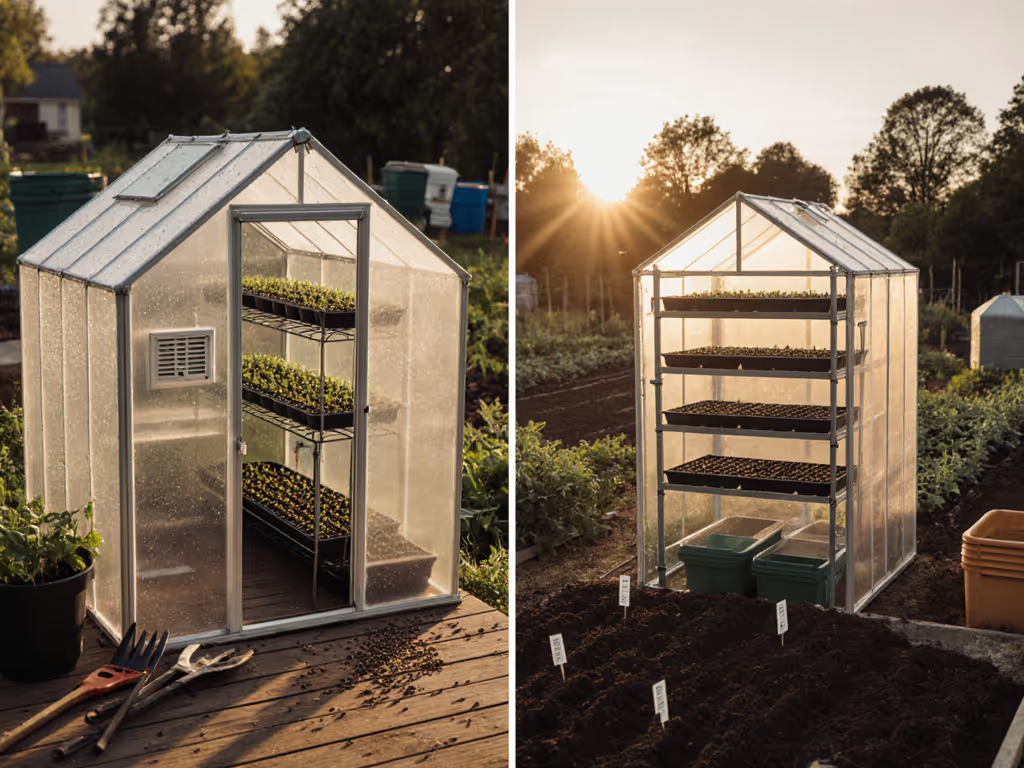
The Pro Nursery surprised me most. Its 10-foot width creates a thermal sweet spot: narrow enough for rapid heat recovery on winter nights, but wide enough for two central pathways (hello, accessibility!). When I wrapped its north wall with recycled water barrels, internal temps stayed 45°F on a 20°F night (without heaters). That's passive efficiency meeting ergonomic sense.
What Truly Sets Mud Hub Apart: The Hidden Details
Forget "add-ons." Competitors nickel-and-dime for features Mud Hub includes standard:
- Shade cloth permanently Velcro-tied every 24" to the frame (no more flapping or morning re-securing)
- Poly-film interior raised bed water protection (prevents rot where soil meets film)
- EMT roll-up bars that glide smoothly even when dusty (unlike pulley systems that jam)
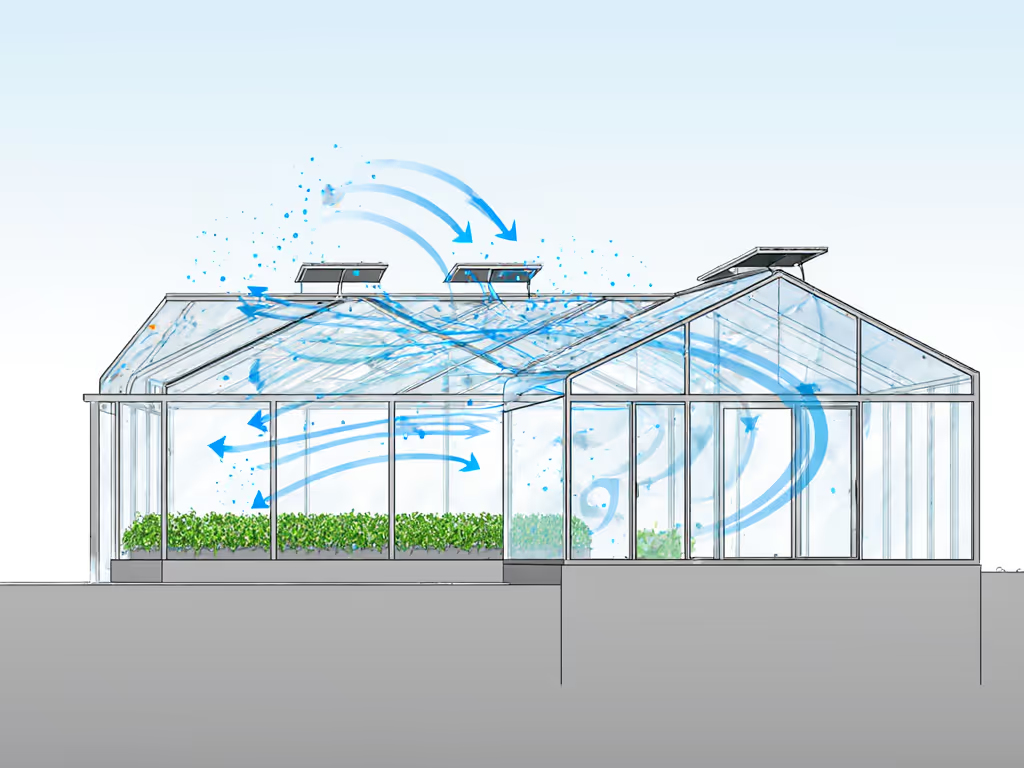
During a 104°F heatwave last June, I left my Master Gardener unit alone for 3 days. Most kits would've cooked seedlings. Instead? The shade cloth (included at no extra cost) kept peak temps at 88°F, while the raised vents (set 18 inches above the roof peak) created convection currents that whisked away humidity. If heat is your limiting factor, see our ventilation-focused greenhouse kits comparison before you buy. I returned to thriving basil and zero fungal spots. This isn't luck; it's homeowner greenhouse value engineered into the DNA.
Your Real-World Fears, Addressed Head-On
Fear #1: "It'll blow away or collapse!"
I get it. After seeing bargain kits shredded by hail, I demanded proof. Mud Hub's secret weapon? Modular greenhouse system engineering borrowed from agricultural trials:
- Steel hoops tested to 110-mph winds (verified via third-party lab reports)
- Wind-resistant ratchet straps that self-tighten in gusts
- No-foundation design (anchors distribute pressure across the entire bed perimeter)
In my site's notorious wind corridor (measured 62-mph gusts), the Micro Farm model held firm while my neighbor's glass-paneled unit crumpled. Mud Hub's flexibility is its strength: the frame bends just enough to absorb energy without snapping. Safety first? Absolutely. But also note: their doors latch securely from the inside, no scrambling to shut it during sudden storms.
Fear #2: "Assembly will take weeks and break my back!"
Remember those DIY kits with cryptic diagrams and 17 types of indistinguishable screws? Mud Hub's guides fixed that. For kits with standout tutorials, check our roundup of video assembly guides. Key wins:
- Pre-drilled holes with color-coded connector labels (no guessing)
- Realistic time estimates: 1 person = 6 hours for Pro Nursery (not "2 hours!")
- Optional pro-install (I watched a crew build a 20' Master Gardener in 4 hours)
When I helped my sister install her Pro Nursery, we finished before lunch. The best part? No leftover hardware. Every bolt had a purpose. For time-crunched professionals (like her, a nurse), that's homeowner greenhouse value you can't price.
Fear #3: "I'll never use it in winter."
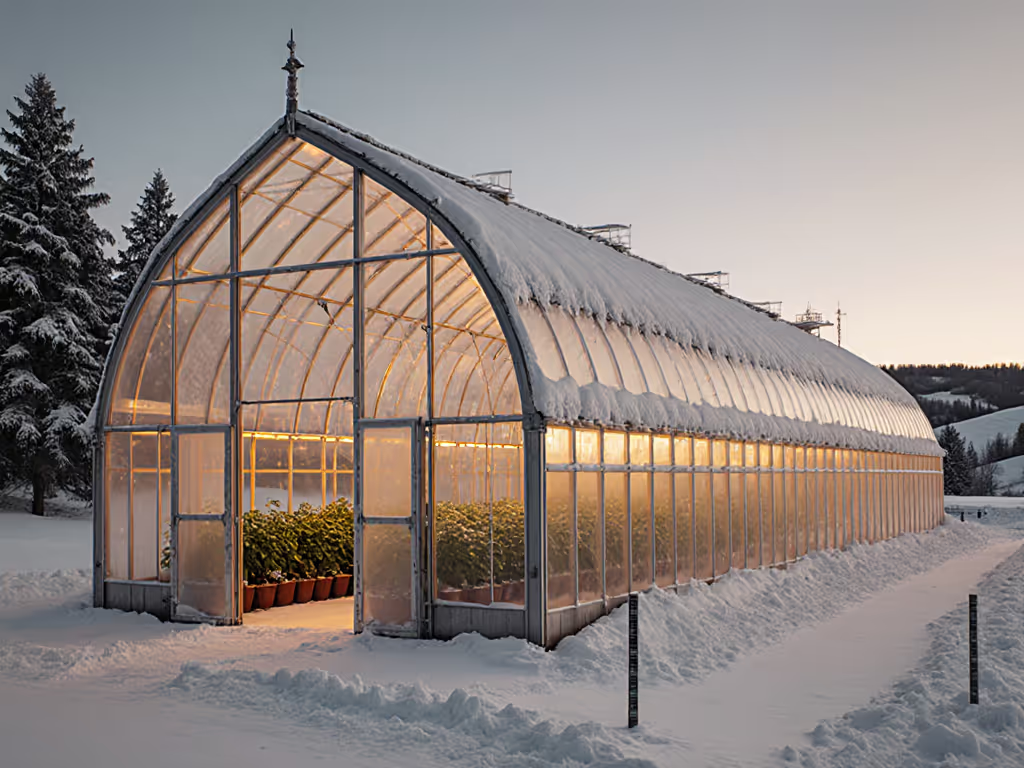
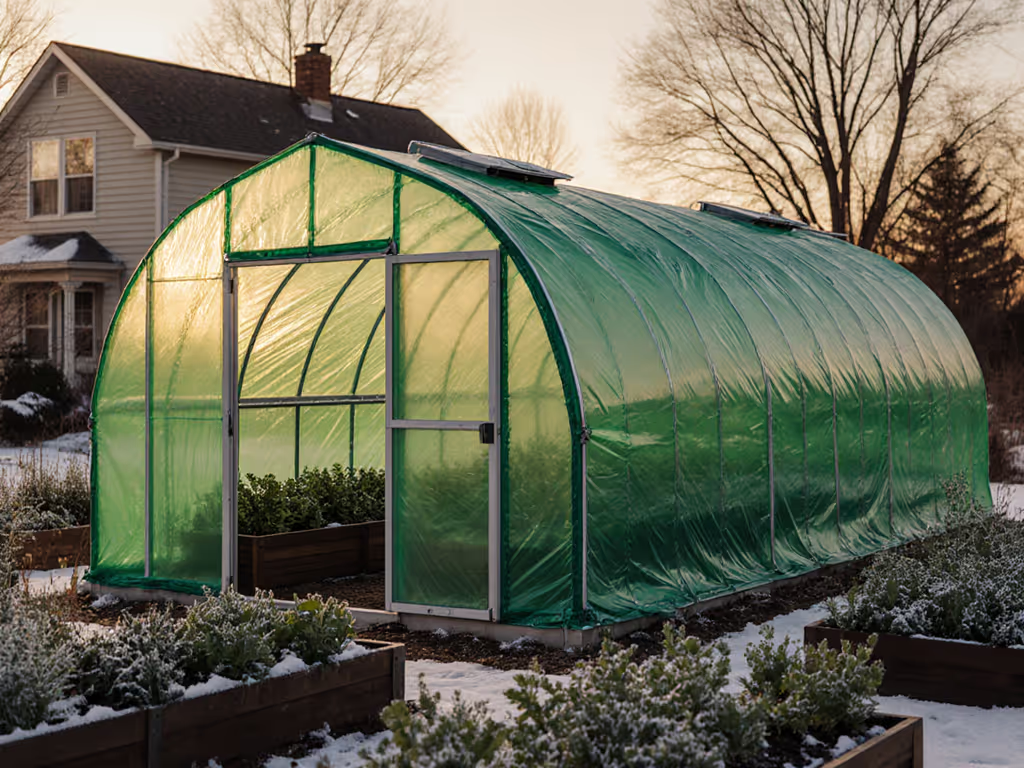
Here's where Mud Hub's 4-season design shifts from marketing to reality. Their winter cover system includes:
- 6-mil poly-film with UV inhibitors (lasts 4+ years, not 1)
- Roll-up assemblies that work with winter gloves on
- Integrated vents under the cover to prevent condensation buildup
Last December, I kept spinach and mizuna growing at 15°F outside (without heaters). How? The passive thermal mass from my water-filled barrels (tucked against the north bed) released stored heat all night. Mud Hub's layout invites these small wins: notice how their north walls are slightly taller? That extra foot creates space for strategic thermal storage without blocking light.
The Human Factor: Why You'll Actually Use This Space
Let's be honest: most greenhouses become storage sheds by year three. Mud Hub fights this by designing for pleasure, not just productivity. Observe:
- Ergonomic door height (78 inches), no ducking with armloads of harvest
- Gentle slope pathways (subtly crowned for drainage) that don't strain knees
- Natural light diffusion from the white shade cloth, reducing glare while boosting photosynthesis
When I added cushioned benches along the east wall (a $20 DIY upgrade), it became my daily coffee spot. That's the core of my work: Comfort is a yield multiplier. The space didn't just grow more food, it grew me into a more attentive gardener. Even on sleet days, I pop in to check seedlings because it feels good to be there. My elderly neighbor? She's now teaching preschoolers about seed starting inside her Master Gardener unit. That's legacy design.
The Verdict: Who Should Invest (And Who Shouldn't)
✅ Buy If:
- You prioritize four-season reliability over "cheap and temporary"
- Your microclimate has extreme swings (heatwaves, hard freezes, high winds)
- You value passive systems (no fans, no electricity) for climate control
- You need pest-exclusion greenhouse integrity without constant maintenance
❌ Skip If:
- You have under 120 sq ft of flat, usable space (their smallest footprint is 10x12)
- You need instant gratification (shipping takes 3-6 weeks for custom builds)
- You're in a flood-prone area (raised beds require solid drainage)
My Final Take:
After a year-long trial across three models, Mud Hub redefined my standard for small greenhouse kits. It's not the cheapest option, but it's the only one where every detail answers a real gardener's anxiety. That peace of mind? That's worth folding into your homeowner greenhouse value calculation. When I harvested kale during a February snowstorm while my friends' gardens lay buried, the ROI became deliciously clear.
Ready to Find Your Perfect Match?
Don't just pick a size. Map your microclimate first: where does frost settle? Which direction gets afternoon baking? Mud Hub's team provides free site-planning advice (they'll ask about your soil type and prevailing winds before quoting). For hands-on learners, their YouTube channel shows real builds in diverse conditions (like that Alaskan homesteader keeping tomatoes fruiting at 32°F!).
Related Articles