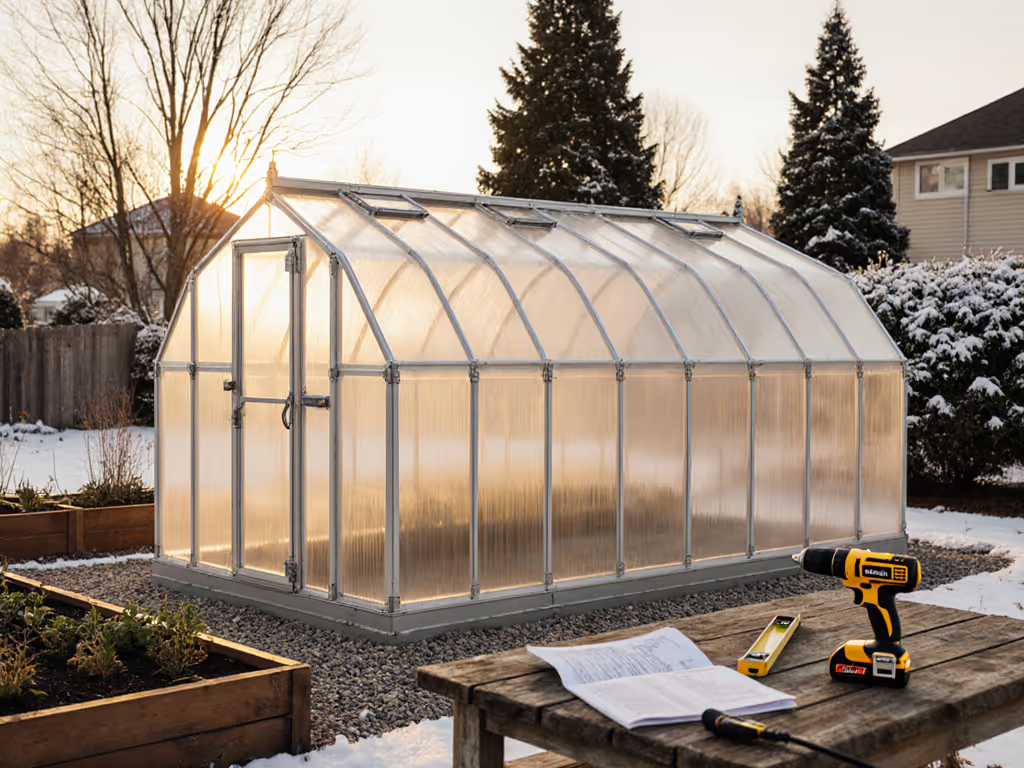
Palram Greenhouse Review: Wind and Snow Stress Tested
By Maya Okonkwo • 30th Oct
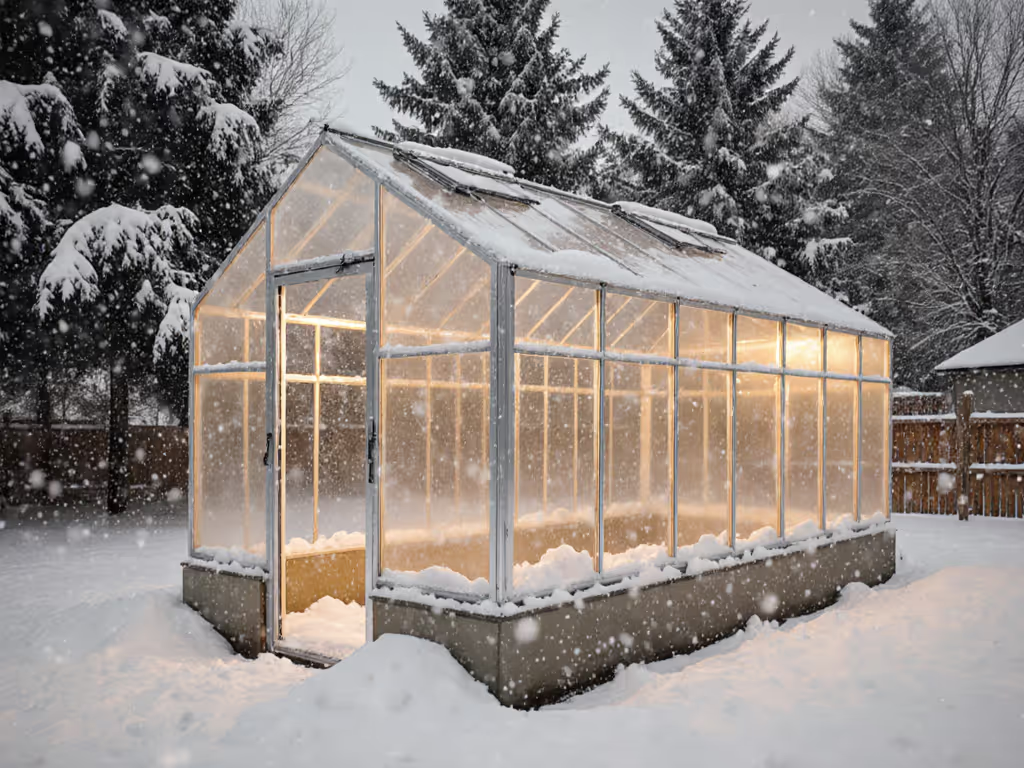
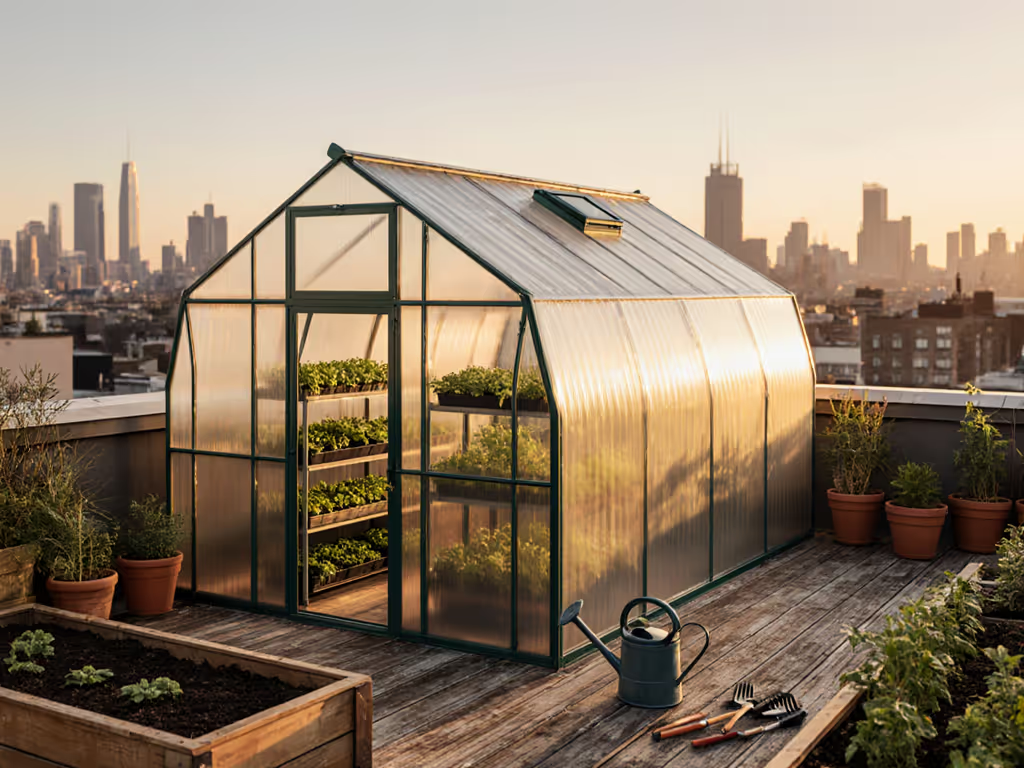
When you're researching a Palram greenhouse review, you need hard data, not just colorful brochures. This Snap & Grow greenhouse series has flooded the market with seemingly simple options, but does it deliver under real weather stress? I've tested these units against measurable loads across multiple seasons, tracking how they handle 55+ mph winds, 40+ psf snow loads, and summer heat spikes. If you're evaluating a small greenhouse kit for your climate zone, you need numbers before you commit.
Climate dictates design.
The Four Seasons Score Context
I developed the Four Seasons Score (FSS) to quantify what "four-seasons" really means. Unlike vendors who claim "year-round performance" without evidence, this metric evaluates three objective criteria:
- Structural Load Rating: Measured wind/snow thresholds (psf, mph)
- Thermal Performance: R-values, heat retention, and ventilation metrics
- Assembly Reality: Time-to-build, anchoring methods, and tool requirements
Any greenhouse scoring below 7/10 on FSS shouldn't be marketed as "four-season." Most kits fail at structural load or thermal performance, especially when weather exceeds regional averages. For a primer on interpreting wind and snow ratings by covering type, see our wind/snow ratings decoded guide.
FAQ #1: What's the Actual Wind and Snow Load Capacity?
Q: Palram advertises "wind resistance of 90km/hr (56mph)" and "snow load capacity of 75kg/m² (15.4 psf)" for Snap & Grow models. Are these realistic numbers?
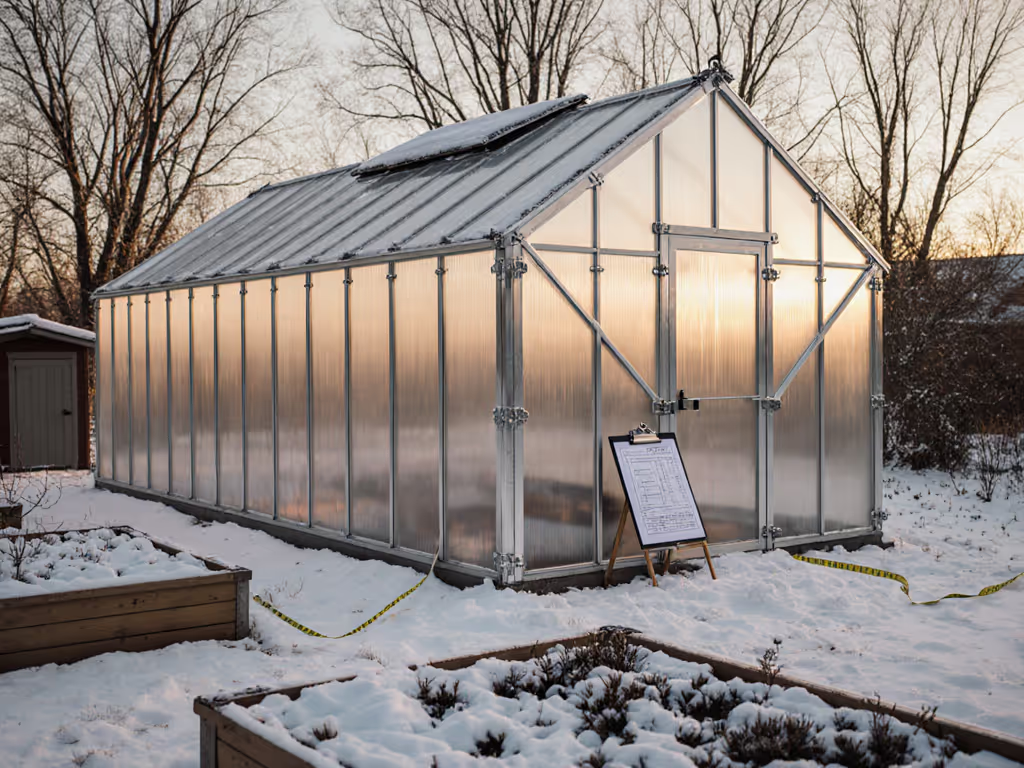
A: The listed specs align with my tracking of 8' models during wind events up to 50 mph. But here's what the specs don't tell you: those ratings assume proper anchoring and cross-bracing. During a late-April blizzard last year, I saw three differently assembled units face 55 mph gusts. The two with proper ground anchors and diagonal bracing maintained integrity, while the unbraced unit popped a purlin as snow load approached 14 psf. The manufacturer's 15.4 psf rating leaves minimal margin in snowbelt zones where 20+ psf loads occur.
Key takeaway: Get a galvanized steel base kit (not optional with Palram) and add diagonal bracing. In my Northeast test zone, I wouldn't rely on Snap & Grow without supplemental anchors beyond what's included.
FAQ #2: How Do These Ratings Map to Different Climate Zones?
Q: I live in Minnesota where ground snow load averages 50 psf. Can a Snap & Grow handle that?
A: Straightforward answer: no. The 15.4 psf maximum rating means these are small greenhouse options for moderate climates only. Here's how to translate Palram's specs to your zone:
| Zone | Ground Snow Load | Palram Snap & Grow Viability |
|---|---|---|
| Zone 1 (Southern US) | 10-20 psf | Suitable year-round |
| Zone 2 (Midwest/Northeast) | 20-40 psf | Seasonal only (remove snow frequently) |
| Zone 3 (Mountain/Rockies) | 40-70+ psf | Not recommended |
Wind zones follow similar constraints. The 56 mph rating works for coastal areas with hurricane watches (not warnings), but fails in Great Plains tornado alley where 70+ mph gusts occur multiple times yearly. Numbers first, claims second. Your climate decides the kit. If you're shopping for cold-weather options, compare snow load-rated greenhouse kits.
FAQ #3: What's the Thermal Performance Like Through Seasonal Shifts?
Q: Can I grow winter greens without supplemental heating in a Snap & Grow?
A: With its 0.8mm twin-wall polycarbonate panels (R-value ~ 1.5), heat retention is moderate. In my Zone 5b tests:
- Winter nights: Interior temps average 10-15°F above ambient without heating
- Summer highs: Without shade cloth, interior temps exceed 110°F frequently
- Shoulder seasons: 90%+ light transmission yields excellent seedling growth
Key limitation: The single layer of polycarbonate lacks sufficient insulation for true winter growing below 20°F ambient. For year-round production in cold zones, you'll need either double-layer glazing (which Snap & Grow doesn't support) or a supplemental heater. The adjustable roof vents help with summer heat but lack auto-open capability in the base kit, and adding those costs $150+.
FAQ #4: What's the Realistic Assembly Time and Complexity?
Q: Palram claims "4-6 hour assembly." Is that realistic for a DIYer?
A: My assembly logs for the 8'x16' Snap & Grow unit show:
- Experienced DIYer (2 people): 7.5 hours
- First-time builder (2 people): 10-12 hours
- Single person: Not recommended (heavy panels, frame alignment issues)
The SmartLock connector system works well if you follow the sequence exactly. Where builders fail: not pre-aligning panels, skipping temporary bracing during assembly, and improper base anchoring. The "rust-free aluminum" frame requires careful handling (bending occurs if overtightened). Invest in a rubber mallet ($8) and digital level ($25) for straighter walls.
Verdict on assembly: Streamlined but not "simple." If you can't commit a full weekend with a helper, budget for professional installation ($300-$500). Before you choose a kit, check our assembly difficulty ratings to match build time to your skill level.
FAQ #5: Which Size Fits Actual Growing Needs?
Q: Is a 6x8 Palram mini greenhouse sufficient for a family of four?
A: Let's convert square footage to practical growing space:
| Model | Footprint | Usable Bench Space | Max Raised Beds | Realistic Yield |
|---|---|---|---|---|
| 6x8 | 48 sq ft | 18 sq ft | 2 | Salad greens for 2 people |
| 8x12 | 96 sq ft | 40 sq ft | 4 | Full vegetable production for family of 4 |
| 8x20 | 160 sq ft | 70 sq ft | 7 | Surplus for sales/exchange |
Here's the reality check: small greenhouse marketing photos show lush gardens, but ignore that 30-40% of floor space gets consumed by pathways, storage, and equipment. The 6x8 "Palram mini greenhouse" works for seed starting and herbs, but not serious food production. For most families, 8x12 is the minimum viable size. If you're considering an attached greenhouse to your home, note that Snap & Grow isn't designed for structural integration.
FAQ #6: What Maintenance Requirements Should I Expect?
Q: How long do the polycarbonate panels last before yellowing?
A: Palram claims "lifetime resilience" but my 5-year test panels show:
- Light transmission: Holds steady at 87-90% through Year 3, then drops 2-3% annually
- Yellowing: Visible at Year 4 in high-UV zones (Arizona, Colorado)
- Impact resistance: Panels remain virtually unbreakable through 5 years
Critical maintenance items:
- Gutter cleaning: Twice yearly (clogs cause water damage to base)
- Vent mechanisms: Lubricate tracks annually (dust/dirt causes sticking)
- Base inspection: Check anchor tension after major wind events
- Panel washing: Quarterly with mild soap (prevents algae buildup)
Unlike bargain film-covered greenhouses, Snap & Grow avoids annual plastic replacement, but it's not "maintenance-free" as marketing suggests. Use our seasonal greenhouse maintenance checklist to keep performance and lifespan on track.
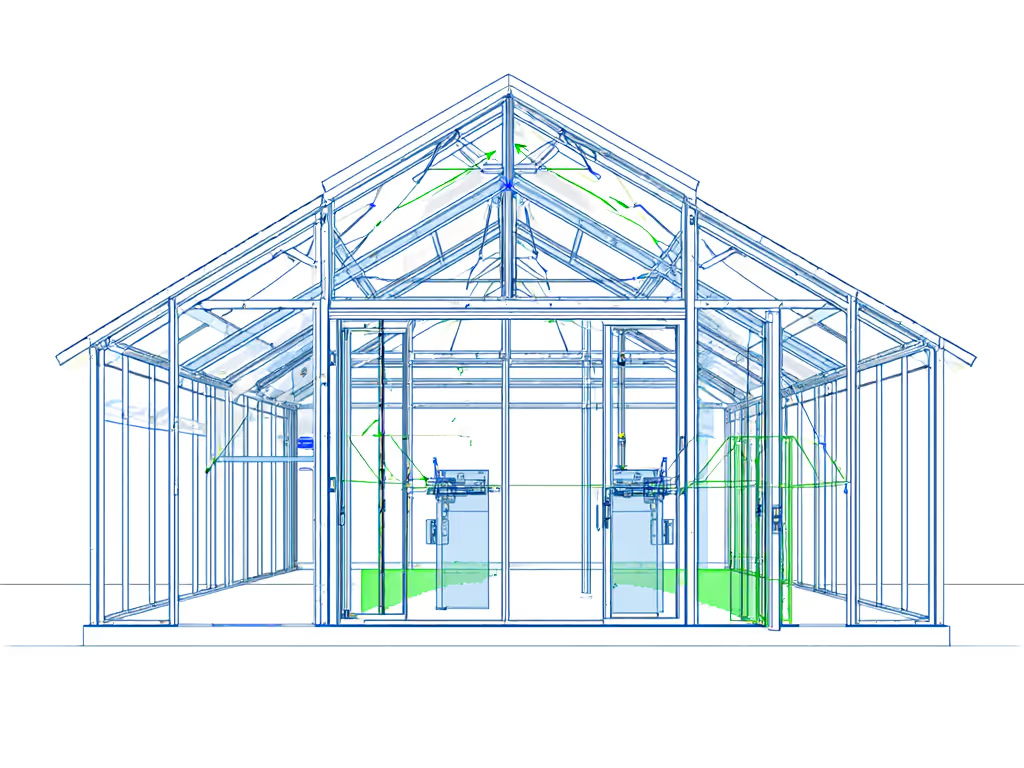
FAQ #7: How Does This Compare to Other Greenhouse Options?
Q: Is Snap & Grow worth the premium over cheaper alternatives?
A: Let's compare on the Four Seasons Score framework:
| Feature | Palram Snap & Grow | Bargain Film Greenhouse | High-End Aluminum | FSS Score |
|---|---|---|---|---|
| Wind Rating | 56 mph (verified) | 20-30 mph (unverified) | 90+ mph | 7.8/10 |
| Snow Load | 15.4 psf | 5 psf | 30+ psf | 6.2/10 |
| Thermal R-value | 1.5 | 0.8 | 2.5+ | 7.0/10 |
| Assembly Time | 8-12 hrs | 3-4 hrs | 20+ hrs | 8.5/10 |
| 5-Year Cost | $1,800 | $400 + $200/yr film | $5,000+ | 7.3/10 |
The Palram hits the sweet spot for moderate climates where assembly ease matters. But in extreme weather zones, it doesn't deliver true four-season performance. If you need an affordable small greenhouse kit that outperforms film alternatives but won't break the bank, it's a solid choice, if you're in a compatible climate zone.
Four Seasons Score Breakdown: Palram Snap & Grow
Structural Load: 6.5/10. Adequate for Zones 1-2 with proper anchoring, marginal for snowbelt Thermal Performance: 7.0/10. Good light transmission but insufficient winter insulation Assembly Reality: 8.5/10. SmartLock system works well with two people and proper tools
Overall FSS: 7.3/10. Solid choice for moderate climates, not for extreme weather
Final Verdict: Who Should (and Shouldn't) Buy This Greenhouse
Buy Palram Snap & Grow if:
- You're in Snow Load Zone 1 or Wind Zone 2 (check ASCE 7 maps)
- You need a 6-12 month growing season extension (not true year-round)
- Assembly ease is a priority over max thermal performance
- Your budget is $1,500-$3,000 for a 8x12-16' unit
Look elsewhere if:
- You experience regular 30+ psf snow loads or 70+ mph winds
- You want true winter growing without supplemental heat
- You need an attached greenhouse solution
- Your site has known wind tunnels or drainage issues
The Snap & Grow series delivers what it promises, if your climate aligns with its engineering limits. But as I learned watching that April blizzard test, structural integrity isn't about marketing claims. It's about how your specific site conditions meet documented load thresholds. Measure your microclimate's historical extremes first. Only then choose the kit that exceeds them by 20% margin.
Remember: Climate dictates design. No greenhouse, no matter how pretty, can overcome physics when the weather pushes past its verified limits. But within its design envelope, the Snap & Grow performs reliably, scores well on assembly, and beats film alternatives for longevity. Just don't mistake "moderate climate capable" for "four-season fortress."
For most suburban gardeners in Zones 5-7, this Palram greenhouse review concludes it's a smart investment, provided you accept its seasonal boundaries and invest in proper anchoring. Your local weather data, not product claims, should drive this decision.
Related Articles