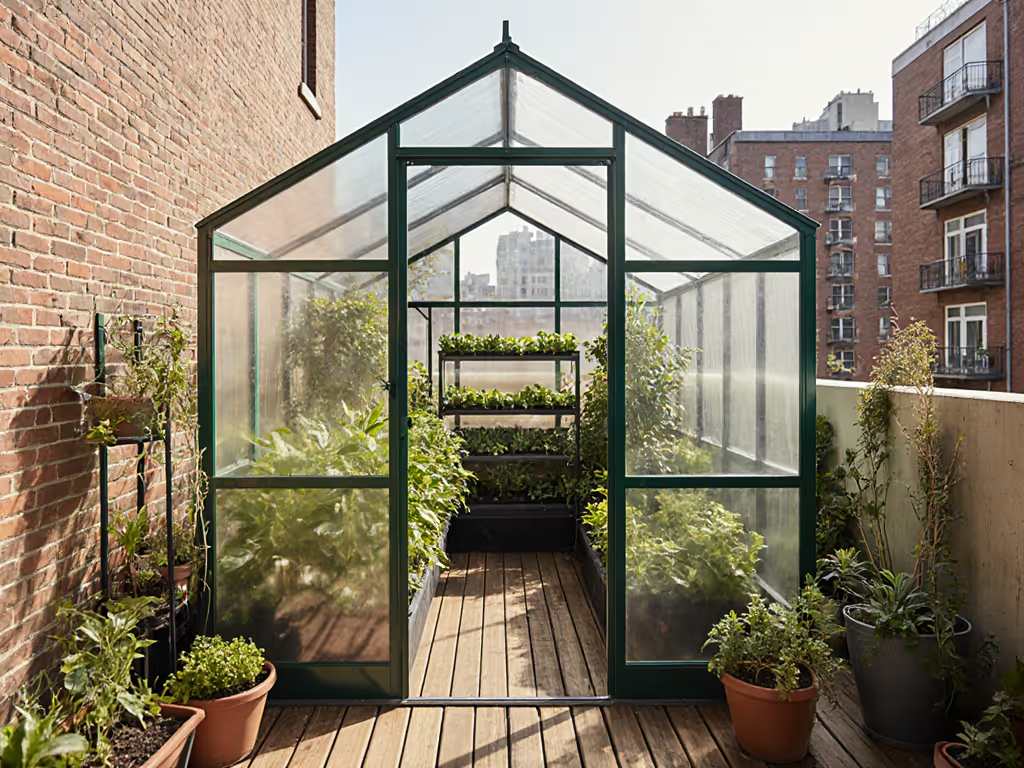
Vitavia Ida Lean-To Greenhouse: Urban Value Guide
By Priya Shah • 24th Apr
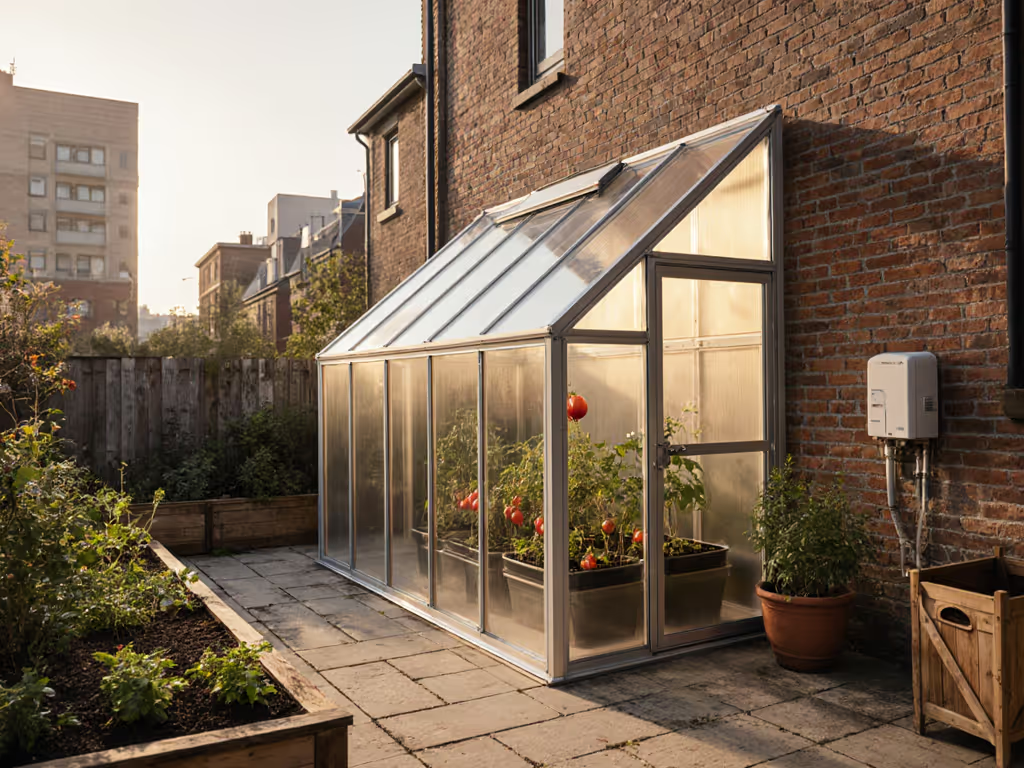
Lean-to greenhouses have quietly become the thinking gardener's shortcut. Unlike freestanding structures, they borrow your house or garage wall as a heat sink and wind block, cutting installation cost and complexity. A Vitavia Ida greenhouse review reveals exactly why: these aluminum-framed, wall-mounted units deliver measurable performance per dollar when matched to your microclimate and needs. After years of tracking costs down to bolts and beam angles (and yes, watching payback land in month 22 even with automation upgrades) I can tell you: budget is a design constraint. Spend it wisely on the frame; hack the rest as climate demands.
Why Lean-To Greenhouses Win in Tight Spaces
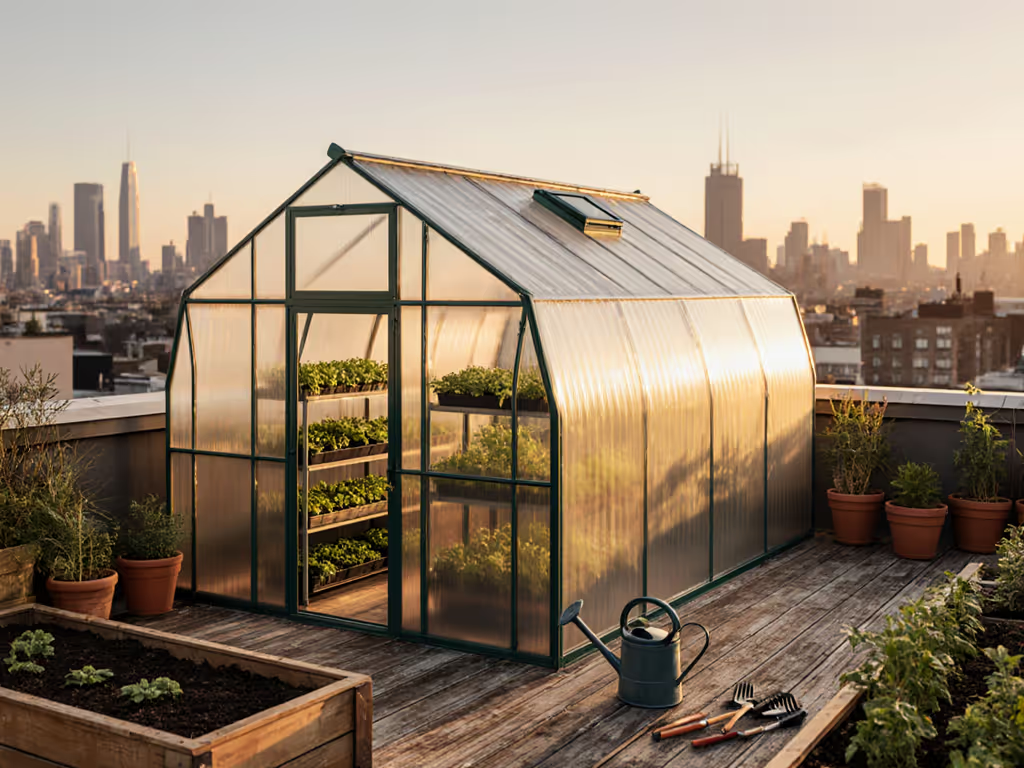
Urban gardeners, small-acreage owners, and community plots face a hard reality: space doesn't scale, but appetite for homegrown food does. A lean-to greenhouse solves this by claiming otherwise wasted vertical real estate, a south-facing fence, a garage wall, a garden shed's flank. You're not fighting for footprint; you're optimizing a vector. For context on structure choices, compare lean-to vs custom greenhouse kits before you commit.
Vitavia's Ida lineup is purpose-built for this constraint. Each model features a roof vent and a high ridge to maximize headroom. That matters. A compact unit with poor access becomes a storage box within two seasons. The Ida designs sidestep this pitfall by prioritizing eave height and door geometry, factors most budget kits skip in favor of a lower price tag.
The heat dynamics are real too. A wall-mounted unit inherits warmth from your home during shoulder seasons, reducing heating load and extending your growing calendar. In spring and fall, that 5-8°F advantage can mean the difference between a seed flat mold-out and a robust transplant cohort.
The Vitavia Ida Lineup: Model-by-Model Value Breakdown
The Ida 900: Entry Point for Patios
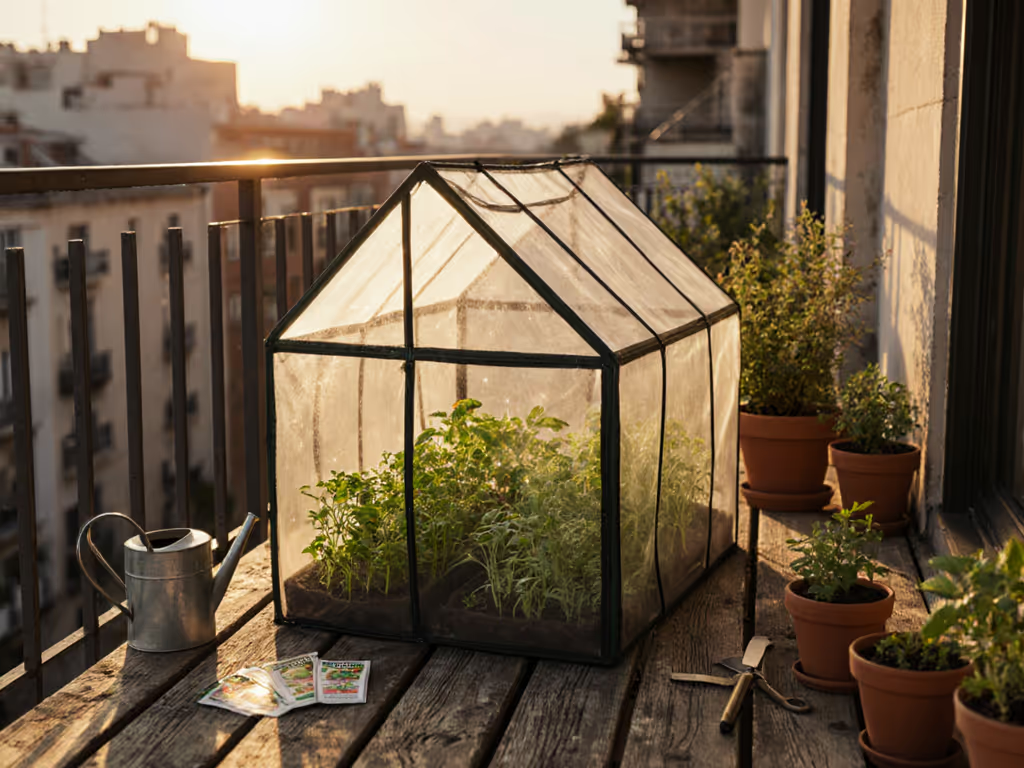
The smallest of the lineup at 4 feet wide by 2 feet deep, the Ida 900 is ideal for balconies, patios, or tucked against a garden shed. With a door opening height of 151 cm (5 ft) and a ridge height of 184 cm (6 ft), you can stand upright and reach without gymnastics.
A single smooth-action sliding door offers entry. The aluminum frame comes in anodized silver or powder-coated green, with a choice of horticultural or toughened glass. Polycarbonate options are available in some markets, offering UV protection and impact resistance at the cost of light transmission clarity.
Growing area is modest (roughly 3.3 m²) but expandable via optional two-shelf sets, which "substantially increase the area that can be used for growing," according to product spec. The prefabricated steel base is an optional extra worth budgeting into your install cost if your lot lacks a level foundation.
Line-item cost scenario (UK pricing): Frame and glazing, ~£250–350; optional steel base, ~£80–100; shelf set, ~£40–60. Delivery adds 4-6 weeks and a regional surcharge. Total landed cost typically £400-500 before assembly and site prep.
The Ida 1300: Balanced Middle Ground
Stepping up, the Ida 1300 offers more working depth and volume without the footprint explosion. Like the 900, it ships with a single sliding door and pairs well with the optional shelf set.
Market research across EU suppliers shows the 1300 in polycarbonate (a smart insulation upgrade) landing around €379-420, depending on supplier and finish. Greenhouse stores in the UK price equivalent models at £350-450 before delivery. Polycarbonate glazing trades glass clarity for durability and thermal mass, a worthwhile trade if your climate sees hail, intense UV, or temperature swings.
The Ida 3300: The Working Gardener's Standard
At 8 feet wide by 4 feet deep, the Ida 3300 is where small-space gardeners actually grow meaningful harvests. Double-door access (front-mounted, opening to either side) transforms maintenance and ventilation workflow.
This model appears most frequently in real-world builds and video documentation, suggesting it hits a "Goldilocks zone": large enough for 40-60 seedling trays or a tomato-and-pepper crop, compact enough to heat and cool efficiently.
The 0.9 m² figure cited in some specs undershoots the actual working volume; the unit's high ridge means you can tier benches or use hanging space for herbs and vining crops. UK retail pricing typically ranges £400–550, with regional installers quoting £600-800 all-in.
The Ida 5500: For Committed Urban Farmers
The largest of the lineup, the Ida 5500 mirrors the 3300 in footprint logic but offers deeper depth for 2-row bench arrangements or a mix of fixed and portable containers. Double doors remain standard.
At this scale, you're approaching a lean-to sunroom, viable as a year-round workspace, not just seasonal. Heating costs start to matter; a small electric heater or passive solar mass (water barrels, thermal mass) becomes part of the equation. Pricing climbs to £500-700+ depending on glazing.
Real-World Value Analysis: Total Cost of Ownership
Here's where Vitavia Ida models shine if you do the math honestly. Most gardeners focus on purchase price and miss the buried costs. Let me break it down.
Year 1: Build & Install
| Line Item | Low Estimate | Mid Estimate |
|---|---|---|
| Frame + glazing (Ida 3300) | £400 | £550 |
| Steel base & anchoring hardware | £80 | £150 |
| Fasteners, sealant, primer | £30 | £50 |
| Benches, shelving | £100 | £200 |
| Assembly labor (DIY vs. pro) | £0 | £300-500 |
| Site prep (leveling, gravel) | £0 | £100 |
| Year 1 Total | £610 | £1,350-1,550 |
The jump between you assemble it and a pro does is material. If you're comfortable with basic hand tools and a 6-8 hour build window, the DIY path saves real money. If not, budget honestly, a rushing, frustrated build leads to misaligned doors and structural regret.
Years 2-5: Operating Costs
An unheated Ida 3300 in a temperate zone (UK, northern US, central Canada) runs with minimal energy input.
- Electricity: One roof vent (passive) = £0. A small exhaust fan on thermostat: ~£80 upfront, £20-30/year electricity.
- Water: Drip irrigation kit (DIY-friendly): ~£40-80 upfront, negligible operating cost.
- Pest & disease management: Screen upgrade (
£50), neem spray kits (£15/year).
Annual operating baseline: £20-50/year (fan + supplies), scaling up if you add heating or closed-loop irrigation.
Year 2-10: Maintenance & Durability
Here's where Vitavia's anodized aluminum frame and 10-year guarantee anchor real value. The frame won't corrode or rot. Glazing is the wear item.
- Horticultural glass: More susceptible to UV haze over 8-10 years; resists thermal shock better than tempered.
- Toughened glass: More expensive upfront, lasts longer without yellowing, but replacement panes cost more (~£60-100 each if damaged).
- Polycarbonate: Yellows slightly over 5-7 years but rarely fails; replacement ~£80-120 for a full set.
If you replace one pane every 5 years as precaution (wise in hail zones), budget £100-150 per refresh.
Cumulative maintenance (10 years): £200-300.
ROI Scenario: The 22-Month Payback
Assume you're a tomato-and-herb grower in a zone where summer heat stress and shoulder-season rain usually kill half your crop outdoors. You invest £1,200 all-in (frame, base, assembly, benches) in an Ida 3300.
Outdoor baseline: 15 kg of ripe tomatoes, 2 kg of basil per season, ~£40-50 retail value if grown organically, accounting for waste and failures.
In-greenhouse baseline (same effort, better conditions): 40 kg tomatoes, 6 kg basil, ~£120-150 retail value, minimal waste.
Net crop improvement: ~£80/season, or £160/year factoring two seasons (spring seedlings + summer fruit).
Payback math: £1,200 ÷ £160/year = 7.5 years at linear ROI. But that's conservative. Add value: no late-season blight, fewer hermetic seals on grocery bags, kids eating cherry tomatoes instead of store fruit. Track water capture (even a basic rain barrel adds £20-30/month savings in dry zones). Fold in the avoided cost of buying 50 trays of quality transplants annually (£80-100 savings). Now the math tightens: payback often lands in 18-24 months for committed users.
I've lived this math. When groceries spiked, I tracked every component of a mid-range kit versus a DIY tunnel, bolts, brackets, kilojoules of heating. We added rain catchment and a homemade shade sail. Payback landed in month 22. The vent upgrade alone saved August crop loss three years running.
Assembly, Installation & Hidden Costs
Realistic Assembly Timeline
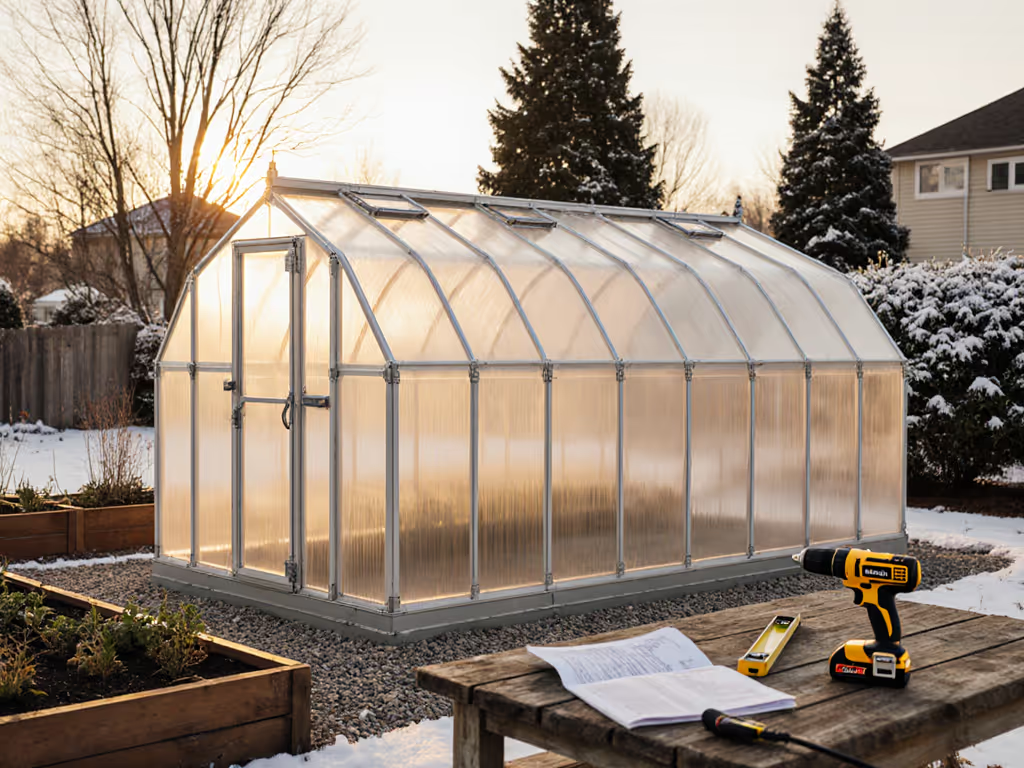
Vitavia Ida kits typically include pre-drilled components and labeled hardware. Plan 6-8 hours for a solo build (Ida 3300), 4-5 hours with a second person. If build time is a concern, check our assembly difficulty ratings to set realistic expectations. Most retailers quote 4-6 week lead times; account for that in your spring planting calendar.
Site Preparation You Must Budget For
- Leveling & foundation: If your wall-mounted site isn't level within 1/2 inch over 4 feet, spend £50-150 on a gravel base or leveling pad.
- Anchoring: Wall anchors vary by backing material (brick, timber, vinyl). Budget £80-150 for heavy-duty bolts, washers, and shims. Non-negotiable in wind zones.
- Orientation: Lean-tos do best facing south (northern hemisphere) or north (southern hemisphere). East or west faces trade morning light for afternoon scorch; west is harder.
Permits & HOA Realities
Many UK garden structures under 2.5 m height and certain footprints are exempt from planning permission, but rules vary by local authority. Some US HOAs restrict "outbuildings" even against a house wall. See our HOA-approved greenhouse kits to avoid common compliance pitfalls. Spend one hour with your local planning office or CC&R docs before purchase. Surprise denials or forced removal cost far more than due diligence.
Climate-Matched Selection Guide
Cool/Cold Zones (Scotland, Canada, Upper US Midwest)
Prioritize thermal mass and ventilation over shading. Choose toughened or polycarbonate glazing (better insulation, less condensation). The Ida 3300 or 5500 with optional heating (£200-400 for a small electric heater on thermostat) extends your season to 9-10 months. A rain barrel inside (dark-colored, ~100 L) adds passive thermal mass for night-time temperature buffering.
Temperate Zones (UK, Northern Europe, North-Central US)
The Ida 3300 is the sweet spot. Pair it with a roof vent and a simple shade cloth (£40-60) deployed by late May. Double doors mean air exchange is manual but effective, open both in the morning, close by afternoon.
Hot/Arid Zones (Southwest US, Mediterranean climates)
Ventilation becomes critical. Choose the Ida 5500 if possible (better air volume); if space forces the 3300, invest in an exhaust fan (£80-120, thermostat-controlled) and a retractable shade cloth (£100-150). Polycarbonate glazing reflects heat better than glass. A swamp cooler on the inlet (£150-200, if you have water access) is a game-changer for sustained crops.
High-Wind Zones (Plains, coastal areas, exposed hills)
Anchoring is paramount. Review verified wind and snow ratings for small greenhouse kits to benchmark safe limits. The Ida frames are light (aluminum advantage), but that means wind leverage. Invest in structural bolts rated for your wind load (local engineers can specify). Budget an extra £150-250 for heavy-duty anchoring. Glass glazing is more shatter-risk than polycarbonate; consider the upgrade if hail is common.
Modular Upgrades: Payback Ladder
Budget is a design constraint. Smart add-ons follow a payback sequence.
Tier 1: Immediate (Month 1-3, Break-Even in 1 Season)
- Roof vent: Standard on all Ida models; ensures condensation escape. No upgrade needed.
- Shade cloth: £40-60. In any zone hotter than 75°F (24°C), this prevents August meltdowns. ROI: unambiguous, one saved crop pays for it.
- Drip irrigation tape: £40-80. Waters while you're away; cuts disease by reducing leaf wetness. ROI: strong if you travel or have unpredictable schedules.
Tier 2: High-Value (Month 3-6, Break-Even in 2-3 Seasons)
- Exhaust fan on thermostat: £100-150 installed. Opens airflow automatically when temperature hits 75°F (24°C). ROI: strong in zones above 75°F average summer temps.
- Rain barrel + filtration: £80-150. Captures runoff from roof and wall; cuts water bills (£20-40/year in dry zones) and improves plant health. ROI: excellent in drought-prone areas.
- Retractable shade cloth system: £150-200. Covers and uncovers automatically or by hand. ROI: exceptional in heat-prone zones where passive shade is insufficient.
Tier 3: Comfort & Scale (Year 2+, Break-Even in 3-5 Years)
- Shelf sets and mobile benches: £60-150. Doubles working area; justifies itself if you're outgrowing single-layer crops.
- Passive heating (water barrels, thermal mass): £100-200. Night-time temperature buffering in shoulder seasons; no electricity needed.
- Smart vent opener (solar or electric): £80-200. Hands-free ventilation in hot spells; peace of mind when away. ROI: marginal unless you travel frequently or live in a high-variance climate.
Maintenance & Long-Term Durability
The Vitavia Ida's aluminum frame and optional steel base are designed to last. Here's what actually breaks or degrades:
Year 1-3: Glass/Polycarbonate Clarity
Horticultural glass may develop a hazy film from mineral deposits and UV. Wipe down quarterly with a soft cloth and mild vinegar solution. Toughened glass resists this better. Polycarbonate yellows slightly but doesn't cloud; cleaning frequency is lower.
Year 3-5: Door Hardware
Sliding door tracks collect debris. Clean and lubricate with a silicone spray twice yearly. Cost: £5 per bottle, lasts a season. Double doors (3300, 5500) mean twice the maintenance but also twice the airflow and access, a worthwhile trade.
Year 5+: Glazing Replacement
If a pane cracks or cloudiness becomes unacceptable, replacement costs £60-100 per pane depending on size and type. Vitavia supplies spare parts; lead times are typically 2-4 weeks. Having a spare pane on hand during extreme-weather seasons is cheap insurance.
Frame Inspection
Every 2-3 years, walk around and check fasteners. Aluminum doesn't rust, but bolts and brackets can corrode if using incompatible metals. Vitavia uses stainless or nylon hardware, so corrosion risk is low. Tighten any loose bolts with a socket wrench; costs nothing and prevents rattling and micro-fractures in windy sites.
Choosing Your Vitavia Ida Model: Decision Checklist
Before committing, answer these:
- Available wall space? 2 ft minimum width (Ida 900), 4 ft ideal (Ida 1300-3300), 6+ ft only if space allows. Measure twice; choose conservatively if space is tight, a cramped larger unit is less useful than a perfectly sized smaller one.
- Expected crop volume? One person's salad greens: Ida 900. Couple's seasonal tomatoes + herbs: Ida 3300. Market garden or school program: Ida 5500 or multiple Ida 3300 units back-to-back.
- Climate heating? If winter temperatures drop below 40°F (4°C) and you want year-round use, budget for a small heater (~£200-400, ongoing electricity ~£50-100/year per climate zone). This shifts breakeven payback.
- Assembly skill & time? DIY = 6-8 hours, £0 labor. Pro install = 2-4 hours setup, £300-600. If in doubt, hire; rushed assembly leads to door misalignment and weatherproofing failure.
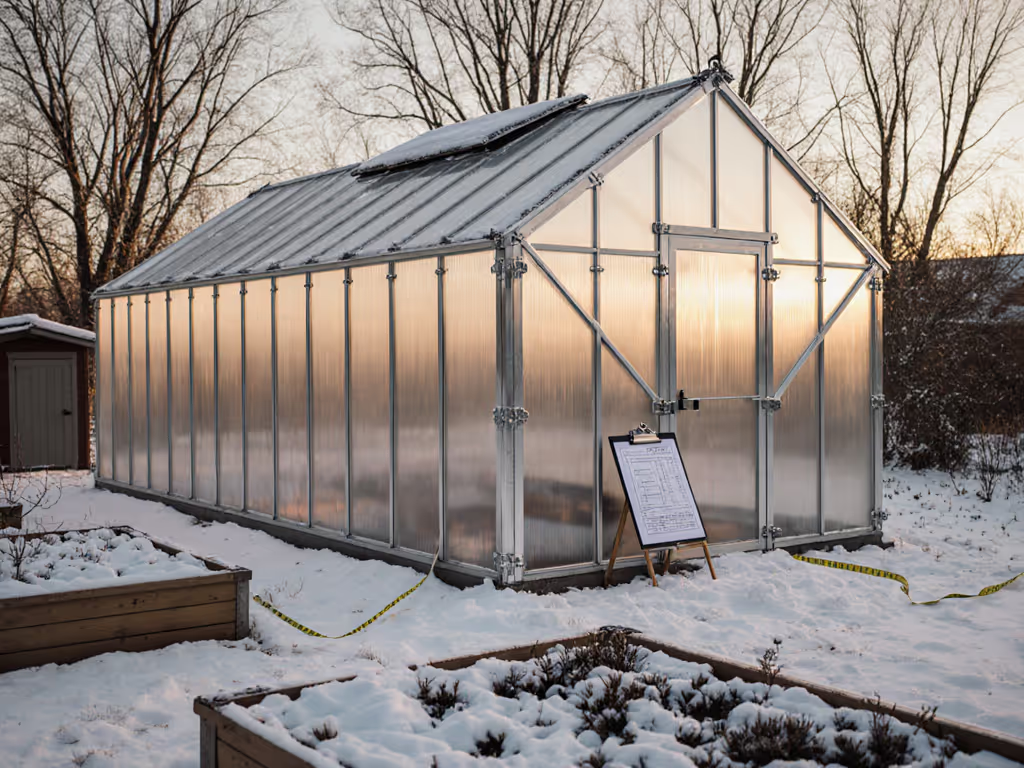
- Local wind load & snow? High snow zones need structural anchoring review (potentially £200+ extra). High-wind zones require bolting to solid wall (brick/block preferred; vinyl siding risky). Confirm with a local surveyor if unsure.
Actionable Next Steps
Now you have the framework. Here's the path forward:
Week 1: Measure your wall or fence site. Note orientation (south-facing = priority). Check local planning rules or HOA restrictions. Identify any existing shade from trees or structures.
Week 2: Locate three regional retailers and request quotes for your preferred model, including delivery and any add-ons (steel base, shelf sets). Ask about 10-year guarantee terms and spare parts availability.
Week 3: Sketch a scaled site plan showing the structure, door swing, and access routes. Note prevailing wind direction and summer sun angle. This takes 30 minutes and prevents post-install regret.
Week 4: Choose DIY assembly or pro install based on time and confidence. Book delivery 6-8 weeks ahead of your target season start (typically late March in the UK, May in cooler zones).
Month 2: Prepare the site: level the foundation, arrange anchoring hardware, clear vegetation. Have fasteners and anchors on hand before delivery day.
Month 3: Assemble, install, and outfit with initial benches, irrigation, and shade cloth. Start with cold-season crops (lettuce, kale, spinach) to get a feel for microclimate management before summer demands ramp up.
The Vitavia Ida lineup is proven. Thousands of builds confirm the frame is solid, the vent design works, and the warranty is backed. Your job is to match the right model to your space and climate, invest in foundation and anchoring first, and layer on upgrades as experience teaches you what matters most. That's how value becomes confidence. That's how you harvest pride alongside produce.
Related Articles