Culinary Herb Greenhouse: Select & Optimize
By Hana Al-Khalil • 15th Feb
A culinary herb greenhouse isn't just a glass box. It is a climate threshold between ambition and reality. Whether you're chasing year-round basil, growing high-value crop greenhouse specimens like saffron and vanilla, or simply extending the season for the herbs your kitchen craves, the space itself has to work with you, not against you. That starts long before you assemble a frame.
I learned this the hard way. I inherited a hoop house that felt like a pizza oven by mid-July. Tomatoes scorched by noon, and I hated stepping inside. One afternoon, I sat with a coffee and actually mapped the sun angles, checked where air moved (or didn't), and realized the structure had no passive strategy at all. After plotting new vent positions, adding a white shade cloth, and tucking water barrels along the north wall, the interior temperature dropped ten degrees (without a single fan running). My elderly neighbor started coming over at midday to prune in there. That taught me something essential: comfort grows plants, and keeps you tending through storms.
Here's how to design a culinary herb greenhouse and premium herb growing environment that will draw you back, season after season.
Step 1: Define Your Crop Purpose
Before you buy a frame, decide what you're actually growing. Generic herbs - basil, parsley, chives - are forgiving and fit any condition. But if you're serious about premium herb growing or niche crops like saffron cultivation greenhouse setups or vanilla growing conditions, your climate demands become specific.
Ask yourself:
- Are you harvesting fresh basil weekly for your kitchen, or trialing three vanilla growing conditions to see if you can make it work?
- Do you want a soft continuous supply, or are you experimenting with high-margin crops for a small market stall?
- Are you growing perennials (rosemary, thyme, bay) or cycling annuals (basil, cilantro, dill) with cover crops in winter?
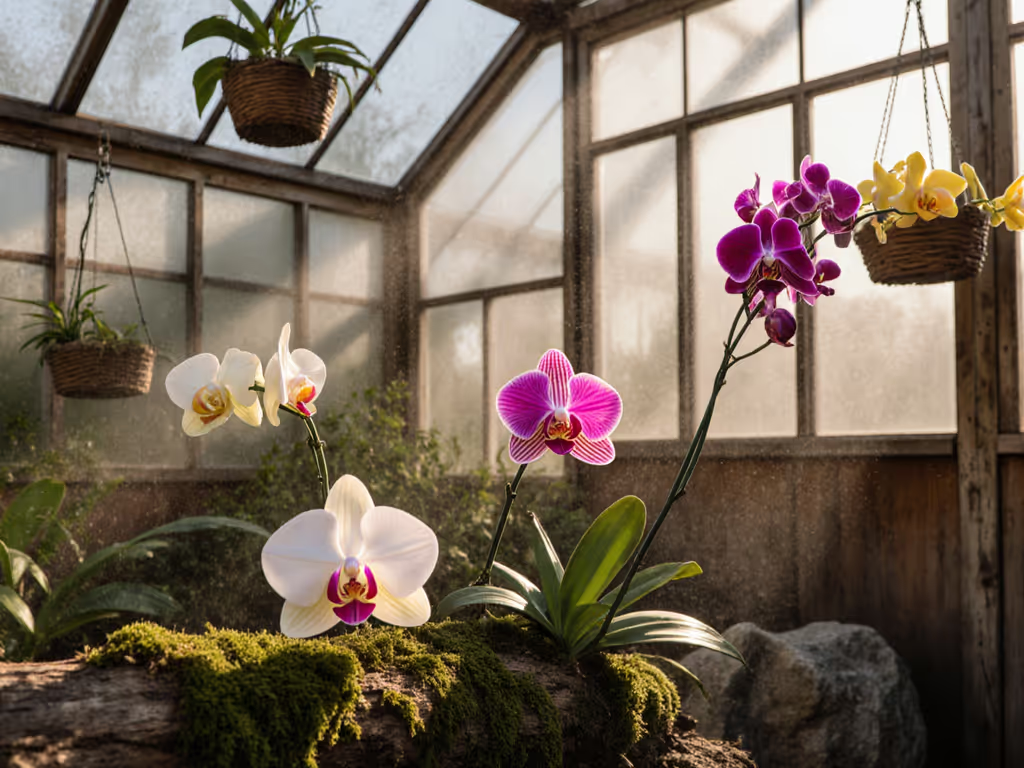
Your answer shapes the thermal mass you need, the ventilation strategy, and how much shade to plan for. A basil paradise needs aggressive heat in spring and cooling in summer. A saffron cultivation greenhouse requires precise drying space and humidity control. Vanilla growing conditions demand humidity and filtered light that differ entirely from Mediterranean herbs.
Write this down. It's your north star for every decision ahead.
Step 2: Assess Your Site & Microclimate
Location is non-negotiable. The best greenhouse sits in full sun for maximum passive heating in cold months, but not in a hot pocket where afternoon rays pound unbroken. Use our winter sun path positioning guide to fine-tune orientation by latitude. Observe your lot through a full day if you can.
- Sun angle: Map where shade falls at 9 a.m., noon, and 3 p.m. in both summer and winter. (Winter sun sits lower; summer sun higher. This matters.) If trees shade you by June, that's not a bug, it's a design feature for cooling if you plan for it.
- Wind corridors: Feel where air funnels. Exposed ridges and open plains create stress; sheltered sites reduce ventilation needs but can trap humidity.
- Water: Check for standing water, runoff paths, or compacted soil after heavy rain. Poor drainage kills roots faster than drought.
- Access: Can you easily reach the structure carrying flats, tools, and water? A 200-meter walk uphill will feel longer on day 50 of winter harvests.
Sketch your lot on graph paper. Mark north, shade patterns, wind direction, water sources, and the distance from your kitchen door. A space easily accessible to where you cook is never clearer than when it's raining and you want fresh herbs for dinner.
Step 3: Choose a Passive Climate Design
This is where comfort becomes a yield multiplier. Passive means using gravity, thermal mass, vents, and orientation instead of fans and heaters running 24/7.
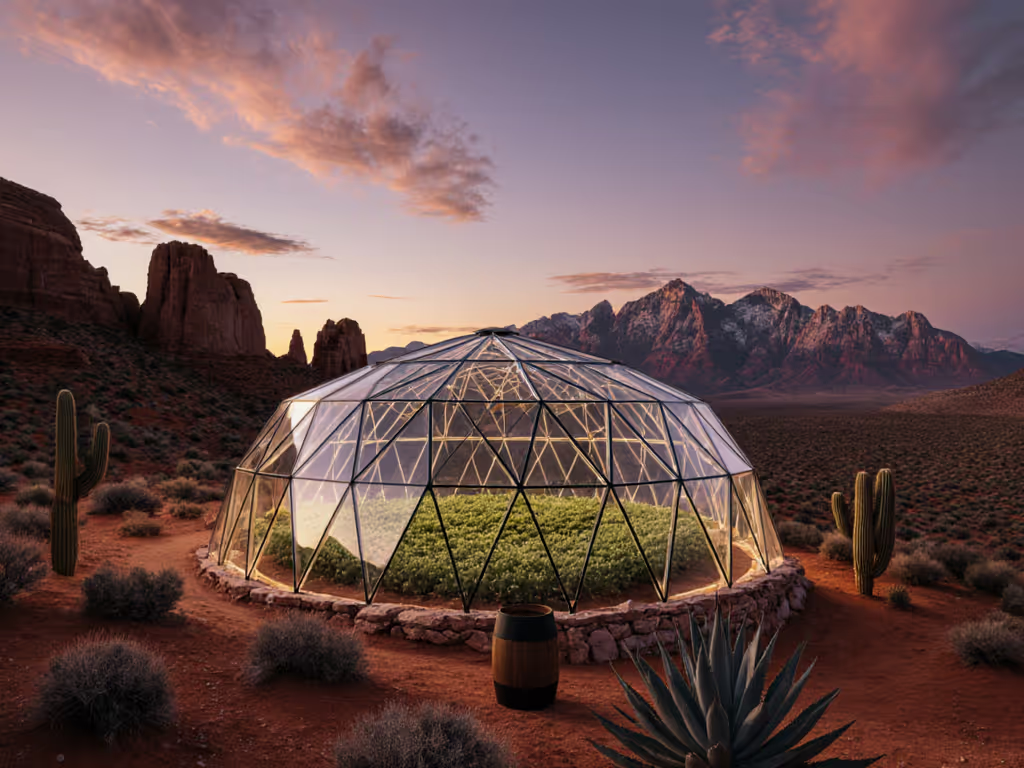
Orientation: Face your greenhouse east-west (long axis pointing east-west) in cold climates, so the long south wall captures maximum winter sun. In hot climates, try north-south to reduce brutal afternoon exposure.
Thermal mass: Water barrels, stone, or concrete along the north interior wall absorb heat by day and release it at night, smoothing temperature swings. In a sunny 50-square-foot greenhouse, three 55-gallon barrels can buffer 10-15 degrees Fahrenheit over 12 hours. They're not glamorous, but they work. For passive heating details, see zero-electricity thermal mass solutions.
Vents and louvers: Plan for at least one roof vent (or two, if over 100 square feet) that opens when interior heat rises above 75°F. Paired with a lower side vent on the opposite wall, you create a thermosiphon: air rises out the top, and draws cool air in the bottom, all without electricity. Manual vents are reliable; automatic vent openers (wax-cylinder or solar) cost $40-$80 and repay themselves in crop protection during heat waves.
Shading: In summer, white shade cloth (30-50% density) over the roof or on the south wall can drop interior temps 8-12 degrees while preserving enough light for herbs. Roll it up on cool mornings; close it by noon in June. It's tedious, but it saves plants and saves you from abandoning the space mid-season.
Step 4: Plan Your Interior Layout
A well-designed layout means you spend energy on plants, not searching for things or twisting your back.
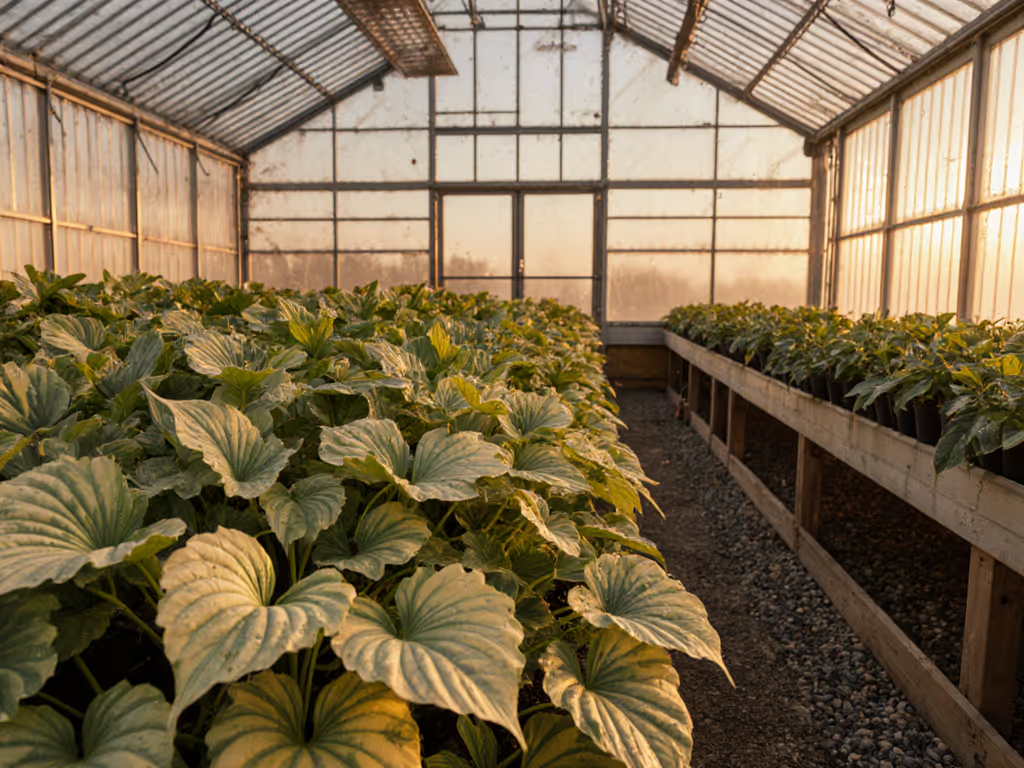
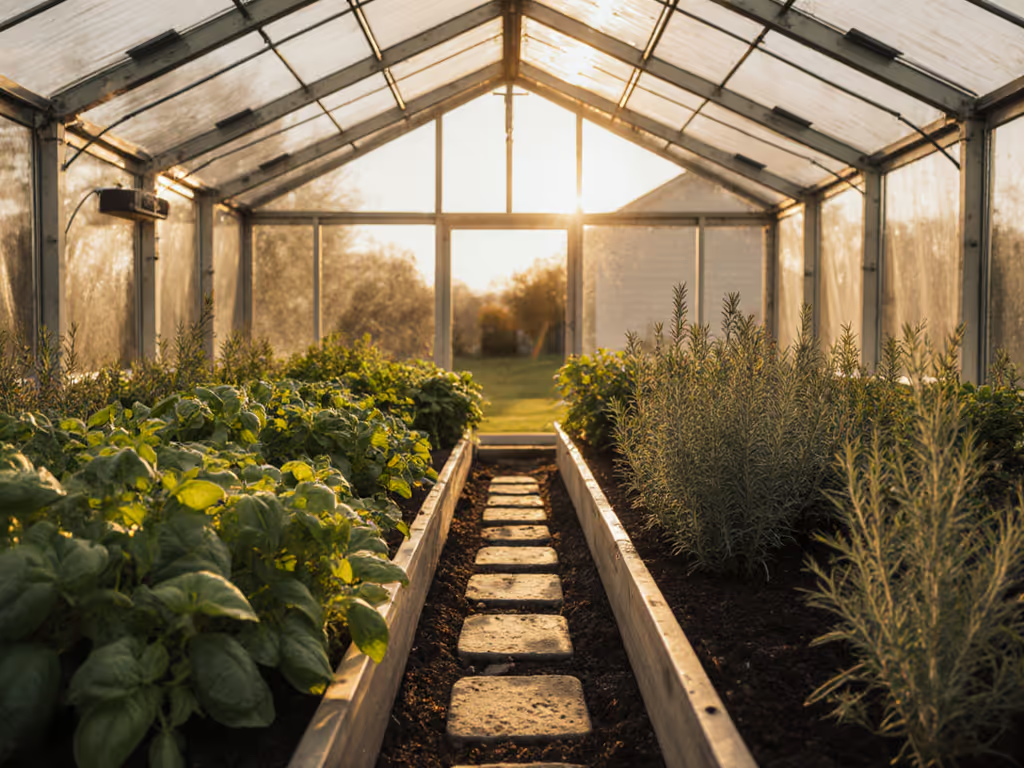
Consider layout sketches in words: Divide your space into zones. Perennial herbs (rosemary, bay, oregano, thyme) belong in a permanent bed or large pots along the north or eastern wall, where they won't shade fast-growing annuals. Annual herbs (basil, cilantro, dill, parsley) live in raised beds or containers down the center or south side, where light is strongest.
Pathways should be at least 24 inches wide (wide enough for a cart or kneeling). Use stepping stones or raised, hardened ground to prevent tracking mud. Place your tallest plants (fennel, bay) at the north end so they don't shade shorter plants.
For accessibility, keep frequently harvested herbs at waist to eye level. Chives, basil, and parsley at 24–36 inches from the ground save your knees and make daily picking a pleasure, not a chore. If you're older or managing mobility concerns, even a 6-inch raised bed makes a difference.
Step 5: Ventilation, Shading & Humidity Control
Most culinary herb greenhouse failures come from poor airflow and condensation, not cold.
Aim for at least one complete air exchange per hour on warm days. If your greenhouse is 200 cubic feet, you need vents totaling 1/6th of your floor area (so roughly 33 square feet of vent space). That sounds like a lot, but one roof vent (16 sq. ft.) plus two side vents (8-10 sq. ft. each) does the job. If you expect extreme heat, compare ventilation kits tested for heatwaves.
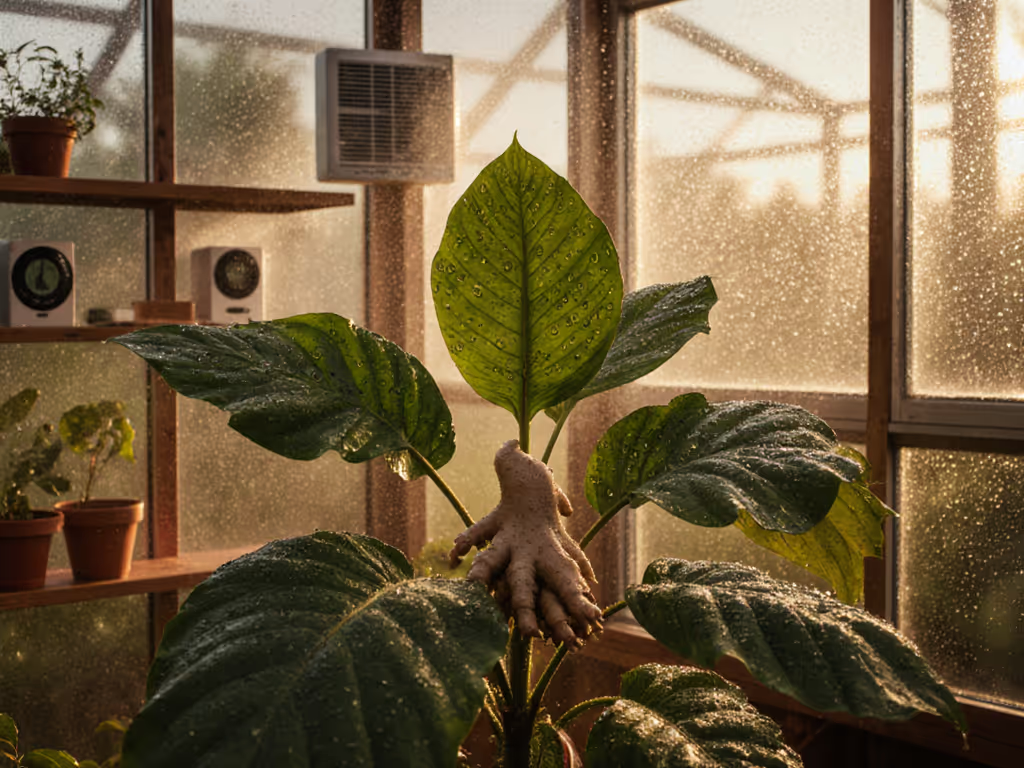
For saffron cultivation greenhouse or other humid-sensitive crops, monitor leaf wetness. Wet leaves at dawn invite mildew. Run fans (small circulation fans, 12-20 watts) at sunrise to dry foliage and keep humidity below 80% during growing season.
Step 6: Water, Nutrients & Support Systems
Herbs are low-maintenance, but a reliable water source beats hauling buckets. A soaker hose or drip line along beds keeps soil moist (not soggy) and saves 30% of water vs. overhead spray. Herbs prefer well-drained, rich soil: 50% compost, 50% perlite or sand is a good ratio.
For premium herb growing, consider a small rain barrel (50–100 gallons) outside the greenhouse, fed by gutter runoff. See our rainwater harvesting greenhouse guide for sizing and filtration tips. Passive gravity feed to a soaker hose is free and resilient.
The Long View
Building a culinary herb greenhouse that calls you back isn't magic, it is intention. You're designing for the person you are in January when it's 20°F outside, and you want snipped chives for your eggs. You're planning for the person who, on a 95°F day, won't abandon a space that's been designed to feel like a sanctuary instead of a sauna.
Take your time mapping sun angles, feeling the wind, and imagining yourself moving through the space at each season. The physical greenhouse will be easier to build than the habit of tending it, so make tending easy. Comfort is a yield multiplier, and the best crop is the one you actually harvest.
Start with one clear purpose, a site assessment sketch, and a commitment to passive design. From there, the details fall into place. Your kitchen will thank you.
Related Articles