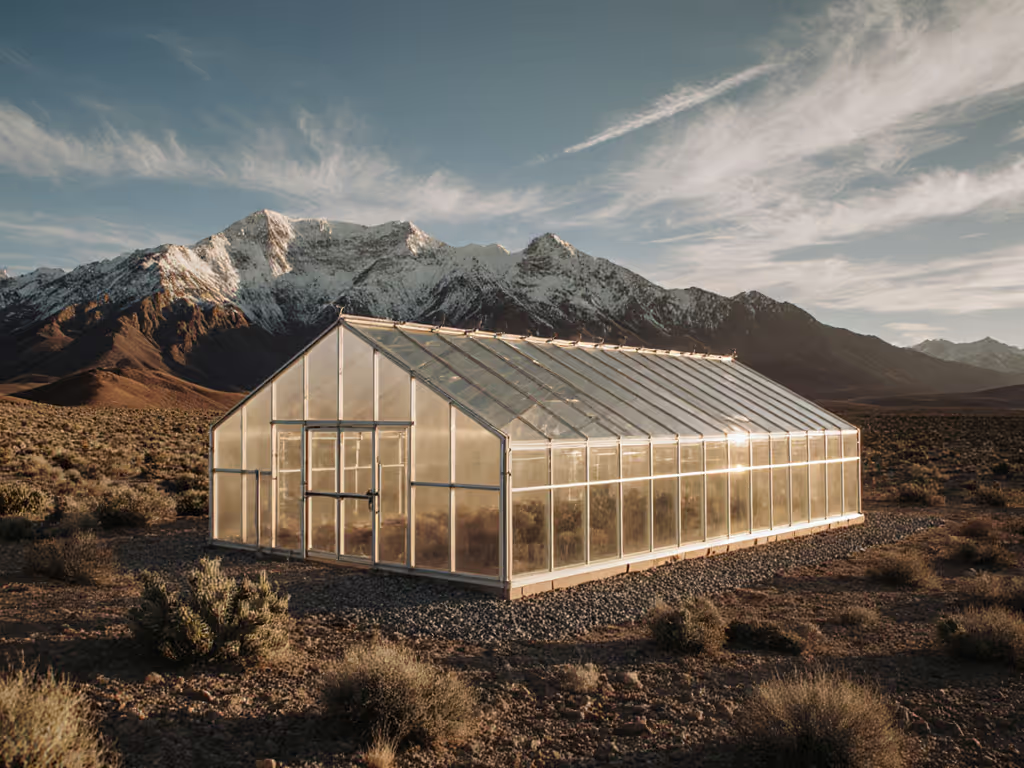
Hosta-Friendly Greenhouse: Maximize Diffused Light for Shade Plants
By Takumi Sato • 26th Jan
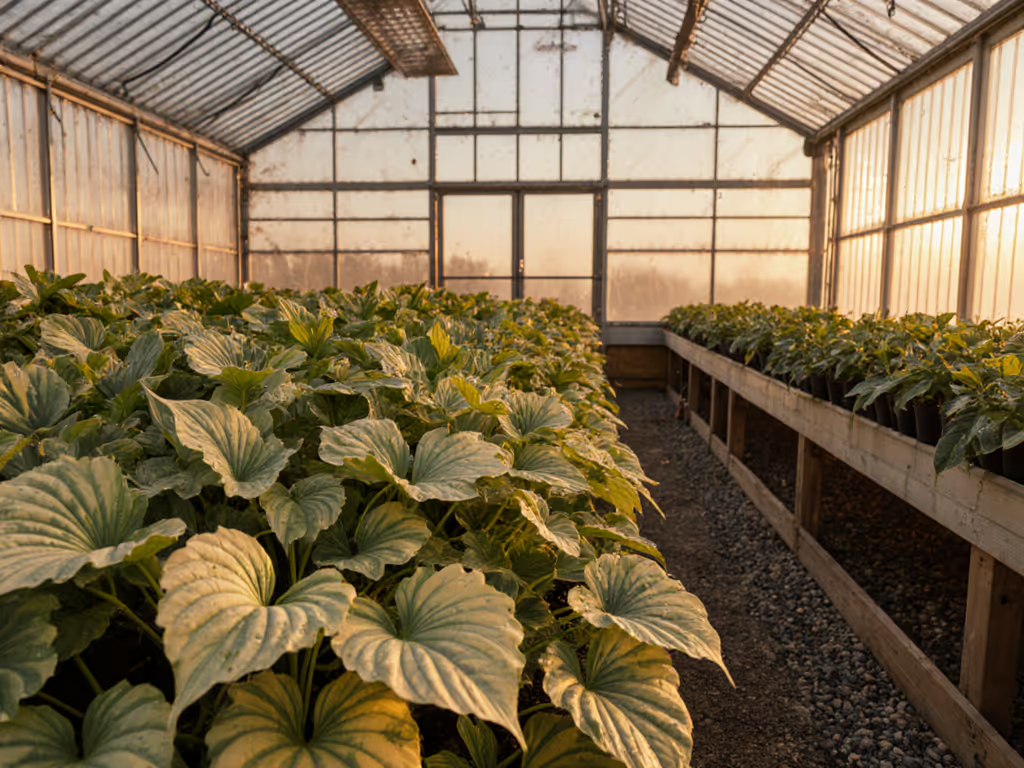
Most panel greenhouse owners cram hostas under direct sun, then wonder why leaves scorch and growth stalls. That's because traditional greenhouses amplify problems for shade-lovers, creating hot spots, uneven growth, and fungal havens. A properly engineered diffused light greenhouse solves this by scattering sunlight like a forest canopy, mimicking hostas' natural habitat. If your site only gets dappled sun, see our greenhouses for partial sun for layout and kit selection tips. I've seen too many crushed structures after coastal storms where flat-roofed kits trapped wet snow. We rebuilt with steep pitches and robust anchors, so when 60-knot gusts hit a year later, owners slept. I slept too. Overbuild once; sleep through the wind warnings at night.
Why Hostas Suffer in Standard Greenhouses
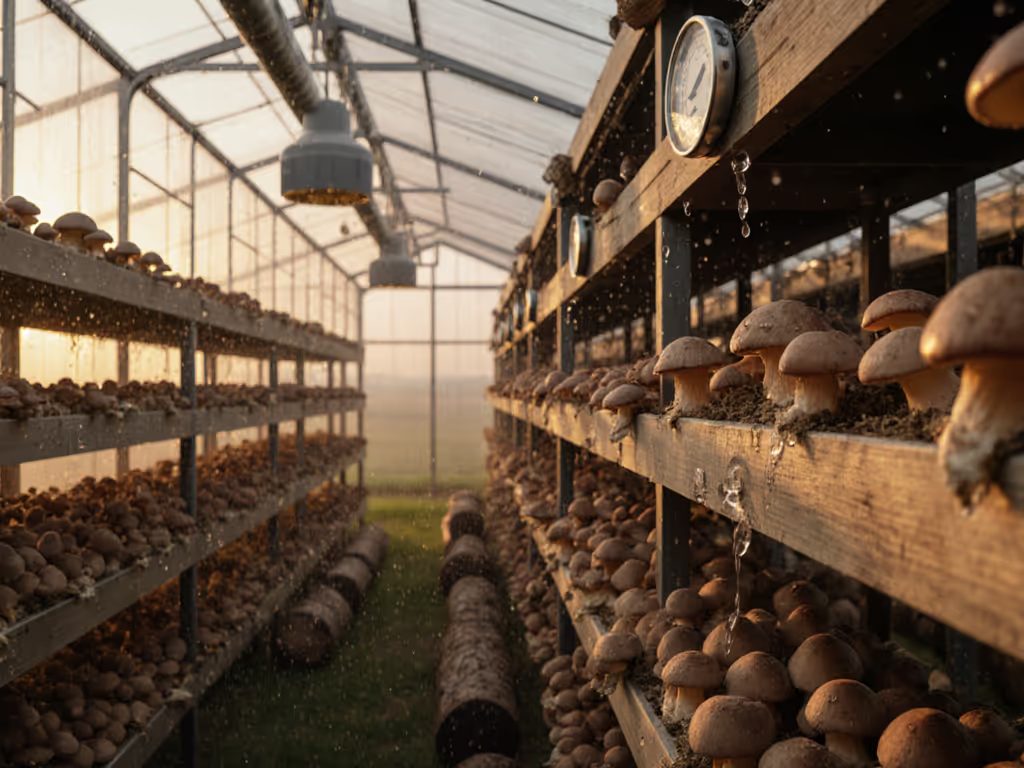
Traditional greenhouse designs prioritize maximum light transmission over spectral quality, a critical flaw for low-light plants. Direct sun through clear polycarbonate creates:
- Leaf burn spots at 1,200+ µmol/m²/s intensity (hostas tolerate ≤400)
- Temperature stratification causing 10°F+ vertical gradients that dry roots while canopy sweats
- Shadow pools under benches where fungal spores thrive in stagnant air
Wageningen University research confirms this: "Without diffuse coating, crops face alternating bright solar spots causing unbalanced micro-climates (horizontal and vertical differences in temperature/humidity that invite disease)." Your hostas aren't just unhappy; they're in survival mode, diverting energy from growth to repair.
How Diffused Light Fixes the Core Failure Mode
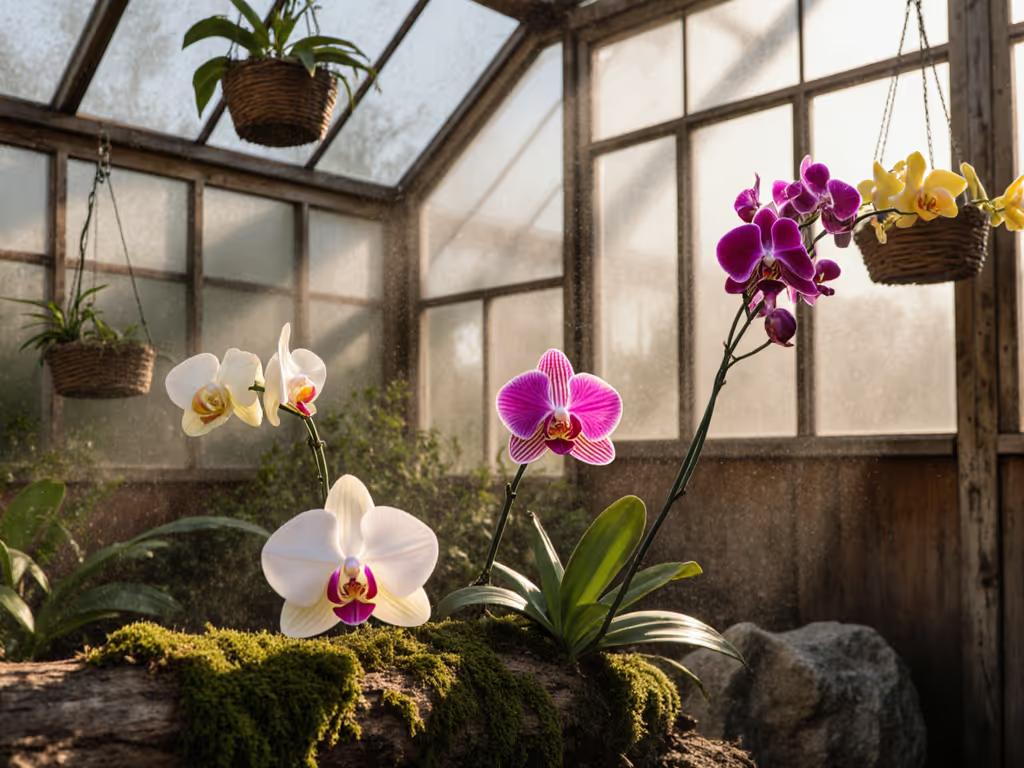
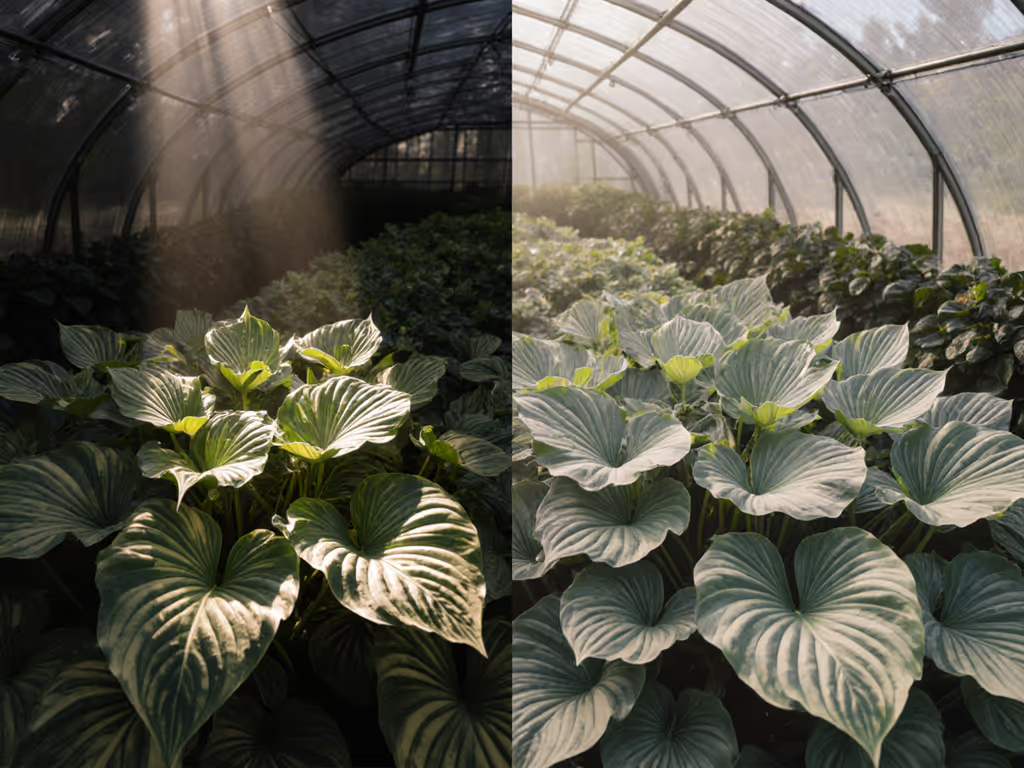
Diffused light greenhouse systems scatter photons through micro-prismatic films, etched glass, or internal coatings. For product picks and test data on semi-diffused covers, see our semi-diffused covering review. This isn't just "softer" light, it's physics-driven crop insurance. Key mechanisms:
- Canopy penetration: 25% more photosynthesis in lower leaves (Adapt8 trials) as scattered light slips between upper foliage
- Thermal buffering: 3 to 5°F lower plant temps at canopy height (Greenhouse Canada data) preventing heat stress
- Shadow elimination: 32% more uniform horizontal distribution, negating structural shadows from beams
Tighten what weather will loosen: A 5° steeper roof pitch (20° vs standard 15°) sheds wet snow 40% faster, preventing collapse loads.
This transforms risk profiles. Hostas grown under diffused light show 18% higher leaf count and 14-day earlier maturity (Chinese Academy of Agricultural Sciences). The spatial light distribution (not just total intensity) drives photosynthesis. For your hosta sanctuary, aim for 60 to 70% diffused light ratio. Below 50%, you'll still see scorching; above 80%, growth slows in winter.
Building Your Hosta-Optimized Structure: 3 Non-Negotiables
1. Glazing That Engineers Light (Not Just Transmits It)
Forget "high-transmission" claims. Prioritize shade-tolerant greenhouse design materials with documented diffusion specs:
- Ideal: 83% light transmission + 65 to 75% diffusion (e.g., structured films with micro-lenses)
- Avoid: Clear single-wall polycarbonate (creates 2,000+ µmol/m²/s hot spots)
- Critical check: Verify haze factor ≥60% in product datasheets, this quantifies diffusion capability
2. Structural Margins That Laugh at Snow Loads
Hostas demand consistent temps, so your frame must handle worst-case condensation + snow combo. My coastal rebuilds taught me:
- Roof pitch: ≥20° (not 15°) to shed wet snow at 1.5"/hr accumulation rate
- Rafters: 2x4 lumber (not 2x2) at 24" O.C. max, reduces deflection to <L/240 under 40psf load
- Anchors: 18" helical piers (not ground screws) at all corners + mid-wall points; torque to 1,800 ft-lbs minimum
Why this matters: Flat-roofed "traditional greenhouse" kits fail at 24psf snow load. Hosta-growing zones frequently see 30+ psf. Overbuild once; resilience is the cheapest insurance. Compare verified snow-load ratings in our cold climate greenhouse kit guide to pick frames that won't sag under wet snow.
3. Ventilation That Manages Micro-Climate Collapses
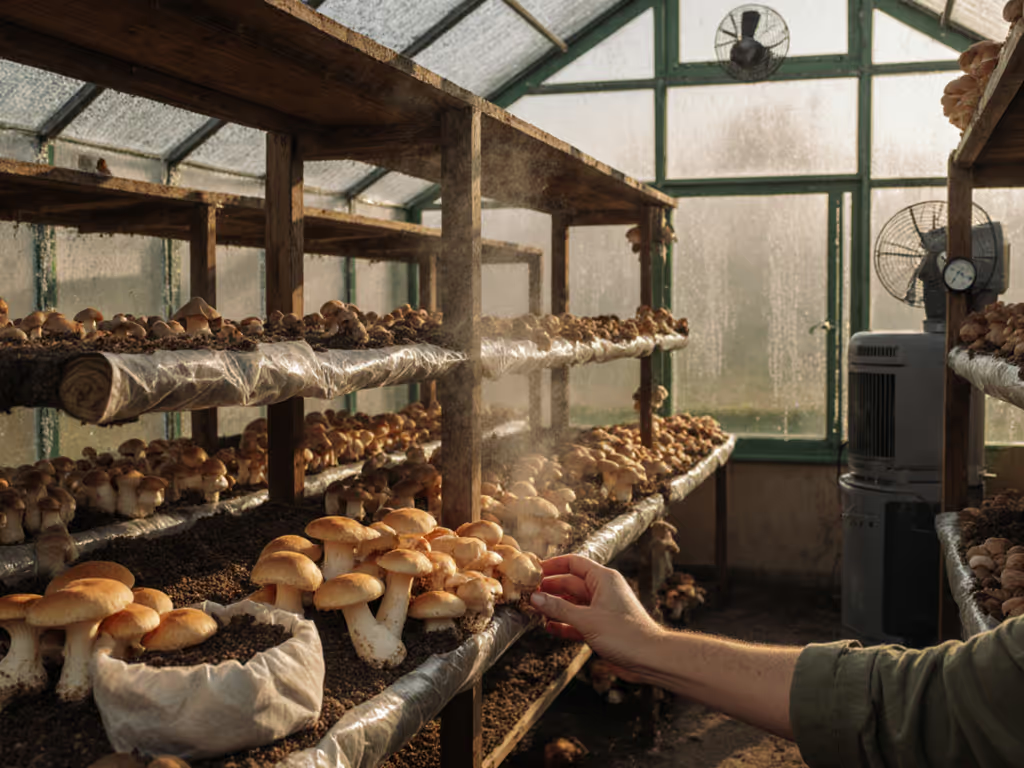
High humidity + still air = botrytis city. But open vents create lethal direct-light shafts. Solution:
- Low sidewall vents: 10% of floor area positioned below hosta canopy height
- Ridge vents: Continuous 4" slot with insect mesh, creates convection without hot spots For airflow hardware tradeoffs, see our ventilation system comparison.
- Thermal buffer: 2" air gap between glazing layers (achieved via double-wall panels) cuts heat spikes 50%
Track success with this checklist:
- Midday canopy temp ≤82°F (vs 90°F+ in standard kits)
- Humidity swings ≤15% between dawn/dusk
- Zero leaf scorch on Halcyon or Patriot cultivars after 72hr sun
Your Action Plan: From Theory to Hosta Haven
Stop gambling with undersized kits. In a hosta growing greenhouse, light quality is structural integrity. Tomorrow:
- Test diffusion by holding glazing samples over hostas. True diffusion creates zero hard shadows from fingers
- Triple your anchor count, one anchor per 3 sq ft of footprint (not the vendor's 5 sq ft suggestion)
Tighten what weather will loosen: Grease all bolt threads before torquing to spec (typically 45 ft-lbs for 5/16" bolts). A single loose rafter-plate connection can cascade into total failure under wet snow. I've walked fields of twisted hoops where "token anchors" pulled out, rebuilding cost 3x more than overbuilding initially. For shade plants, resilience isn't optional. It's the price of sleeping through storm warnings.
Related Articles