Custom Greenhouse Kits: Midwest Four Seasons Score
By Hana Al-Khalil • 16th Nov
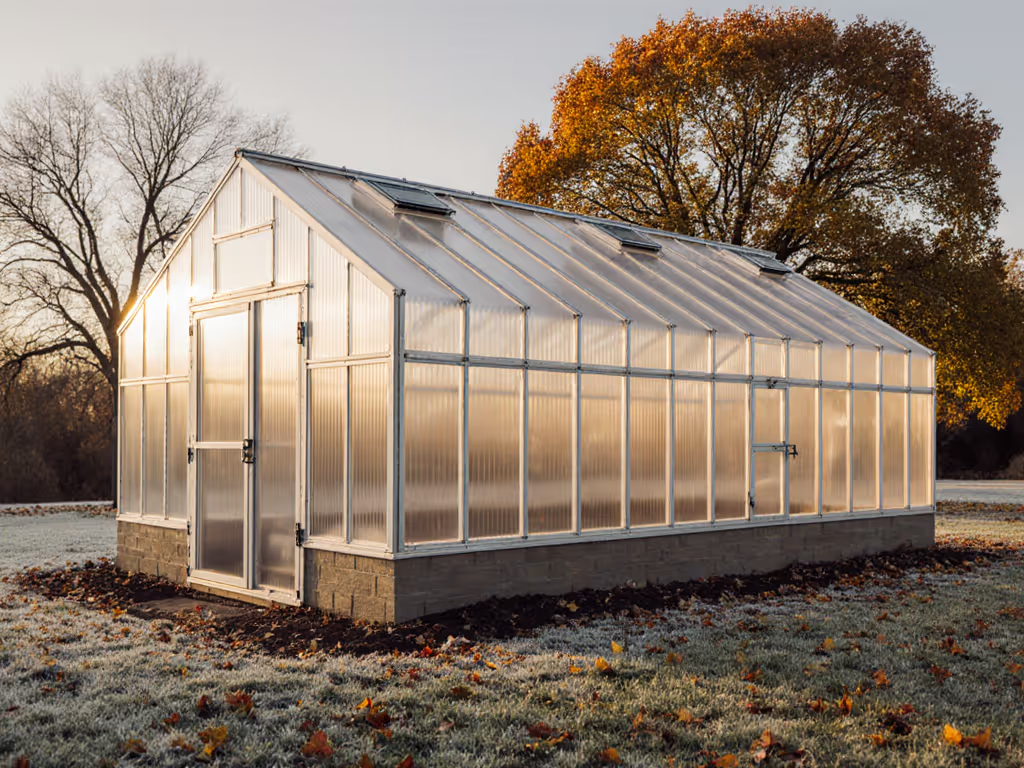
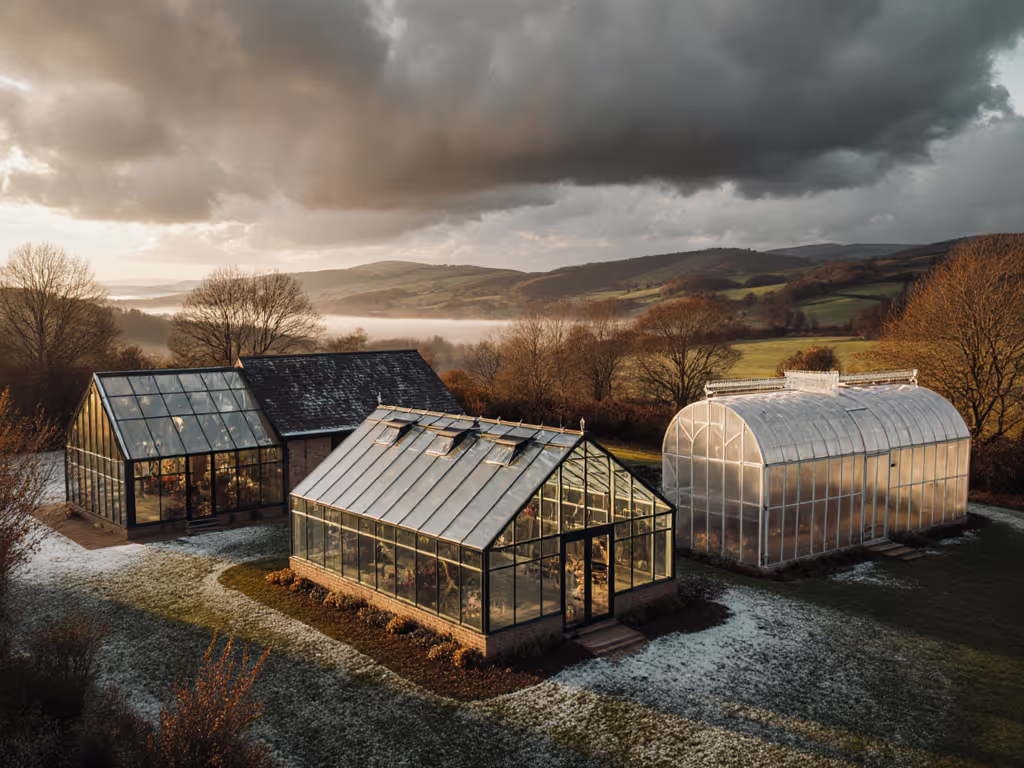
When Midwesterners whisper about custom greenhouse kits, they're usually dreaming of a structure that laughs off February blizzards and shelters tomatoes through July heatwaves. A true winter greenhouse here isn't just about surviving cold, it's engineering resilience against the Midwest's wild mood swings: sudden -30°F plunges, humid summers that choke seedlings, and deceptive spring thaws that leave flimsy frames groaning under wet snow. I've seen too many gardeners start with hopeful seed trays only to face heartbreak when a 'four-season' kit buckles under its first real test. For verified snow load guidance, see our cold climate greenhouse kit comparison. Let's cut through the noise with a practical framework for finding your perfect match.
Why Off-the-Shelf Kits Fail Midwesterners
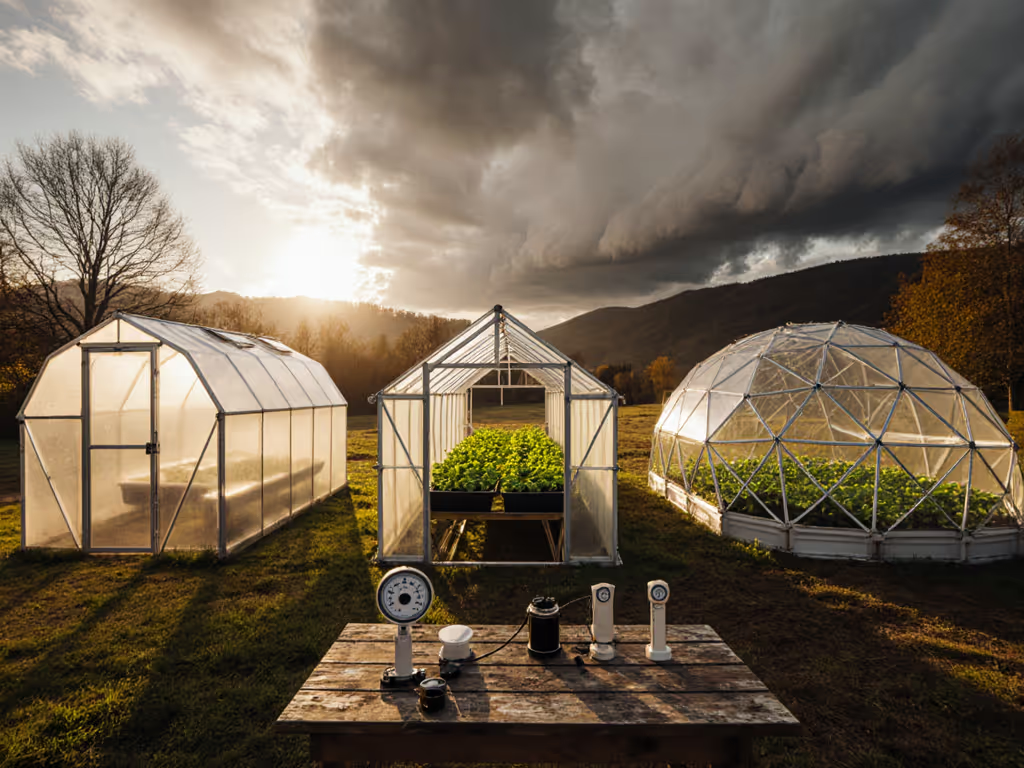
Midwest gardening challenges demand more than generic solutions. That 'all-season' hoop house from a national catalog? Its single-layer plastic might degrade by fall, leaving you battling condensation drip that invites powdery mildew. Its vents likely won't open wide enough when a 90°F September day hits, and they'll freeze shut by November. Last winter, I consulted for a school garden in Iowa where their 'snow-rated' kit collapsed under 18 inches of wet snow. Why? The catalog listed 'high snow load capacity' but buried the fine print: requires internal bracing not included in base kit.
Comfort grows plants, and keeps you tending through storms.
This isn't just about plants. When your back aches from ducking under a too-low frame, or condensation fogs your glasses as you harvest spinach in January, you'll stop going out there. I learned this after my own hoop house became a sauna by 10 a.m. (scorching tomatoes, burning my shoulders, and making me dread stepping inside). True greenhouse for year-round growing must prioritize your comfort as much as the crops.
The Four Seasons Score: Your Midwest Climate Checklist
Forget vague promises like 'year-round use.' Evaluate custom greenhouse kits using these three pillars:
1. Durability: Beyond Snow Load Numbers
- Reality check: Look for tested snow load ratings (like 98 psf, the Planta Greenhouse standard I've verified in St. Louis winters). Avoid 'up to' claims without engineering stamps.
- Midwest microclimate gardening tip: Steep roof pitches (45°+) shed wet snow faster than flat roofs. In open prairie zones, add wind baffles to break gusts above 65 mph.
- Sensory red flag: If the frame feels flimsy when you tap it (even in photos), skip it. Midwest wind whips directional, test for corner bracing, not just side strength.
2. Efficiency: Passive Systems > Plug-In Gadgets
- Thermal mass matters: Water barrels along the north wall absorb midday heat and release it at night. In my first retrofit, 50-gallon barrels dropped interior temps by 10°F during heat domes (no electricity). Learn passive heating setups in our zero-electricity thermal mass guide.
- Glazing science: Twin-wall polycarbonate (like 4mm panels) traps heat 2x better than single-layer film. It also diffuses harsh summer light, reducing 'bleached' lettuce.
- Verbatim allusion: Cool the human, save the crop. Ventilation isn't just for plants, side vents angled toward seating areas create cross-breezes that make you want to linger and prune.
3. Assembly: Time vs. Longevity Tradeoffs
- Honesty about DIY: A '3-day build' kit often means four people with construction experience. If you're a solo builder, prioritize pre-drilled frames and labeled parts. For realistic build-time expectations, see our assembly difficulty ratings.
- Hidden cost alert: Anchoring kits for clay-heavy Midwest soil often need concrete footings, not just stakes. Budget 15% extra for this.
- Accessibility win: Wider door frames (36"+) let wheelbarrows pass. Kneeling stools aren't just comfort, they prevent back strain during winter harvests.
Your Climate-Adapted Strategy (No Degree Required)
Midwest growers need solutions that pivot with the seasons. Here's how to build flexibility into your custom greenhouse kits:
Winter Prep That Actually Works
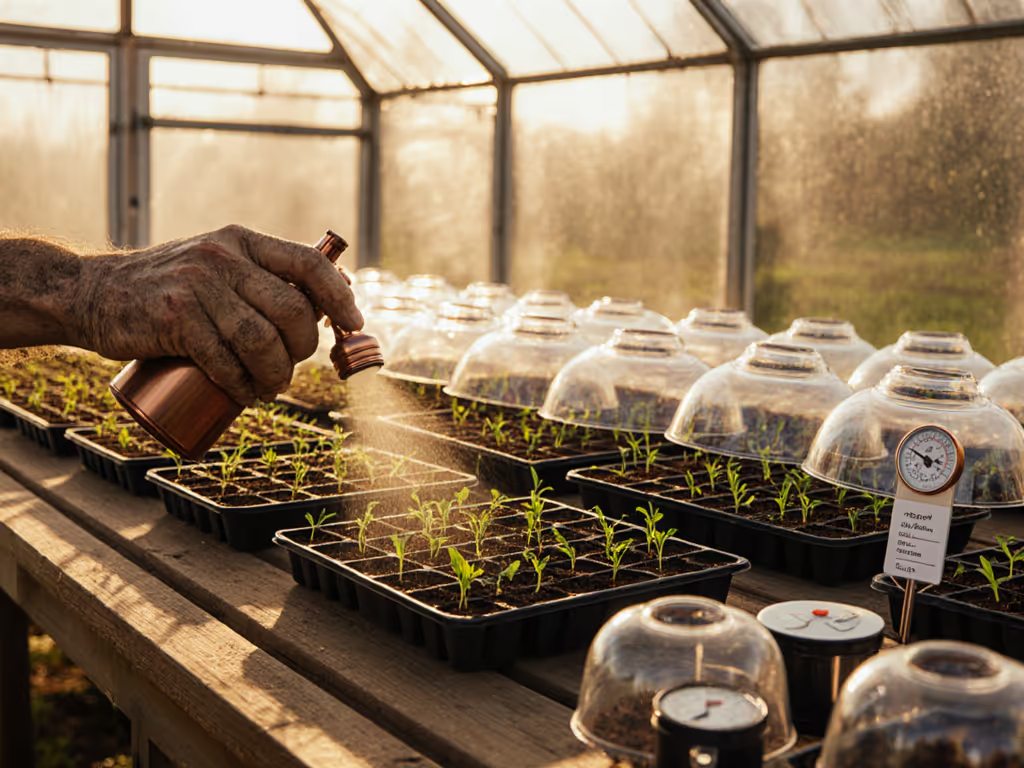
- Stop condensation at the source: In fall, add a 12" layer of gravel under benches. I've measured this reducing humidity by 20%, enough to stop fungal outbreaks on kale.
- Thermal shutters: Roll-up insulating covers (like Reflectix) over north walls on nights below 25°F. They're cheaper than heaters and don't need outlets.
- Snow glide trick: Attach a 1" PVC pipe along the roof peak. When snow slides, it breaks cleanly instead of piling up, saving frames from collapse.
Summer Survival Without AC
- Shade strategy: White 30% shade cloth only on the roof, not sides. Sides need max airflow. In my zone 5b tests, this combo dropped temps 15°F below black cloth.
- Ventilation math: For every 100 sq ft, you need 1 sq ft of roof vent + 1 sq ft of side vent. Auto-openers (activated at 75°F) prevent heat spikes while you're at work.
- Hydration hack: Gutters aren't just for rainwater, they cool the frame. When water runs down, it pulls heat from metal. Simple, but I've felt the difference in 100°F humidity.
Product Spotlight: Where Simplicity Meets Midwest Grit
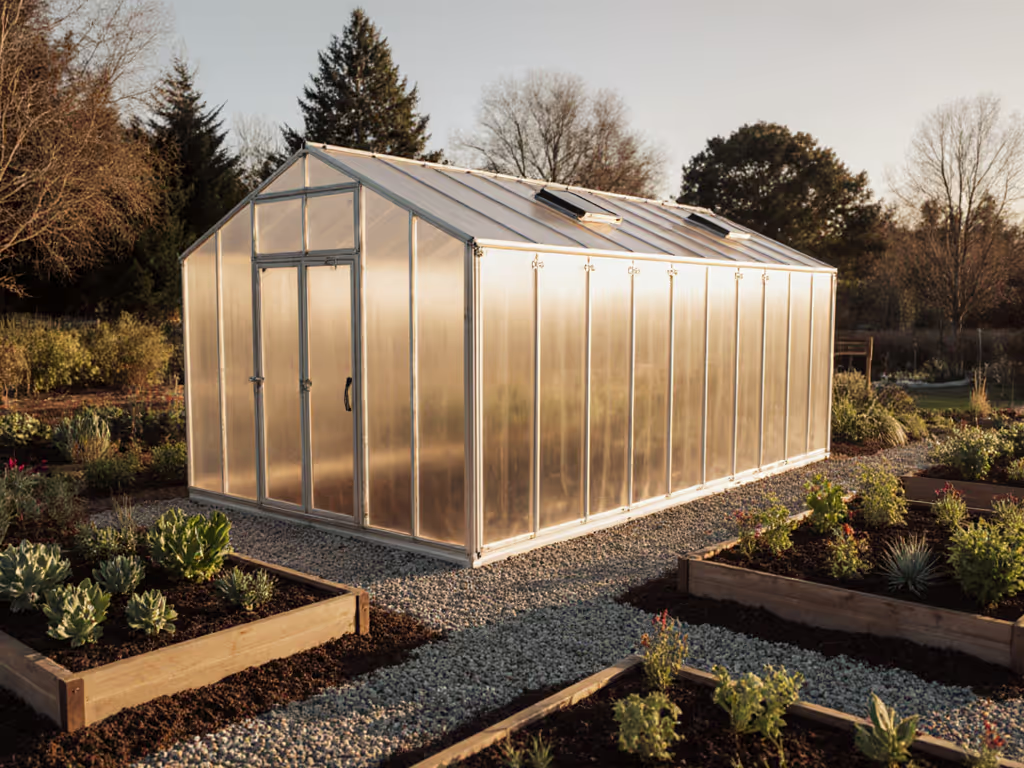
For growers needing a smaller footprint without sacrificing resilience, the Palram Canopia 6x8 Greenhouse Kit nails Midwest basics. Its twin-wall polycarbonate panels (4mm thick) reject summer UV while retaining winter heat, critical for midwest microclimate gardening where sun angles shift dramatically. I appreciate how the galvanized steel base anchors securely in clay soils (common near the Mississippi), and the single gutter channels water away from foundations, no more muddy puddles freezing at doorways. The adjustable roof vent auto-opens at 75°F, solving the 'heat spike' problem that kills seedlings in cheaper kits. For hands-on testing and modifications, see our Palram greenhouse review. Crucially, it's designed for human comfort: 82" height lets most adults stand straight, and the magnetic door catch keeps breezes flowing during humid snaps.
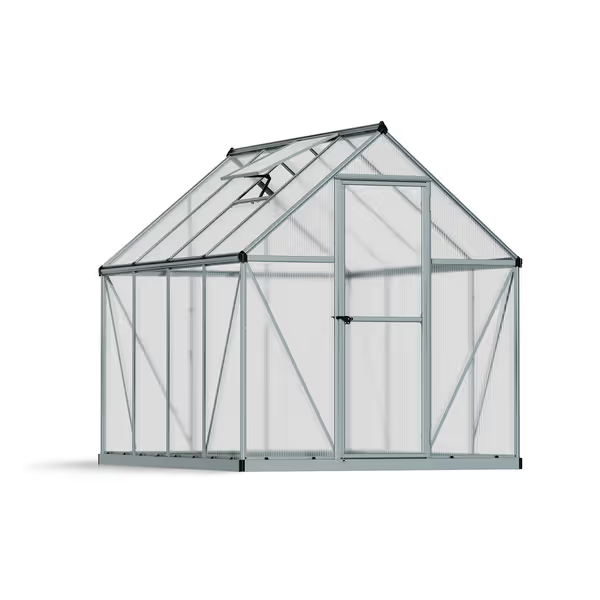
Canopia 6x8 Hobby Greenhouse Kit
Year-round plant protection solving microclimate challenges with robust engineering.
$339.2
Glazing4mm Twin-Wall UV Polycarbonate
Glazing4mm Twin-Wall UV Polycarbonate
Pros
Unbreakable 4mm twin-wall panels block 100% UV
Sturdy aluminum frame and galvanized steel base
Cons
Assembly instructions can be inconsistent
Customers find the greenhouse to be a great quality starter structure that looks substantial and withstands fairly high winds. However, assembly experiences are mixed, with some finding it easy to put together while others consider it a nightmare. Moreover, the instruction quality and value for money receive mixed feedback - while some praise the excellent and detailed instructions, others note the lack of words, and opinions on value are divided between those who find it worth the money and those who consider it a waste of time and money. Additionally, the sturdiness and wind resistance receive mixed reviews, with some reporting parts breaking and bending while others say it holds up well in strong winds.
Customers find the greenhouse to be a great quality starter structure that looks substantial and withstands fairly high winds. However, assembly experiences are mixed, with some finding it easy to put together while others consider it a nightmare. Moreover, the instruction quality and value for money receive mixed feedback - while some praise the excellent and detailed instructions, others note the lack of words, and opinions on value are divided between those who find it worth the money and those who consider it a waste of time and money. Additionally, the sturdiness and wind resistance receive mixed reviews, with some reporting parts breaking and bending while others say it holds up well in strong winds.
Site Planning: Avoiding Costly Mistakes
Your location makes or breaks even the best custom greenhouse kits. Midwest specifics matter:
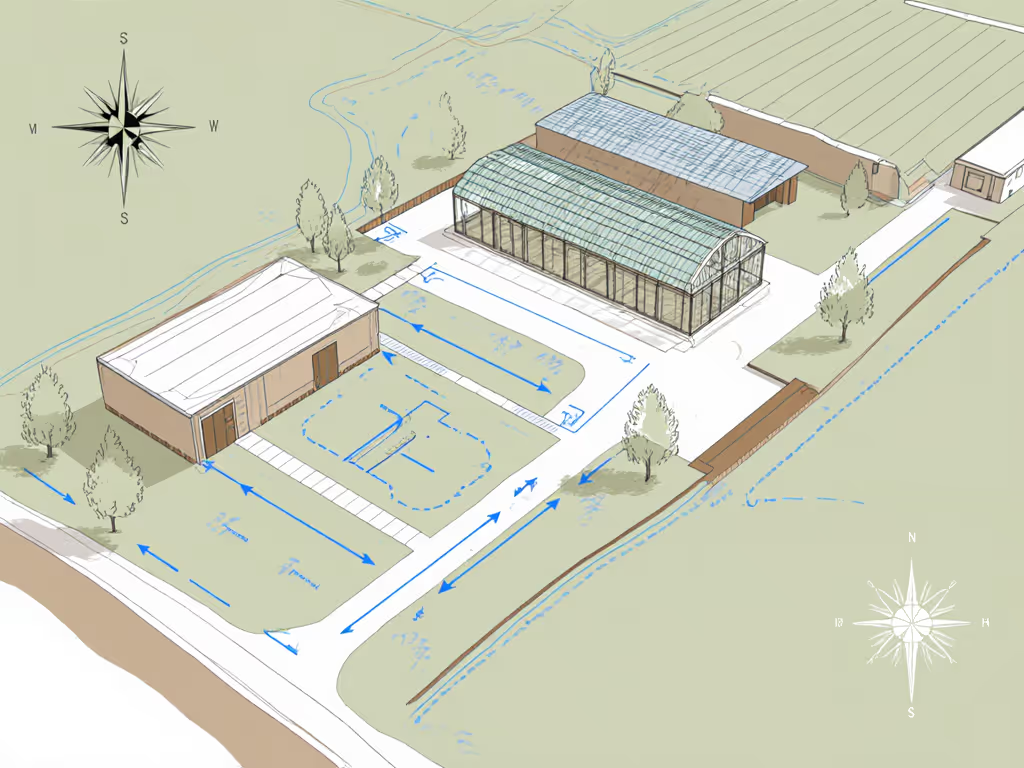
- Orientation isn't optional: Angle the long side east-west to maximize winter sun exposure. In frozen zones, avoid north-facing slopes where frost lingers.
- Wind corridor test: On a breezy day, release flour 10 feet up. If it streams through your planned site, add a windbreak row (like arborvitae) 50 feet upwind.
- Drainage reality: After rain, check puddling spots. If water pools >1 hour, either elevate the foundation 6" or install French drains (frozen soil shifts frames).
Final Thought: Build for the Habit, Not Just the Harvest
A winter greenhouse that's miserable to work in will gather dust. Conversely, when you design for your comfort (gentle slopes for easy access, cool seating areas, clear views of thriving plants), you'll grab your snips during ice storms. That hoop house I inherited? Now my neighbor joins me at noon to prune peppers. We sweat less, harvest more, and laugh when neighbors peer through the fogged glass wondering how we're still gardening in December.
Cool the human, save the crop.
Related Articles