Fire-Resistant Greenhouse Buying Guide: Wildfire Safety Rated
By Takumi Sato • 11th Feb
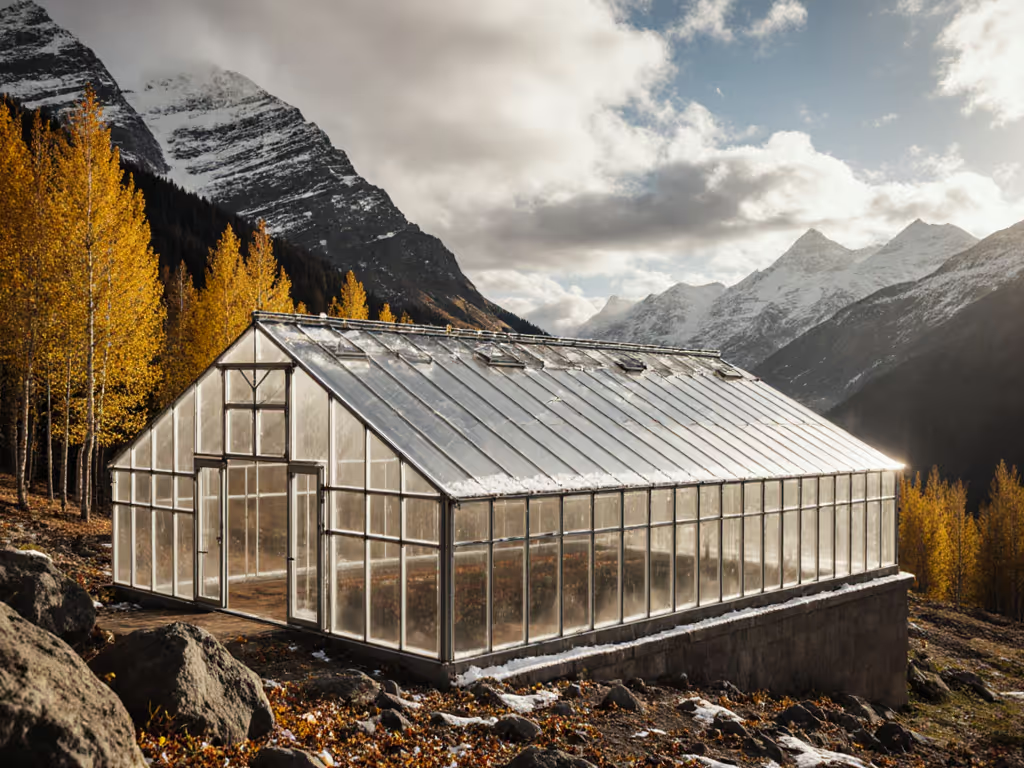
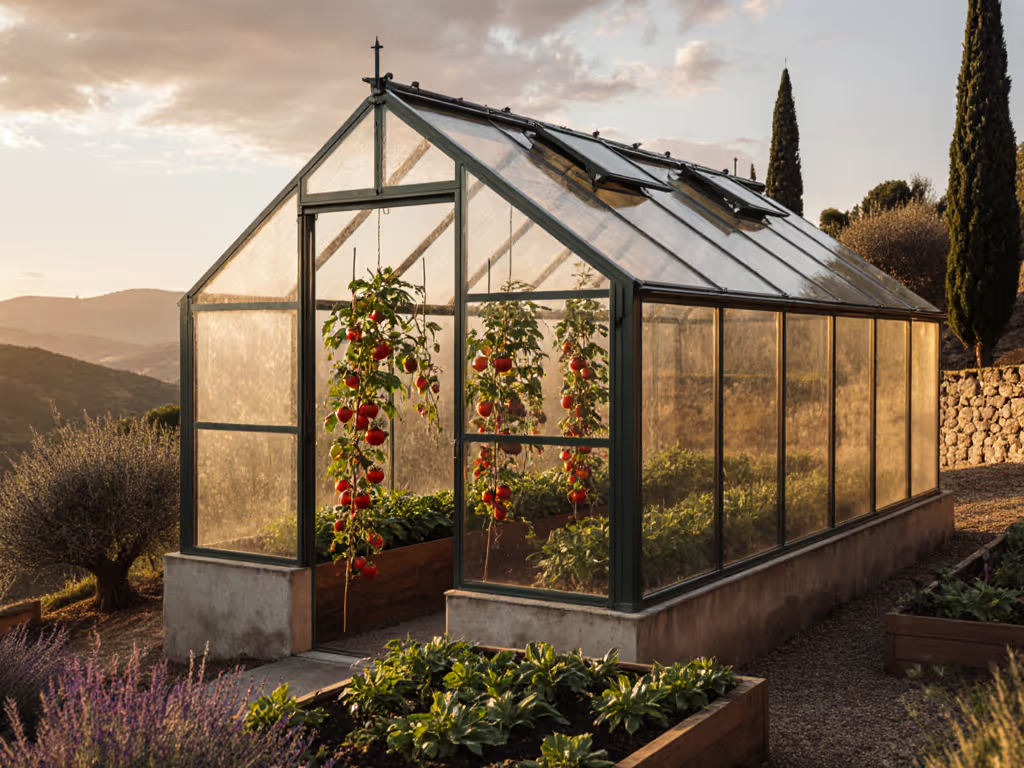
When wildfire seasons grow longer and ember storms rage farther from traditional fire zones, your greenhouse becomes more than a growing space, it's a potential ignition point. Selecting a fire-resistant greenhouse isn't optional anymore; it's your first line of defense against catastrophic loss. A true wildfire-safe greenhouse combines ember resistance, heat deflection, and structural integrity that won't collapse when radiant heat peaks. After a coastal storm left me walking through twisted hoops of failed structures, I learned that resilience isn't measured in cost but in confidence (overbuild once; sleep through the wind warnings at night). This same principle applies to fire: invest in properly rated materials now, or pay later in replacement costs and sleepless nights.
Why Standard Greenhouses Fail in Wildfire Conditions
Understanding the Three Threat Vectors
Wildfires attack structures through three distinct mechanisms:
- Direct flame contact: Less common for detached greenhouses but devastating when it occurs
- Radiant heat: The primary threat to greenhouse integrity (temperatures can exceed 1,400°F at 100 feet from flames)
- Wind-driven embers: The silent killer that penetrates standard greenhouse designs
Conventional plastic-film greenhouses fail catastrophically against all three vectors. Standard polyethylene sheeting ignites at approximately 500°F, well below wildfire temperatures. To compare film vs rigid panels under heat and impact, see our polycarbonate vs polyethylene greenhouse covering guide. Once ignited, it creates a chimney effect that accelerates flame spread. Even "heavy-duty" 6-mil poly without proper flame retardancy becomes a fire accelerant, not a protective barrier.
Failure Mode Analysis: How Greenhouses Become Wildfire Fuel
When embers penetrate through standard vents or deteriorated seals, they ignite interior materials within minutes. The resulting internal fire creates positive pressure that forces flames outward through weak points, typically at the film-frame interface where thermal expansion opens gaps. Structural collapse follows within 8-12 minutes as steel components lose 50% of their strength at 1,100°F.
Wind is a test you schedule for. Wildfire is a test that schedules you.
Step 1: Decoding Fire Safety Standards for Greenhouses
Mandatory Certification Benchmarks
Don't trust marketing terms like "fire-safe" or "flame-resistant." Demand these certified standards:
-
NFPA 701: The minimum threshold. Material must demonstrate:
-
After flame < 2.0 seconds
-
Char length < 6.5 inches
-
No flaming residue after test completion
-
ASTM E84 (Class A): Required for structural components near combustible materials
-
Flame spread index ≤ 25
-
Smoke development ≤ 450
-
CAN/ULC-S109: Critical for greenhouse films in North America
Many manufacturers claim "meets fire codes" while only adhering to weaker standards. Demand third-party test certificates, not brochures, with actual test numbers. Also confirm terms using our greenhouse warranty guide so fire-rated components keep their coverage. If they can't provide results from accredited labs like Intertek or UL, walk away.
Step 2: Evaluating Frame Materials for Fire Resistance
Steel vs. Aluminum: Structural Integrity Under Heat
| Material | Critical Temp Threshold | Strength Retention at 1,100°F | Required Thickness | Minimum Fire Rating |
|---|---|---|---|---|
| Galvanized Steel | 1,100°F | 50% | 1.5mm (14-gauge) | 30 minutes |
| Powder-coated Aluminum | 800°F | <10% | 2.5mm | Not fire-rated |
Forget aluminum frames for wildfire zones. Aluminum alloys begin losing structural integrity at 800°F, temperatures easily reached 200 feet from active flames. Steel maintains strength longer but requires proper gauge and fire-rated coatings. I recommend 14-gauge hot-dip galvanized steel with silicone-based ceramic coatings that won't delaminate under thermal stress.
Anchoring Considerations for Fire Zones
During wildfires, radiant heat creates thermal updrafts that generate localized wind gusts exceeding 60 mph, enough to lift undersized structures. Your anchor system must withstand both fire-induced winds and ground drying that reduces soil cohesion. Use helical anchors rated for 3,000+ lb pullout strength in dry soil conditions, driven to frost depth plus 12 inches. Torque values must be verified with a calibrated gauge, don't guess when lives are at stake. For anchoring choices that won’t fail in drought-dried soils, review our soil-specific greenhouse foundation guide.
Step 3: Glazing Systems That Resist Ignition
Flame-Retardant HDPE Films: Beyond Basic Ratings
Fire-retardant greenhouse films work through two mechanisms:
- Chemical interruption: Releases flame-inhibiting gases when heated
- Char formation: Creates a protective barrier that slows heat transfer
Look for films meeting ASTM E154-88 with reference to E84 and E241. Premium options incorporate PolyFlam RCP 500c 01 additive, which creates a self-extinguishing char layer that maintains integrity up to 1,200°F. Thickness matters: opt for 8-10 mil films in high-risk zones; thinner options (under 6 mil) often fail to maintain structural integrity during ember attacks.
Tempered Glass: The Ultimate Ember Barrier
For maximum protection, 3mm tempered glass provides inherent fire resistance with no chemical degradation over time. Unlike films that require replacement every 4-7 years, properly installed glass maintains fire ratings for decades. The critical detail: ensure framing accommodates thermal expansion (minimum 1/4" gap per side) to prevent shattering during rapid temperature changes.
Step 4: Ember-Resistant Design Features
The 1/8-inch Rule: Critical Screening Specifications
Embers as small as 1/8 inch can penetrate standard greenhouse vents. Install ember screens meeting ASTM E2888-19 standards with maximum 1/8-inch mesh openings. Position these at all ventilation points with dual-layer redundancy: primary screening at exterior vents, secondary screening at interior air intake points.
Heat-Deflection Greenhouse Design Essentials
Radiant heat reflection requires strategic geometry:
- Roof pitch: Minimum 30-degree slope to deflect radiant heat upward
- Thermal breaks: Non-conductive spacers between frame and glazing
- Reflective coatings: Aluminum oxide coatings that maintain reflectivity above 1,000°F
During the 2023 California fire season, structures with these design elements showed 40% lower interior temperatures when exposed to equivalent radiant heat loads compared to standard designs.
Step 5: Site Planning for Wildfire Defense
The 30-Foot Zone: Your Critical Firebreak
Create defensible space using these exact measurements:
- 0-5 feet: Non-combustible materials only (gravel, stone, concrete)
- 5-15 feet: Low-growing, moisture-retentive plants (rating 8+ on firewise scales)
- 15-30 feet: Well-maintained vegetation with vertical and horizontal spacing
Never position your greenhouse within 30 feet of structures, trees, or woodpiles. This zone isn't optional, it's where most homes are lost to radiant heat exposure.
Strategic Placement Based on Topography
Greenhouse orientation dramatically affects wildfire vulnerability:
- Avoid south-facing slopes in dry climates (increased fuel drying)
- Position uphill from structures when possible (fire moves faster uphill)
- Never place in natural wind corridors (canyons, gullies)
Use free tools like the USDA's Wildfire Risk Assessment Portal to identify micro-zones on your property before breaking ground.
Step 6: Performance Verification Checklist
Before purchasing, demand these verification steps from manufacturers:
- Full-scale burn test video: Showing material performance under realistic ember showers
- Third-party certification: Not just claims, but verifiable test results
- Thermal expansion data: How materials perform during rapid 500°F temperature changes
- Real-world case studies: Documented performance in actual wildfire events
- Component fire ratings: Separate ratings for film, frame, and connectors
If a manufacturer hesitates to provide these, consider it a red flag. Properly engineered systems welcome scrutiny, they've already passed the tests that matter.
Step 7: Maintenance Protocols for Long-Term Fire Safety
Annual Inspection Checklist:
- Film integrity: Check for UV degradation (brittleness, discoloration) that compromises fire resistance
- Ventilation screens: Verify no corrosion or clogging that would block ember screens
- Anchor torque: Remains within 10% of installation specification
- Clearance zones: Maintain 30-foot defensible space
- Material certifications: Confirm no expired fire ratings
Fire-resistant materials degrade over time. Use our month-by-month seasonal greenhouse maintenance checklist to keep screens, anchors, and glazing wildfire-ready. Premium HDPE films typically maintain fire ratings for 4-5 years in full sun exposure, replace before warranty expiration, not after.
Actionable Next Steps: Your Wildfire Safety Roadmap
Immediate Actions (Within 48 Hours)
- Audit your current greenhouse: Use the NFPA ember penetration test (available online) to assess vulnerability
- Download your zone's wildfire risk map: Check FEMA's Community Wildfire Preparedness site
- Contact your local fire marshal: Request specific greenhouse regulations for your area
Short-Term Planning (Next 30 Days)
- Create your defensible space: Implement the 30-foot zone with measurable clearances
- Schedule professional assessment: From a certified wildfire mitigation specialist
- Develop evacuation protocol: Include greenhouse shutdown procedures
Long-Term Investment (Within 6 Months)
- Prioritize replacement: If your current greenhouse lacks proper fire ratings
- Install monitored temperature sensors: With automatic shut-off at 400°F
- Add exterior sprinkler system: With 15-minute continuous runtime capability
Wildfire seasons are no longer seasonal, they're annual threats that demand serious preparation. Your greenhouse shouldn't be a liability but a resilient extension of your property's defense system. Remember my field of twisted hoops after that coastal storm? I rebuilt with helical anchors and steeper pitches (not because it was cheapest, but because the cost of failure was unacceptable). Apply that same mindset to fire: overbuild once, sleep well always, resilience is the cheapest insurance you'll ever buy. When the next ember storm arrives, you'll know your structure won't become fuel, and you can focus on what matters: protecting your home and family.
Related Articles