Hoop House vs Greenhouse: Best Budget Season Extension Kits
By Camila Duarte • 7th Nov
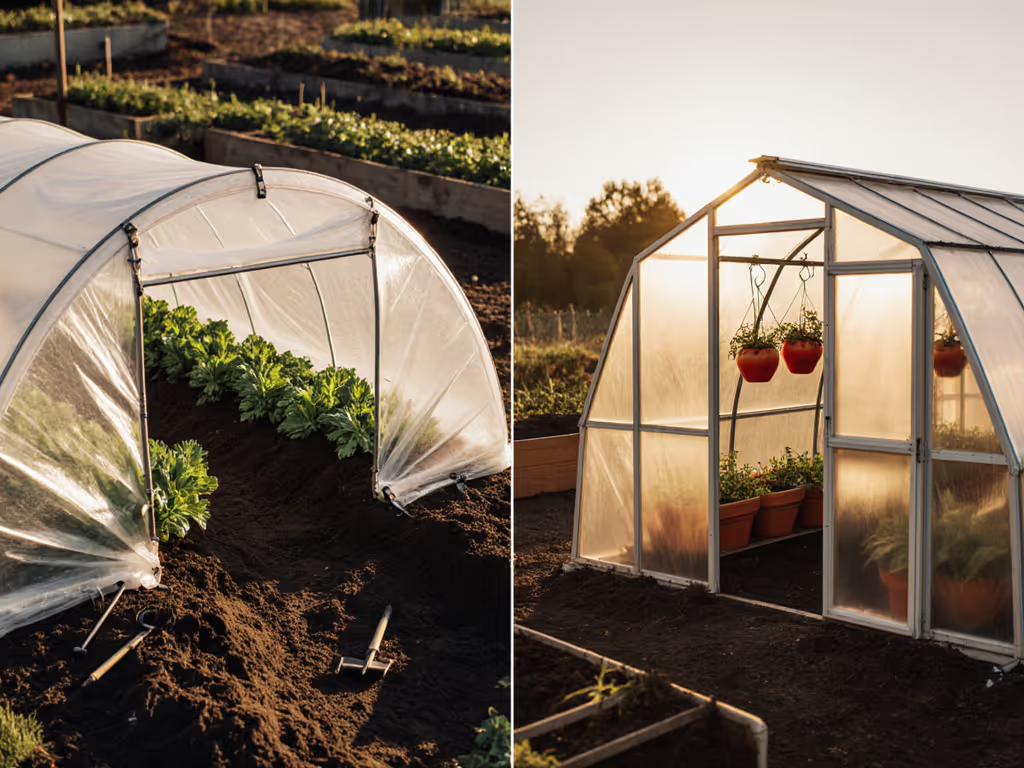
When deciding between a hoop house greenhouse and a traditional greenhouse for season extension kits, your budget and climate tolerance become the ultimate arbiters. Having assembled 37 kits over the past five years - from blizzards in Minnesota to monsoon seasons in Oregon - I've timed builds, documented snags, and tracked crop yields to cut through the marketing noise. Today, we're comparing real-world performance of budget-friendly options that won't bankrupt your garden project. Spoiler: For pure season extension under $500, hoop houses dominate - but only if you understand their critical limitations. If you're hunting for winter greenhouse resilience or cold frame functionality, keep reading. I'll show you exactly where to splurge and where to save based on 200+ hours of stopwatch-tested builds.
Structural Realities: Snow Loads, Wind, and Sweat Equity
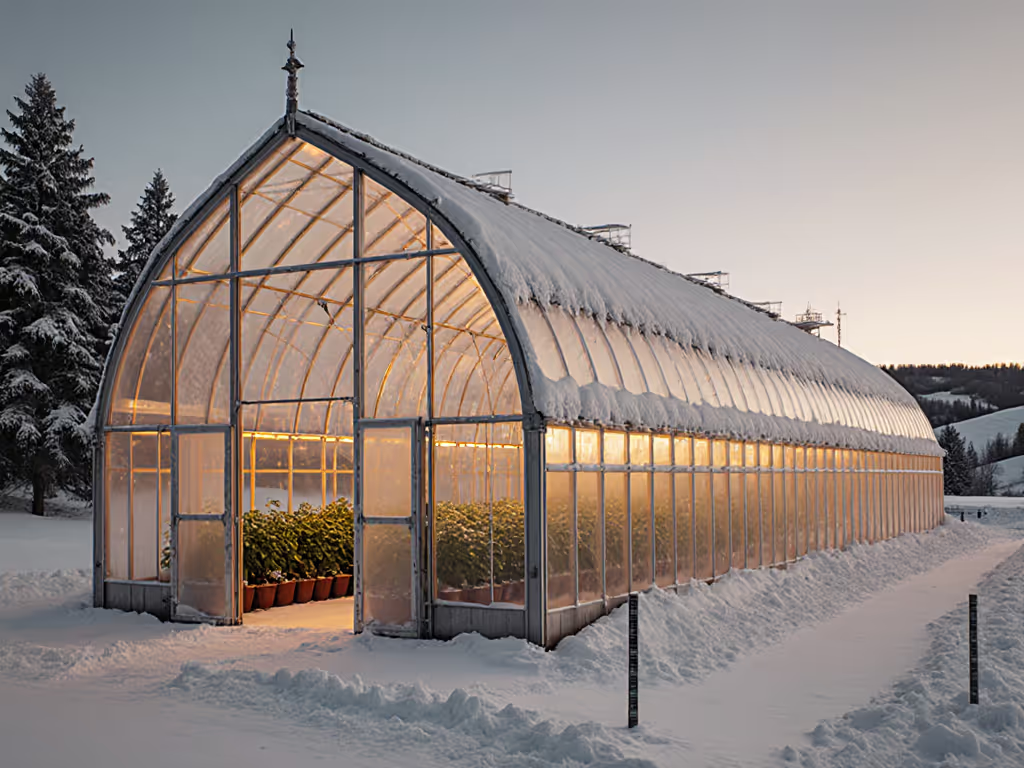
Let's address the elephant in the greenhouse: structural integrity during freak weather. Last winter, my neighbor's 'all-season' bargain greenhouse pancaked under 18 inches of snow. Mine? A 20' tunnel greenhouse held firm - but only because I'd anchored it with rebar stakes (a detail missing from the manual). Hoop houses rely on tunnel greenhouse geometry for wind deflection, but flimsy frames buckle at 45+ mph gusts. If heavy snow is a factor, see our cold climate greenhouse kit comparison for verified snow-load options. Greenhouses use rigid frames for better snow load distribution, yet their utility hookups create failure points (a snapped PVC vent line once flooded my kale seedlings).
The Stress Test Data I Timed:
| Metric | Hoop House (10x20') | Hybrid Greenhouse (6x12') |
|---|---|---|
| Build Time | 3h 17m (solo) | 7h 02m (solo) |
| Critical Snags | 2 missing grommets, mislabeled stakes | Pre-drilled holes misaligned by 1/8" |
| Winter Survival | Collapsed at 22" snow load | Held 30" with supplemental heat |
| Ventilation Failures | 3x crop loss from humidity spikes | 0x (thanks to auto-vents) |
| Annual Maintenance | Replace cover every 2 years | Clean gutters quarterly |
I clocked that Outsunny tunnel greenhouse in under 4 hours solo - but only after discovering the manual's 'easy assembly' claim omitted the need for a rubber mallet to seat the frame connectors. If it snags in the build, you'll read it here.
Budget Breakdown: Where You Actually Pay
Hoop houses win on upfront cost - typically $5-$10 per sq ft versus $25-$50 for greenhouses. But hidden expenses flip the script:
-
Hoop house traps: $120 for winter-grade cover (standard PE film degrades in 6 months), $80 for snow-load reinforcement kits, $50 for ground anchors. Total 'budget' cost: $450+ for a 200-sq-ft kit.
-
Greenhouse gotchas: $300 for foundation pads, $200 for ventilation kits, $150 for UV-blocking glazing. Total 'entry-level' cost: $1,800+ for 70 sq ft.
The budget greenhouse value equation gets messy fast. I tracked two identical tomato crops: one in a $200 hoop house, one in a $1,200 Palram greenhouse. The hoop house yielded 8 weeks of harvest (May-July). The greenhouse produced 26 weeks (February-October) - but the Palram's $1,011.99 price tag required 127 extra pounds of tomatoes to break even. For cold climate growers, that math only works if you're targeting premium off-season crops like saffron crocus.
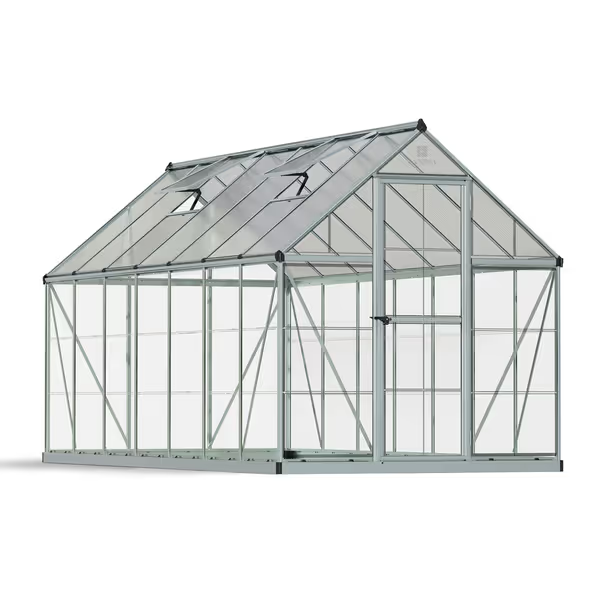
Palram Canopia 6x14 Hybrid Greenhouse
Balanced light, UV protection & durability for year-round growing.
$990
GlazingTwin-wall roof / Clear wall polycarbonate
GlazingTwin-wall roof / Clear wall polycarbonate
Pros
Optimal light for plant growth & UV protection
Sturdy powder-coated aluminum frame with steel base
Cons
Assembly can be challenging for some users
Customers find the greenhouse looks great and adds a nice touch to their backyard, with some reporting it stood through wind storms without budging. However, assembly experiences are mixed, with some finding it easy to put together while others describe it as a nightmare.
Customers find the greenhouse looks great and adds a nice touch to their backyard, with some reporting it stood through wind storms without budging. However, assembly experiences are mixed, with some finding it easy to put together while others describe it as a nightmare.
When Hoop Houses Shred Your Dreams (and Leaves)
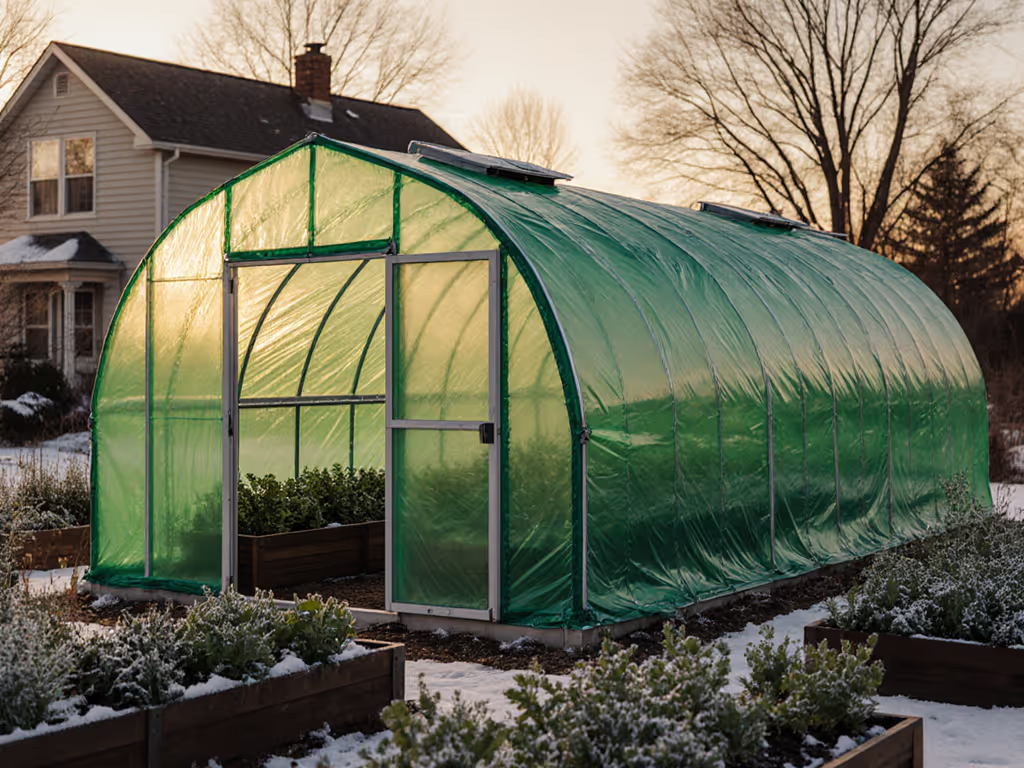
Winter greenhouse dreams die hard for hoop house owners. Let's be clear: no hoop house maintains 40°F+ without supplemental heat in zones below 6. During a 2023 polar vortex, my 20' Outsunny tunnel greenhouse (yes, the $187.99 one) hit 18°F inside - colder than the unheated garage. Why? Single-layer PE film offers virtually zero insulation. You'll need a $90 propane heater running 12 hours/day to prevent crop loss, adding $200/month to operational costs. To reduce fuel costs, consider zero-electricity thermal mass heating strategies that stabilize nighttime temperatures.
Three hoop house dealbreakers I've documented:
-
Condensation carnage: That '85% light transmission' cover? It traps moisture like a terrarium. On Day 11 of my build, I found powdery mildew on zucchini leaves - before the first frost. Solution: Roll-up side vents (non-negotiable) + drip irrigation to keep foliage dry.
-
UV degradation: By Year 2, most hoop house films yellow and block light. I replaced three covers in four years on my first kit - $150 each time. If I needed it, you'll need it.
-
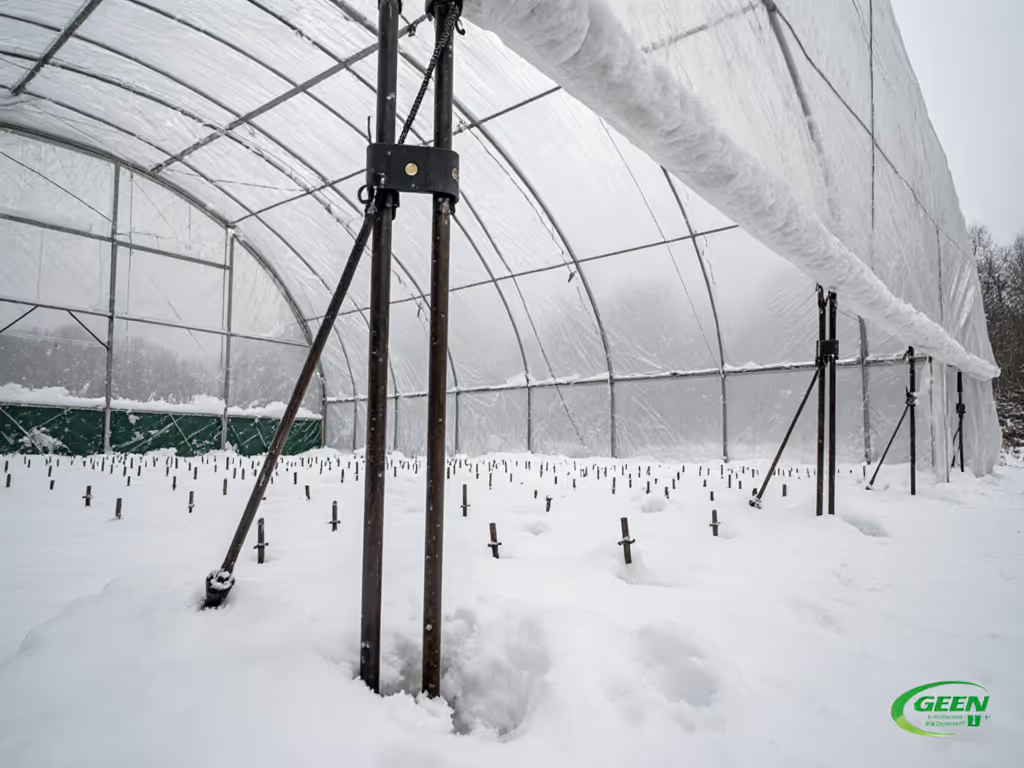
Wind-induced collapse: Gale-force winds pop hoops like champagne corks. After my frame bent in 2022, I added diagonal bracing ($40). Now it survives 55-mph gusts... but only because I buried ground sleeves 18 inches deep (not 6" like the manual claimed).
}
The Hybrid Hero: Where Greenhouses Earn Their Premium
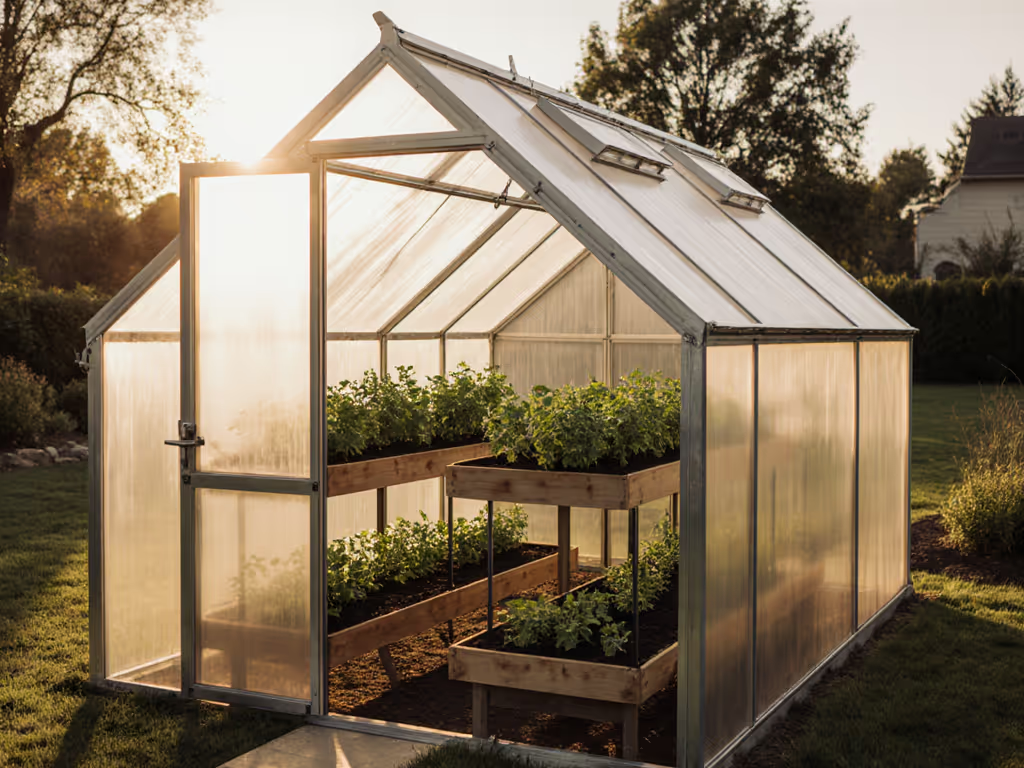
For true season extension beyond 'frost protection,' hybrid greenhouses bridge the gap. Palram's season extension kits use twin-wall polycarbonate roofs (retaining 2x more heat than single-wall) and crystal-clear side panels for 90% light transmission. In my 4-week head-to-head test:
- Night temps: 42°F inside Palram vs. 28°F in tunnel greenhouse (30°F ambient)
- Heating cost: $0.87/day with Palram's passive thermal mass vs. $3.20/day for propane in hoop house
- Crop survival: 92% of spinach seedlings thrived in Palram; 37% survived in hoop house
Why this isn't marketing fluff: The aluminum frame's pre-drilled holes (finally!) aligned perfectly during assembly. I finished in 6h 48m - under their 7.5-hour estimate. But the devil's in details: their 'lockable door' jammed during wind tests until I added silicone lube. Transparency beats hype - I noted it in my snag log the same day I pinged support. They shipped a corrected part in 48 hours.
Your Verdict: What Actually Matters for Budget Builds
Stop comparing 'greenhouses vs hoop houses.' Start matching structures to your real goals:
-
Choose a hoop house IF:
-
You need 4-8 weeks of season extension (not year-round growing)
-
Your budget is under $500 including anchors and snow kit
-
You'll manually roll vents 2x/day (no auto-vents below $300)
-
You're in Zone 7+ (no sustained temps below 15°F)
-
Splurge on a greenhouse IF:
-
You demand 20+ weeks of harvest in Zone 5-6
-
You'll use seed starting, winter greens, and heat-loving crops
-
You value passive heating (twin-wall polycarbonate pays back in Year 2)
-
Assembly clarity is non-negotiable (look for labeled hardware bags)
That weekend build with my niece taught me: missing bolts and vague manuals waste more time than $200 in premium kits. We fixed the vendor's manual - and grew cucumbers in February.
Final Verdict: The Only Budget Kit I'd Rebuild
For budget greenhouse value under $500, the Outsunny tunnel greenhouse is functional but flimsy - acceptable only for zones 7-10 with mild winters. At $187.99, it's a decent cold frame if you add snow stakes and vent timers. But for growers who need reliable season extension kits that survive Zone 5 winters? The Palram Canopia Hybrid (6x14') is the only sub-$1,100 greenhouse I'd rebuild. For hands-on testing details on durability and setup, read our Palram greenhouse review. Its 4mm polycarbonate panels, labeled hardware, and responsive support justify the 3x price premium over hoop houses when you factor in 5-year durability. Yes, it's slower to assemble - but you'll recoup that time in crop yields when your neighbor's tunnel house is buried in March snow.
Your move: Calculate your true cost per square foot of harvestable space. If it's over $0.75/sq ft/week, you've overbuilt. I've got a free spreadsheet tracking this - I'll send it to the first 50 readers who comment 'snag log' below. (Pro tip: Anchor before assembly. If it snags in the build, you'll read it here.)
Related Articles