
Greenhouse Drip Irrigation Kits: Water-Efficient Comparison
By Hana Al-Khalil • 19th Nov
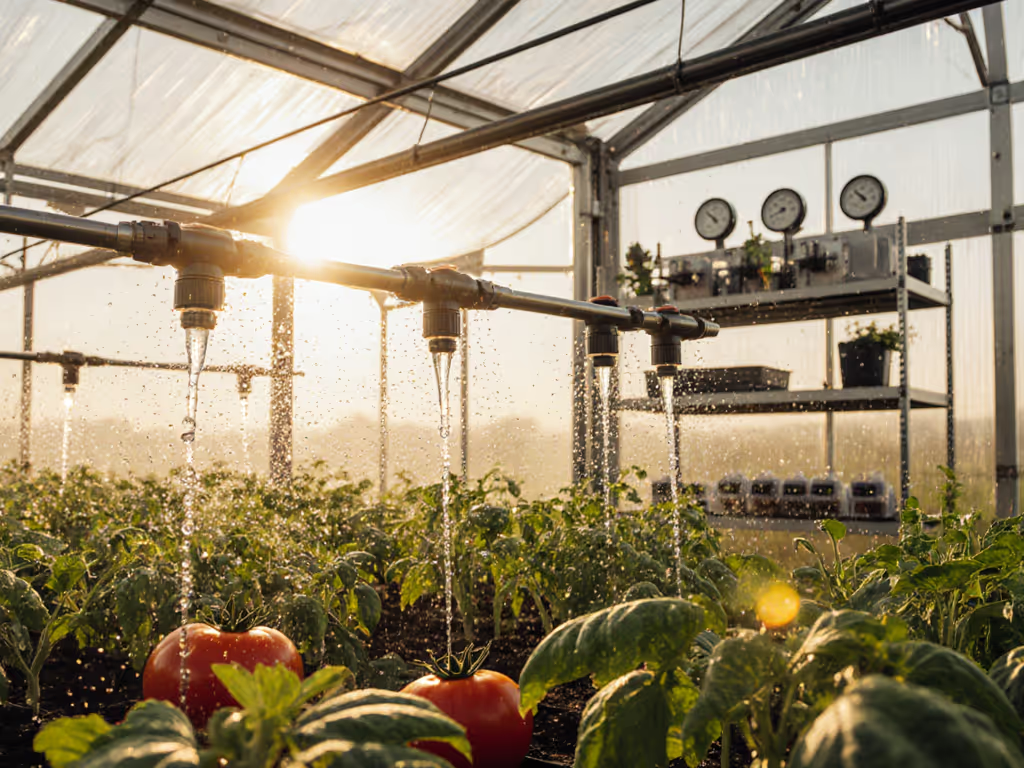
Your greenhouse drip irrigation system shouldn't be an afterthought. It is the quiet heartbeat of your attached greenhouse. When I first inherited my neighbor's hoop house, I learned this truth the hard way: a sweltering space with unpredictable watering made me avoid my own greenhouse, even as my tomatoes desperately needed attention. I'd been hand-watering inconsistently, creating alternating drought and flood conditions that stressed both plants and caretaker. That discomfort nearly broke my fledgling habit (until I installed a proper drip system that worked with my space, not against it). Comfort grows plants, and keeps you tending through storms.
Why Your Watering Method Determines Greenhouse Success
Most greenhouse owners don't realize how much their watering approach affects both plant health and personal enjoyment. When I measured the humidity spikes in my hoop house after overhead watering, I saw relative humidity jump from 55% to 85% within minutes, creating perfect conditions for powdery mildew while making the space feel oppressive to me. The solution isn't just about efficiency, but designing a water-efficient greenhouse that you'll actually want to spend time in.
Drip irrigation works differently than traditional methods by delivering water directly to root zones through precisely placed emitters. This creates several sensory and physiological benefits:
- Your plants experience steady moisture levels instead of feast-or-famine cycles
- Your hands stay dry as you check plants (no more damp soil clinging to your fingers)
- Your greenhouse air feels cleaner without the mist and splatter of overhead watering
- Your footsteps stay quiet on dry pathways instead of splashing through puddles
When your greenhouse feels pleasant, you'll visit more often (catching pest issues early, noticing subtle growth changes, and enjoying those quiet morning harvests). Remember my sweltering hoop house? Once I added passive cooling and a proper drip system, I started finding my elderly neighbor in there midday, happily pruning without breaking a sweat. That's the magic of integrated design: comfort sustains the habit.
Key Components of a Successful Greenhouse Drip System
Water Delivery Precision
A quality automatic watering greenhouse system doesn't just deliver water. It delivers the right amount, to the right place, at the right time. The best systems feature:
- Adjustable emitters that can be fine-tuned from gentle drip to steady stream
- Emitter stakes that stay firmly planted in soil (look for at least 5" length)
- Pressure compensation that maintains consistent flow regardless of elevation changes
- Easy-clean design with removable caps to prevent clogging
I once watched a gardener struggle with emitters that constantly popped loose from tubing. The frustration chased her out of her greenhouse just when her seedlings needed monitoring. Design the path you'll actually use, including a watering system that functions reliably without constant fussing.
Smart Water Management
Water efficiency isn't just about saving gallons: it is about creating stable conditions where plants thrive with less stress.
- Filters that prevent sediment from clogging delicate emitter pathways
- Pressure regulators keeping flow consistent (25-30 PSI is ideal for most greenhouses)
- Backflow preventers protecting your main water supply
- Timer integration that accommodates seasonal light changes
Many greenhouse owners I've consulted try to save money by skipping filters, only to face clogged emitters mid-season when they're busiest. I recommend investing in proper filtration upfront. It's the difference between a system that works all season and one that becomes another chore. If you're exploring automation beyond timers, see our guide to smart climate control for greenhouse kits.
Comparing Your Greenhouse Drip Irrigation Options
Basic Drip Kits: Best for Small Attached Greenhouses
Basic kits work well for attached greenhouse structures up to 12'x12', where water pressure and layout remain relatively simple. These systems typically include:
- Mainline tubing (usually 5/8" or 3/4")
- Distribution tubing (1/4" to 5/16") with pre-installed emitters
- Connectors and end caps
- Timer and backflow preventer
Pros: Inexpensive, easy installation, good for raised beds
Cons: Limited adjustability, less durable in full sun exposure, difficult to modify after installation
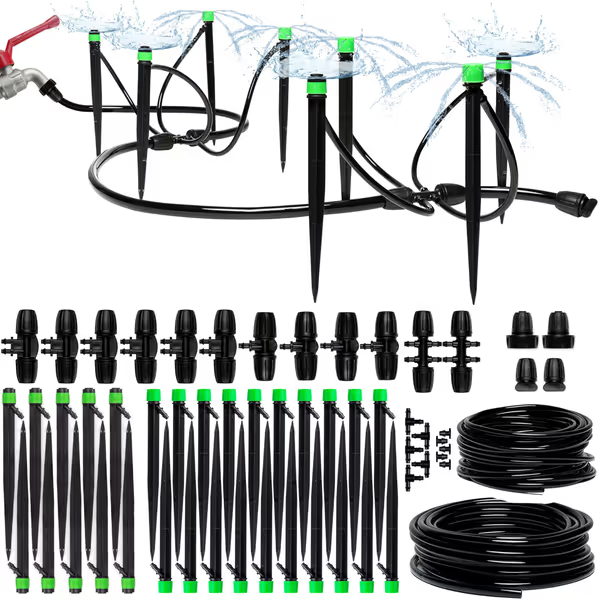
CARPATHEN Drip Irrigation System Kit
Automated drip irrigation for healthy plants and reduced water waste.
$38.62
Operating Pressure20-45 PSI
Operating Pressure20-45 PSI
Pros
Complete kit with adjustable emitters for custom watering.
UV resistant tubing, durable for underground or above-ground.
Cons
Mixed opinions on connector quality.
Customers find the drip irrigation kit easy to set up and use, with adjustable sprinkler heads and tubing of good quality. The system works effectively, with one customer noting it works well with an auto timer, and customers appreciate its value for money, particularly for watering flowerbeds and gardens. While customers find it easy to connect the fittings, opinions about the connectors are mixed.
Customers find the drip irrigation kit easy to set up and use, with adjustable sprinkler heads and tubing of good quality. The system works effectively, with one customer noting it works well with an auto timer, and customers appreciate its value for money, particularly for watering flowerbeds and gardens. While customers find it easy to connect the fittings, opinions about the connectors are mixed.
Solar-Powered Systems: Ideal for Off-Grid Greenhouses
When your greenhouse is detached from your home's water supply, solar-powered systems offer elegant solutions. These systems typically draw from rain barrels or small ponds, using solar energy to power pumps. If you're collecting and reusing water, explore our rainwater harvesting greenhouses for storage and filtration best practices.
Pros: Energy independent, water source flexibility, excellent for remote locations
Cons: Higher initial cost, requires consistent sunlight, limited water volume
At Growing Spaces, they offer a solar-powered drip irrigation kit ideal for smaller greenhouses that includes 200 feet of tubing and 50 emitters, perfect for a 15' or 18' dome. I've seen this system transform distant hoop houses from places I avoid to spaces I visit daily, because watering happens automatically without my intervention.
Customizable Emitter Systems: Most Versatile for Mixed Plantings
If your greenhouse contains diverse crops with varying water needs (like seedlings next to fruiting tomatoes), customizable emitter systems provide the most flexibility.
Pros: Precise control per plant, easy to adjust as seasons change, accommodates growth patterns
Cons: Higher complexity, requires more initial planning, slightly higher cost
What makes these systems shine is their adaptability. Rotate a cap to adjust flow from barely dripping to 40 GPH, perfect when transitioning from delicate seedlings to thirsty fruiting plants. The CARPATHEN system I've tested lets you switch between vortex and stream emitter caps as needed, which has been invaluable when growing both moisture-sensitive herbs and water-loving cucumbers in the same space.
How to Choose Your Perfect System
Match Your System to Your Space
Your greenhouse size and layout should drive your irrigation choice:
- Small attached greenhouses (under 100 sq ft): Basic drip kits with pre-installed emitters
- Medium greenhouses (100-200 sq ft) with mixed crops: Customizable emitter systems
- Large or off-grid greenhouses: Solar-powered systems with supplemental water storage
Measure your space before purchasing. I've seen too many gardeners buy undersized systems that can't reach all their beds, creating "dry zones" where plants struggle while other areas get overwatered.
Consider Your Climate Factors
Where I live in Colorado, summer afternoons can be scorching while spring nights still dip below freezing. Your local climate dramatically affects irrigation needs: Gardeners in desert and high-heat regions can follow our arid climate greenhouse guide for shading, cooling, and drip layout tips.
- Hot, dry climates: Prioritize subsurface drip to minimize evaporation
- Humid climates: Focus on systems that keep foliage dry to prevent disease
- Variable climates: Choose systems with easy seasonal adjustments
That hoop house transformation I mentioned? I tucked water barrels along the north wall to act as thermal mass while implementing drip irrigation that ran early morning when evaporation would be lowest. For more ways to stabilize temperature without electricity, see our thermal mass heating strategies. Ten degrees cooler, plants happier, and me, actually enjoying midday greenhouse time for the first time.
Think About Your Time and Physical Needs
Be honest about how much maintenance you'll realistically do. A system with beautiful features does you no good if you won't use it consistently. Consider:
- Your physical capabilities: Look for ergonomically designed components that don't require bending or straining
- Your schedule: Will you remember to adjust settings weekly? Choose automated options if not
- Your technical comfort: Some systems offer smartphone controls; others use simple manual timers
For accessibility, I recommend emitter stakes that are easy to adjust while standing, and timers placed at eye level (not buried under benches where you'll forget them). Small wins in usability compound into consistent care.
Making Your Water-Efficient Greenhouse a Reality
Installation Tips from Experience
When setting up your drip system, keep these ergonomic principles in mind:
- Lay out your tubing before cutting, you'll waste less material and create cleaner lines
- Space emitters based on plant needs, not arbitrary measurements (tomatoes need more water than basil)
- Place filters and pressure regulators where you can easily access them (not buried under soil)
- Test your system before covering with mulch (watch each emitter for consistent flow)
I once saw a gardener install a perfect-looking system that delivered water beautifully, except all the emitters faced the wrong direction, watering the pathways instead of plants. A quick pre-mulch test would have caught that.
Ongoing Maintenance: The Comfort Connection
Your watering system should require minimal upkeep to maintain that crucial comfort factor. Schedule these simple checks:
- Spring: Clean filters, check for winter damage, adjust emitter positions for new plantings
- Mid-summer: Verify flow rates haven't diminished, clear any clogs
- Fall: Drain and store components that might freeze
A well-maintained system becomes invisible in the best way, delivering exactly what plants need without becoming another chore that drives you out of your greenhouse. Then use our seasonal greenhouse maintenance checklist to keep irrigation running smoothly year-round.
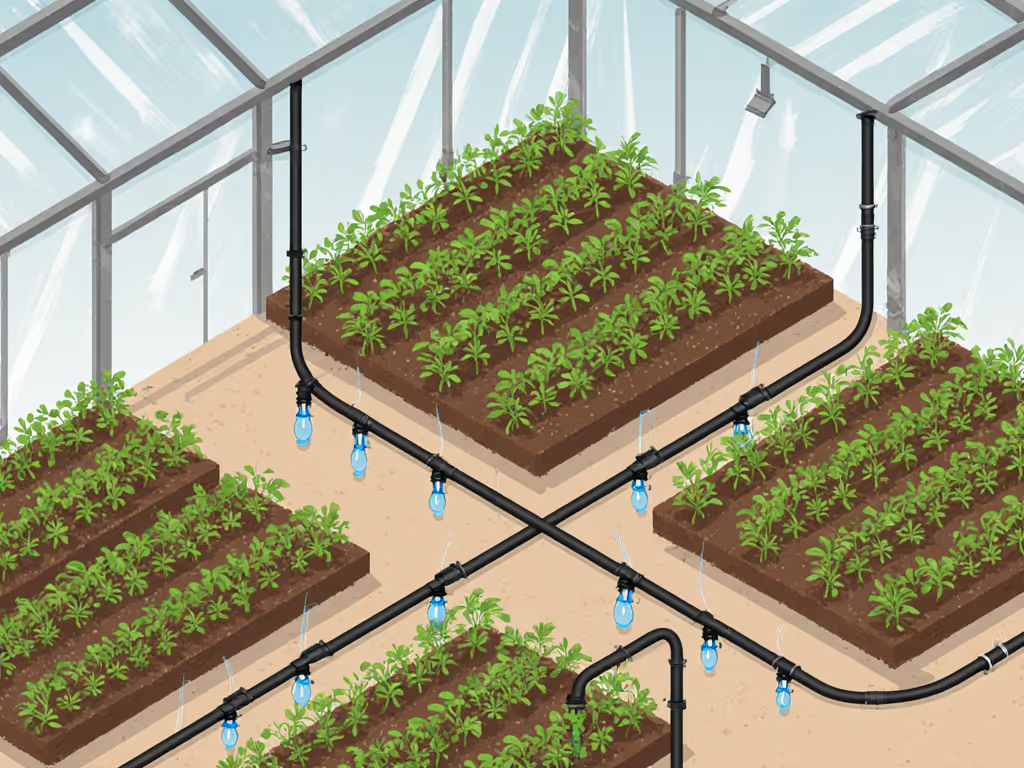
Your Next Step Toward Water Wisdom
As you consider your greenhouse drip irrigation options, remember the lesson my hoop house taught me: the best system is not the most advanced. It is the one you'll actually use consistently.
Rather than searching for a perfect solution, focus on finding a practical system that fits your specific space, climate, and habits. Start small if needed (a single raised bed with basic drip irrigation can teach you more than theoretical research). Measure your soil moisture before and after watering to calibrate your timing. Notice which plants respond best to your system's delivery pattern.
Your greenhouse should be a place of calm productivity, not constant troubleshooting. When you've designed a water-efficient greenhouse that works with your natural rhythms, you'll find yourself lingering longer among your plants, noticing subtle changes, and enjoying the quiet satisfaction of a space that nourishes both plants and caretaker alike.
Design the path you'll actually use, then watch how both your plants and your gardening habit flourish.
Related Articles